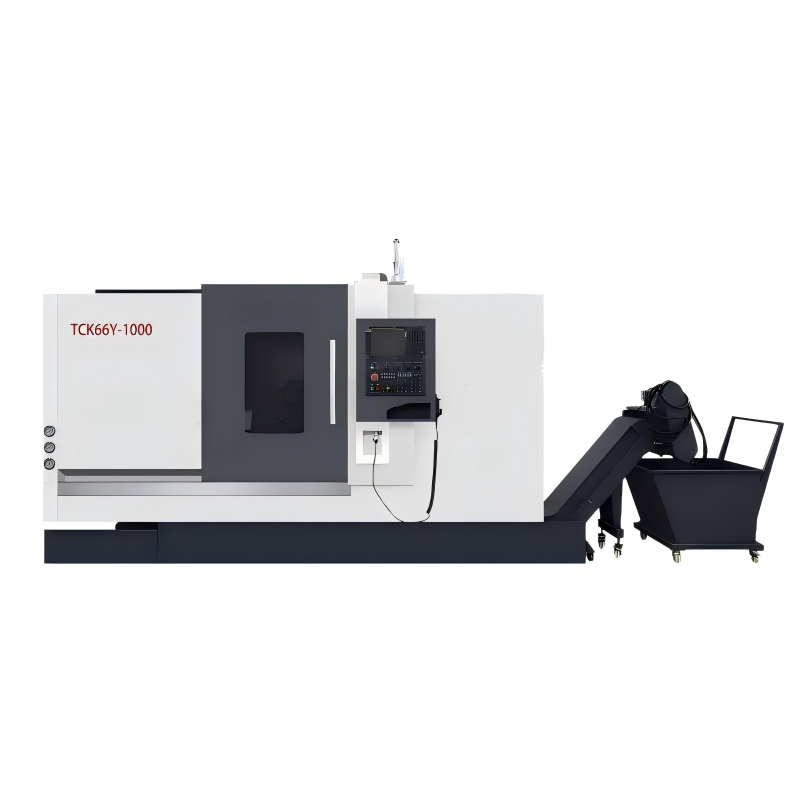
In the realm of modern manufacturing, the evolution of machine tools has significantly impacted production efficiency and product quality. Two prominent examples that exemplify this advancement are the Slant bed pipe threading CNC lathe and the vertical Machining Center. While these machines serve different purposes, they both represent cutting-edge solutions in their respective fields. This technical report will delve into the advanced features of a Vertical Machining Center, providing insights into its capabilities and how it complements other advanced machinery like the slant bed pipe threading CNC Lathe.
The Versatility of a Vertical Machining Center
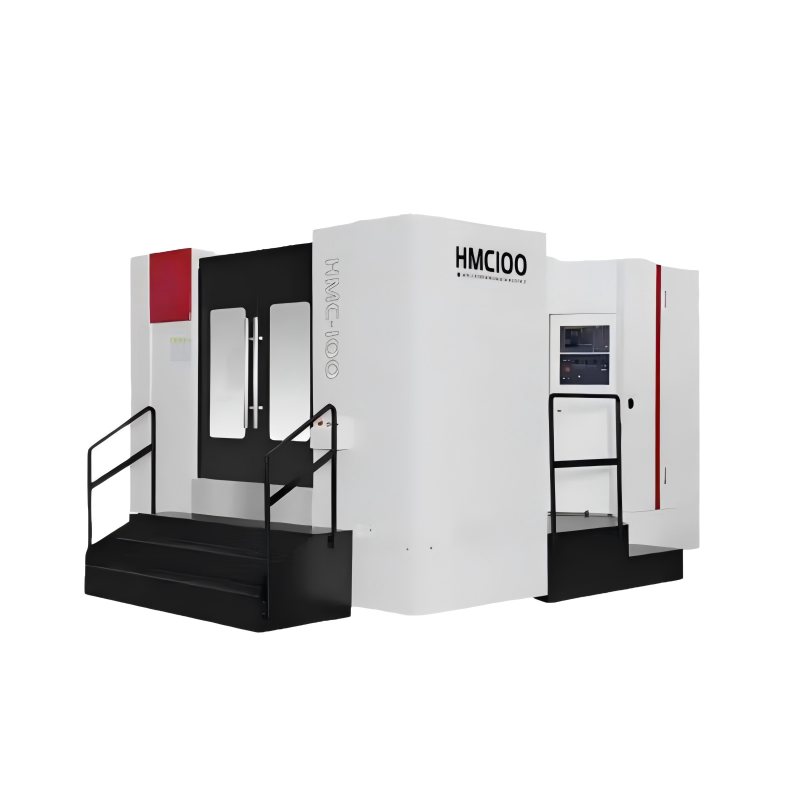
A vertical machining center (VMC) is a type of milling machine where the spindle axis is vertically oriented. This orientation allows for efficient removal of material from the workpiece, making VMCs highly versatile for a wide range of applications. The versatility of a VMC is one of its most significant advantages, as it can handle various materials, including metals, plastics, and composites. Additionally, VMCs can perform multiple operations such as drilling, tapping, reaming, and boring, all on a single setup, reducing the need for additional machinery and minimizing production time.
The ability to integrate with automation systems further enhances the versatility of VMCs. Automated tool changers, pallet changers, and robotic arms can be seamlessly integrated, allowing for continuous operation and increased productivity. This integration is particularly beneficial in high-volume production environments where downtime needs to be minimized.
High Precision and Accuracy
One of the key features of a vertical machining center is its high precision and accuracy. Modern VMCs are equipped with advanced control systems and high-resolution feedback mechanisms, ensuring that every cut is executed with pinpoint accuracy. This level of precision is critical in industries where tolerances are extremely tight, such as aerospace, medical, and automotive manufacturing.
The use of linear scales and encoders, along with thermal compensation systems, helps to maintain consistent accuracy over extended periods. These systems continuously monitor and adjust for any thermal expansion or contraction, which can otherwise affect the dimensional stability of the workpiece. Furthermore, the rigid construction of VMCs, often featuring cast iron or granite bases, contributes to their stability and reduces vibrations, leading to better surface finishes and more accurate parts.
Advanced Control Systems and Software Integration
The heart of a vertical machining center is its control system, which manages all aspects of the machining process. Advanced control systems, such as those found in modern VMCs, offer a range of features that enhance usability and performance. These include intuitive user interfaces, real-time monitoring, and predictive maintenance capabilities. The integration of CAD/CAM software with the control system allows for seamless programming and simulation, enabling operators to visualize the machining process and make adjustments before the actual cutting begins.
Moreover, the ability to connect VMCs to a network for data collection and analysis is becoming increasingly important. This connectivity, often referred to as Industry 4.0, allows for remote monitoring, predictive maintenance, and overall optimization of the manufacturing process. By collecting and analyzing data, manufacturers can identify trends, optimize tool paths, and improve overall efficiency. This level of integration is also beneficial when working with other advanced machinery, such as the Slant bed pipe threading CNC lathe, as it allows for a cohesive and streamlined production environment.
Enhanced Productivity and Efficiency
Vertical machining centers are designed to maximize productivity and efficiency. One of the key factors contributing to this is the rapid tool change capability. Modern VMCs can change tools in a matter of seconds, thanks to advanced automatic tool changers (ATCs). This feature significantly reduces non-cutting time and increases the overall throughput of the machine. Additionally, the use of high-speed spindles, which can reach speeds of up to 20,000 RPM or more, allows for faster material removal rates and shorter cycle times.
Another aspect that enhances productivity is the ability to perform multi-axis machining. Many VMCs now come with 4th and 5th axes, allowing for complex geometries to be machined in a single setup. This not only reduces the need for multiple setups but also ensures higher accuracy and repeatability. The combination of high-speed spindles, rapid tool changes, and multi-axis capabilities makes VMCs an indispensable tool in modern manufacturing.
Conclusion
The advanced features of a vertical machining center, such as versatility, high precision, advanced control systems, and enhanced productivity, make it a vital component in today's manufacturing landscape. These features not only improve the quality and efficiency of the machining process but also enable seamless integration with other advanced machinery, such as the Slant bed pipe threading CNC lathe. As technology continues to evolve, the capabilities of VMCs will undoubtedly expand, further driving innovation and excellence in manufacturing.


 29/06/2026



