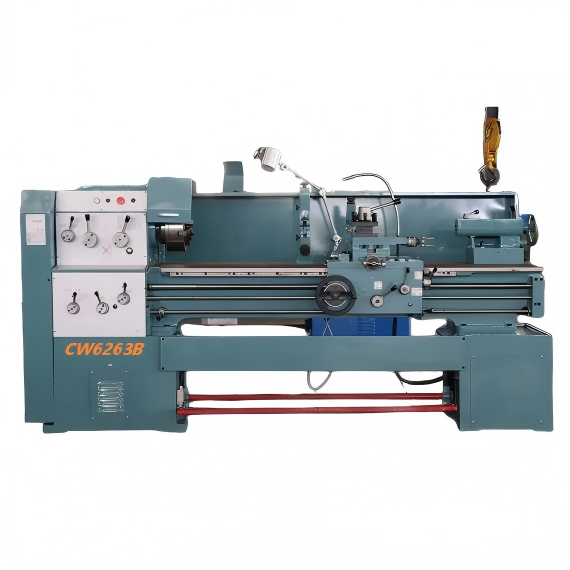
China has long been recognized as a major player in the global manufacturing industry, and its role in shaping the global lathe machine industry is no exception. With a strong focus on innovation, quality, and cost-effectiveness, China lathe manufacturers have made significant contributions to the advancement of lathe technology and the overall growth of the market. This report delves into China's impact on the global lathe machine industry, highlighting key areas where Chinese manufacturers have excelled and the challenges they face.
Over the past few decades, Chinese lathe manufacturers have emerged as formidable competitors in the global market. The rapid industrialization and economic reforms in China have provided a fertile ground for the development of a robust manufacturing sector. This has enabled Chinese companies to invest heavily in research and development, leading to the production of high-quality lathes that meet international standards.
One of the key factors driving the success of Chinese lathe manufacturers is their ability to offer competitive pricing without compromising on quality. By leveraging economies of scale and efficient supply chain management, these manufacturers can produce lathes at a lower cost compared to many of their Western counterparts. This cost advantage has allowed them to capture a significant share of the global market, particularly in developing countries where affordability is a critical factor.
Moreover, Chinese lathe manufacturers have also benefited from government support and incentives aimed at promoting the domestic manufacturing industry. These policies have included tax breaks, subsidies, and access to low-cost financing, which have helped to reduce the barriers to entry and encourage innovation. As a result, Chinese companies have been able to develop advanced technologies and stay at the forefront of the industry.
Innovation is a cornerstone of the global lathe machine industry, and Chinese manufacturers have made significant strides in this area. Many Chinese companies have invested in state-of-the-art facilities and equipment, enabling them to produce lathes with advanced features and capabilities. For example, some Chinese manufacturers have developed CNC (Computer Numerical Control) lathes that offer high precision and efficiency, making them ideal for complex and high-precision machining tasks.
Additionally, Chinese lathe manufacturers have also focused on integrating Industry 4.0 technologies into their products. This includes the use of IoT (Internet of Things) sensors, AI (Artificial Intelligence), and data analytics to enhance the performance and reliability of lathes. These smart lathes can monitor their own operations, detect potential issues, and even perform predictive maintenance, thereby reducing downtime and increasing productivity.
Furthermore, Chinese companies have also been active in developing eco-friendly and energy-efficient lathes. With an increasing emphasis on sustainability, many manufacturers are now producing lathes that consume less power and generate less waste. This not only helps to reduce the environmental impact but also lowers operating costs for end-users, making these lathes more attractive to a wider range of customers.
Despite their remarkable achievements, Chinese lathe manufacturers still face several challenges that could affect their future growth. One of the primary challenges is the need to maintain high quality and consistency across their product lines. As the demand for high-precision and reliable lathes continues to grow, Chinese manufacturers must ensure that their products meet the stringent requirements of global customers. This requires continuous investment in quality control and process improvement.
Another challenge is the increasing competition from other emerging markets, such as India and Southeast Asia. These regions are also investing in their manufacturing sectors and may offer similar cost advantages. To stay ahead, Chinese manufacturers will need to differentiate themselves through innovation and by offering value-added services, such as after-sales support and customization options.
Lastly, geopolitical tensions and trade policies can also impact the global market for lathes. Tariffs and trade restrictions can increase the cost of raw materials and components, affecting the competitiveness of Chinese manufacturers. To mitigate these risks, Chinese companies may need to diversify their supply chains and explore new markets to ensure long-term stability and growth.
In conclusion, Chinese lathe manufacturers have played a pivotal role in shaping the global lathe machine industry. Their focus on innovation, quality, and cost-effectiveness has enabled them to become major players in the market. However, they must continue to address the challenges they face and adapt to changing market conditions to sustain their success in the future.
 09/06/2026
China, a global leader in manufacturing, has established itself as a reliable source for a wide range of industrial machinery, including lathe machines. These machines, which are essential for various machining processes, have seen significant advancement
Read More09/06/2026Understanding the Importance of Regular Maintenance for Horizontal LathesMaintaining your horizontal lathe machine is not just a good practice; it's essential for ensuring its longevity and performance. A China lathe manufacturer, like many other manufact
Read More09/06/2026When it comes to investing in a high-quality horizontal lathe machine, especially from a reputable China lathe manufacturer, there are several key features that you should consider. These features not only ensure the longevity and reliability of the machi
Read More09/06/2026When it comes to equipping your workshop with the right machinery, choosing a horizontal lathe machine is one of the most critical decisions. A well-chosen lathe can significantly enhance productivity, precision, and overall efficiency in your operations.
Read More06/06/2026As the global market continues to evolve, manufacturers across all sectors are seeking ways to stay competitive while maintaining high standards of quality and efficiency. In this context, China lathe manufacturers have emerged as key players, offering ad
Read More06/06/2026China lathe manufacturer has been a pivotal player in the global machinery industry, offering innovative solutions from design to delivery. This report delves into the journey of a China lathe manufacturer, highlighting key stages and processes that contr
Read More05/06/2026In today’s globalized manufacturing landscape, the selection of a reliable lathe manufacturer is crucial for businesses aiming to maintain high standards of production efficiency and product quality. This report delves into why numerous enterprises across
Read More05/06/2026In the ever-evolving world of manufacturing, precision and efficiency are paramount. Among the many players in this field, a China lathe manufacturer stands out for its commitment to quality and innovation. This technical report aims to unveil the secrets
Read More04/06/2026When it comes to choosing a China lathe manufacturer, the decision can significantly impact your production efficiency, product quality, and overall business success. This report aims to guide you through the top considerations that should influence your
Read More04/06/2026Choosing the right China lathe manufacturer is crucial for businesses aiming to enhance their production capabilities while ensuring quality and cost-effectiveness. This technical report aims to guide you through the process of discovering the best China
Read More04/06/2026Exploring the capabilities of a horizontal lathe machine reveals a world of precision, efficiency, and versatility. This technical report delves into the core functionalities and advanced features that make horizontal lathes indispensable in modern manufa
Read More04/06/2026China has long been a global leader in the manufacturing industry, particularly when it comes to precision machinery such as CNC lathes. The country's vast pool of skilled labor, advanced technological capabilities, and competitive pricing have made it a
Read More04/06/2026The Historical Context of China Lathe ManufacturerIn the intricate world of manufacturing, the evolution of precision is a testament to human ingenuity and technological advancement. A China lathe manufacturer has played a pivotal role in this journey, co
Read More04/06/2026When it comes to selecting a China lathe manufacturer, the process can be quite daunting, especially for those who are not well-versed in the intricacies of machine tools. This comprehensive guide aims to provide you with a structured approach to choosing
Read More03/06/2026As a leading China lathe manufacturer, our company has established itself as a reliable and innovative provider of high-precision machining solutions. This report aims to highlight the key aspects that set us apart in the industry, focusing on our experti
Read More03/06/2026In the ever-evolving landscape of manufacturing, the role of precision machinery cannot be overstated. Among these, lathes, a fundamental tool in machining, have seen significant advancements. This report delves into how a China lathe manufacturer is shap
Read More02/06/2026Introduction to China Lathe Manufacturing ExcellenceThe rise of China as a global manufacturing powerhouse has been nothing short of spectacular. Among the many industries that have seen significant growth, the machine tool sector, particularly lathe manu
Read More02/06/2026As the manufacturing industry continues to evolve, finding a reliable and efficient China lathe manufacturer is crucial for businesses looking to stay competitive. This report aims to explore the leading China lathe manufacturer in 2023, providing insight
Read More02/06/2026In the rapidly evolving world of manufacturing, China lathe manufacturer has taken a significant step forward by embracing advanced CNC (Computer Numerical Control) technology. This report delves into how this integration not only enhances productivity bu
Read More02/06/2026In the rapidly evolving landscape of manufacturing, finding a reliable China lathe manufacturer is crucial for businesses aiming to optimize their production processes. This report delves into the key factors that make a leading China lathe manufacturer s
Read More02/06/2026China has long been a leader in the manufacturing industry, and one of its most prominent sectors is the production of lathes. A China lathe manufacturer is not just another player in the global market; it represents a significant force that is constantly
Read MoreOur professional sales team is always ready to assist you.