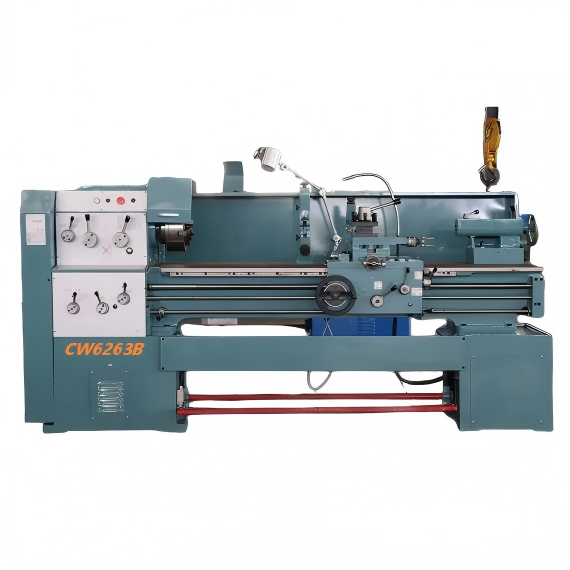
In the realm of precision manufacturing, the CNC lathe for long shaft machining stands out as a critical tool. This article delves into the advanced techniques and methodologies employed in the precision machining of long shafts using CNC Lathes, providing insights that are both technically sound and practically applicable.
The machining of long shafts presents unique challenges due to their length and the need for high precision. One of the primary issues is maintaining consistent accuracy over the entire length of the shaft. As the shaft gets longer, the risk of deflection and vibration increases, which can lead to inaccuracies in the final product. Additionally, the setup and alignment of the workpiece on the CNC lathe for long shaft machining require meticulous attention to ensure that the cutting tools engage the material at the correct angles and depths.
Another challenge is the management of thermal expansion. During the machining process, the friction between the cutting tool and the workpiece generates heat, which can cause the material to expand. For long shafts, this thermal expansion can be significant, leading to dimensional errors if not properly managed. To mitigate these issues, it is essential to use coolant effectively and to maintain a stable operating environment.
One of the key factors in achieving high-precision long shaft machining is the optimization of tool paths. The tool path, or the sequence of movements made by the cutting tool, must be carefully planned to minimize the risk of chatter, tool wear, and surface finish imperfections. Advanced CAD/CAM software can be used to generate optimal tool paths, taking into account the specific geometry of the long shaft and the properties of the material being machined.
When programming the CNC lathe for long shaft machining, it is important to consider the feed rate, spindle speed, and depth of cut. These parameters must be balanced to achieve the desired surface finish and dimensional accuracy while also maximizing productivity. For instance, a higher feed rate can increase the material removal rate but may also increase the risk of tool chatter and surface roughness. Conversely, a lower feed rate can improve surface finish but may reduce overall efficiency.
Additionally, the use of adaptive toolpaths can further enhance the machining process. Adaptive toolpaths adjust the cutting parameters in real-time based on the feedback from the machine, ensuring that the cutting forces remain within acceptable limits and minimizing the risk of tool breakage and part damage.
Effective fixturing is crucial for the successful machining of long shafts. The fixture must securely hold the workpiece while allowing for the necessary degrees of freedom for the cutting tool to access all areas of the shaft. Traditional clamping methods, such as chucks and collets, can be effective for shorter shafts, but they may not provide the necessary support for longer workpieces.
For long shaft machining, specialized fixtures, such as steady rests and tailstocks, are often used. Steady rests provide additional support at intermediate points along the shaft, reducing the risk of deflection and ensuring that the workpiece remains straight during the machining process. Tailstocks, on the other hand, provide support at the end of the shaft, helping to maintain the axial alignment and preventing the workpiece from moving during the operation.
Furthermore, the use of live centers can enhance the precision of the machining process. Live centers have rotating points that support the workpiece, reducing the friction and wear that can occur with fixed centers. This is particularly important for long shafts, where even small amounts of friction can lead to significant deflection and loss of accuracy.
Achieving a consistent surface finish and tight tolerances is a critical aspect of long shaft machining. The surface finish of a long shaft can significantly impact its performance, especially in applications where smooth surfaces are required, such as in bearing journals or sealing surfaces. To ensure a high-quality surface finish, it is essential to use the appropriate cutting tools and machining parameters.
For fine finishing operations, diamond-tipped tools or ceramic inserts can be used to achieve a mirror-like surface finish. These tools are known for their ability to produce very smooth surfaces with minimal tool marks. Additionally, the use of honing or superfinishing processes after the initial machining can further refine the surface finish, ensuring that it meets the required specifications.
Tolerance control is equally important in long shaft machining. The CNC lathe for long shaft machining must be capable of holding tight tolerances, often within microns. This requires precise calibration of the machine, regular maintenance, and the use of high-precision measuring instruments. In-process inspection using coordinate measuring machines (CMMs) or optical comparators can help to verify that the dimensions of the shaft are within the specified tolerances throughout the machining process.
The CNC lathe for long shaft machining is an indispensable tool in the precision manufacturing industry. By understanding the challenges associated with long shaft machining and implementing advanced techniques such as optimized tool paths, specialized fixturing solutions, and stringent quality control measures, manufacturers can achieve high levels of accuracy and surface finish. These techniques not only enhance the quality of the final product but also contribute to increased productivity and cost-effectiveness in the long run.
 16/06/2026
The manufacturing industry has seen a significant transformation with the advent of Computer Numerical Control (CNC) technology. Among the various applications, the role of CNC lathes in high-quality long shaft manufacturing stands out as particularly cru
Read More16/06/2026In the realm of precision engineering, advancements in technology have continuously pushed the boundaries of what is possible, especially when it comes to machining long shafts. The CNC lathe, a cornerstone of modern manufacturing, has seen significant in
Read MoreOur professional sales team is always ready to assist you.