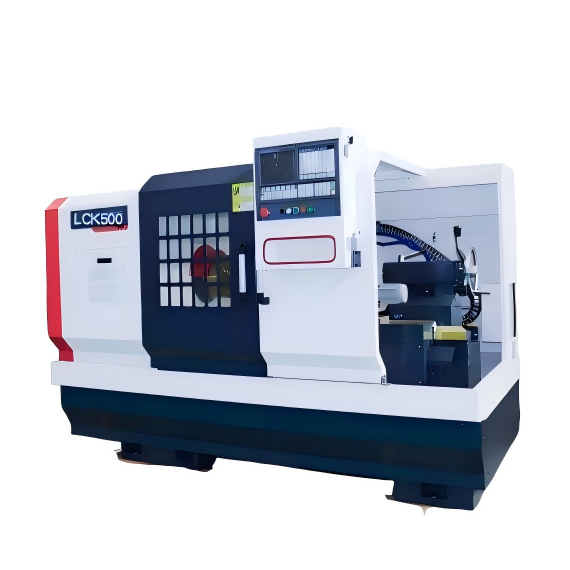
CNC Machining: The Future of Precision Manufacturing is a topic that has garnered significant attention in the industrial and manufacturing sectors. As technology continues to advance, Computer Numerical Control (CNC) machining stands out as a critical component in achieving high-precision, efficient, and cost-effective production processes. This report aims to explore the current state of CNC machining, its evolution, and how it is shaping the future of precision manufacturing.
The journey of CNC machining began in the 1940s with the development of the first numerical control (NC) machines. These early systems used punched tape to control machine tools, marking the beginning of automated manufacturing. Over the decades, advancements in computer technology have led to the integration of microprocessors, which significantly enhanced the capabilities of NC machines, giving birth to what we now know as CNC machines.
Today, CNC machines are capable of performing a wide range of operations, from simple cutting and drilling to complex multi-axis milling and turning. The evolution of CNC technology has been driven by the need for higher precision, faster processing times, and greater flexibility in manufacturing. Modern CNC systems are equipped with advanced software and hardware that allow for real-time monitoring, adaptive control, and seamless integration with other manufacturing processes.
CNC machining offers several advantages that make it indispensable in precision manufacturing. One of the most significant benefits is the ability to achieve high levels of accuracy and repeatability. CNC machines can produce parts with tolerances as tight as a few micrometers, ensuring that each part meets the exact specifications required. This level of precision is crucial in industries such as aerospace, automotive, and medical, where even the slightest deviation can have serious consequences.
Another advantage of CNC machining is its efficiency. Unlike manual machining, which requires skilled operators and is prone to human error, CNC machines can operate continuously without fatigue. This results in faster production times and lower labor costs. Additionally, CNC machines can be programmed to perform multiple operations on a single part, reducing the need for multiple setups and further increasing efficiency.
Flexibility is also a key advantage of CNC machining. With the ability to quickly reprogram and adapt to new designs, CNC machines can handle a wide variety of materials and part geometries. This makes them ideal for both small-batch and large-scale production, allowing manufacturers to respond quickly to changing market demands.
Despite its many advantages, CNC machining is not without its challenges. One of the primary challenges is the initial investment required for CNC equipment and software. High-quality CNC machines can be expensive, and the learning curve for programming and operating these machines can be steep. However, the long-term benefits of increased productivity, reduced waste, and improved quality often outweigh the initial costs.
Maintenance and downtime are also significant concerns in CNC machining. Regular maintenance is essential to ensure the longevity and performance of CNC machines. Downtime due to maintenance or repairs can lead to production delays and increased costs. To address this, manufacturers are increasingly adopting predictive maintenance strategies, which use data analytics and sensors to monitor machine health and predict potential failures before they occur.
Another challenge is the need for skilled operators and programmers. While CNC machines reduce the need for manual labor, they still require knowledgeable personnel to set up, program, and maintain the machines. Training programs and educational initiatives are being developed to help bridge the skills gap and ensure that the workforce is equipped with the necessary knowledge and skills to operate CNC machines effectively.
The future of CNC machining is closely tied to ongoing technological advancements. One of the most promising areas of innovation is the integration of artificial intelligence (AI) and machine learning (ML) into CNC systems. AI and ML can optimize machining parameters, improve tool life, and enhance overall machine performance. For example, AI algorithms can analyze data from sensors to detect anomalies and adjust machining parameters in real-time, leading to more consistent and higher-quality parts.
Additive manufacturing, or 3D printing, is another area that is likely to intersect with CNC machining in the future. Hybrid machines that combine subtractive (CNC) and additive (3D printing) capabilities are already in development. These hybrid machines can produce complex, multi-material parts with internal structures that would be impossible to create using traditional methods. This combination of technologies opens up new possibilities for design and manufacturing, enabling the creation of lighter, stronger, and more functional parts.
Finally, the trend towards Industry 4.0 and smart manufacturing is driving the development of more connected and intelligent CNC systems. The Internet of Things (IoT) and cloud computing are being integrated into CNC machines, allowing for real-time data collection, remote monitoring, and predictive analytics. This connectivity enables manufacturers to optimize their production processes, reduce waste, and improve overall efficiency.
CNC machining has come a long way since its inception, and it continues to play a vital role in precision manufacturing. The evolution of CNC technology, combined with its numerous advantages, makes it an indispensable tool for modern manufacturing. While there are challenges to overcome, ongoing innovations and advancements in AI, additive manufacturing, and Industry 4.0 are poised to further enhance the capabilities of CNC machining. As the industry moves forward, CNC machining will undoubtedly remain at the forefront of precision manufacturing, driving efficiency, quality, and innovation.
 May 29, 2026
The automotive industry, a cornerstone of modern manufacturing, has been undergoing significant transformations driven by technological advancements. One such innovation that is reshaping the sector's landscape is Computer Numerical Control (CNC) technolo
Read MoreOur professional sales team is always ready to assist you.