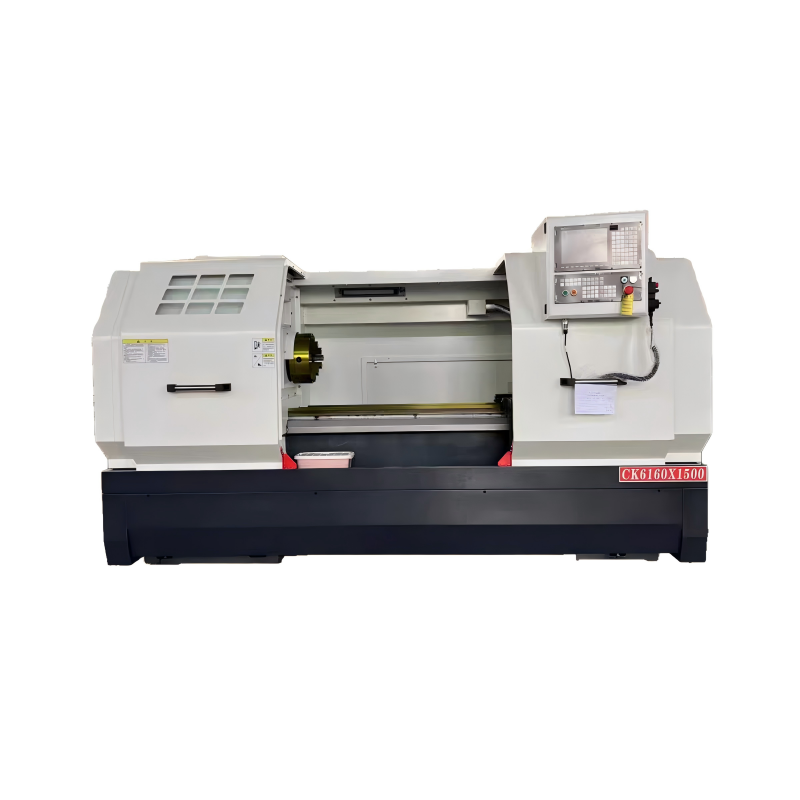
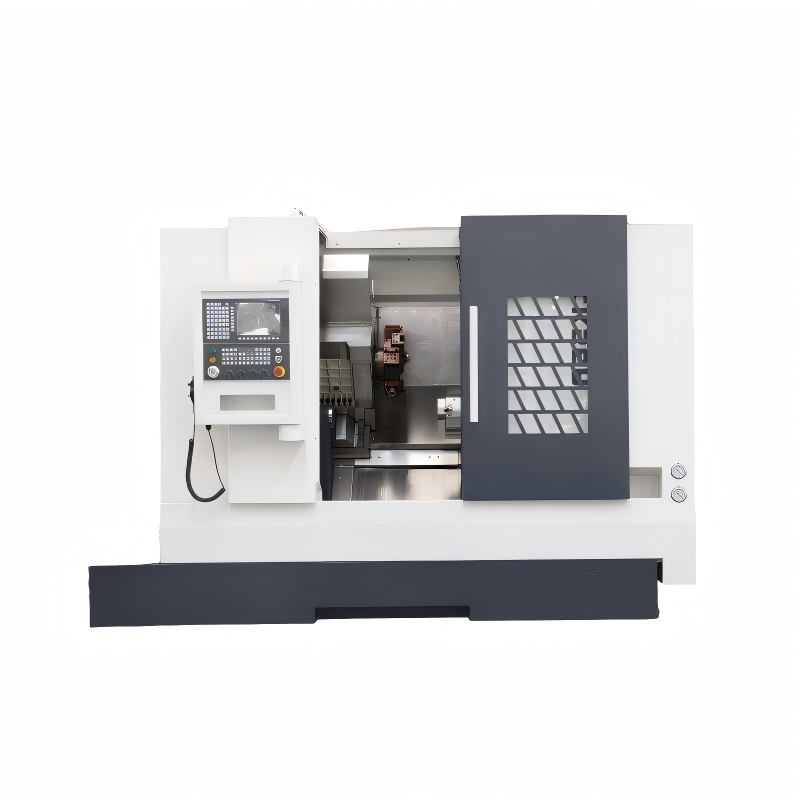
The CNC pipe threading lathe is a sophisticated machine designed to enhance the efficiency and accuracy of pipe threading operations. This technology has revolutionized the way pipes are prepared for connections, especially in industries that require high precision and consistency. The term CNC stands for Computer Numerical Control, which means these lathes operate under the guidance of pre-programmed software, allowing for precise control over the cutting process. Unlike traditional methods, where human operators manually adjust the settings, CNC pipe threading lathes use digital inputs to perform complex tasks with minimal error.
One of the key advantages of using a CNC pipe threading lathe is its ability to produce threads with high repeatability. This ensures that each thread produced meets the exact specifications required, reducing the likelihood of errors and improving overall quality. Additionally, these machines can handle a wide range of pipe sizes and materials, making them versatile tools for various applications. By automating the threading process, manufacturers can significantly increase their productivity while maintaining high standards of workmanship.
The introduction of automation in pipe threading processes via CNC pipe threading lathes marks a significant advancement in manufacturing technology. Automation not only reduces the need for manual labor but also enhances the speed and accuracy of production. In an era where time is of the essence, the ability to quickly and accurately thread pipes can give businesses a competitive edge. With CNC pipe threading lathes, the setup time is drastically reduced, as the machine can be programmed to perform specific tasks without the need for constant human intervention.
Moreover, the use of automated systems in pipe threading allows for continuous operation, even during off-peak hours or overnight. This 24/7 capability increases the output capacity of a facility, leading to higher productivity levels. The reduction in human error, combined with the consistent performance of the machine, results in a more reliable and efficient production process. For industries that rely on timely and accurate pipe threading, such as oil and gas, plumbing, and construction, the adoption of CNC pipe threading lathes can be a game-changer.
Quality and consistency are paramount in any manufacturing process, and pipe threading is no exception. A CNC pipe threading lathe plays a crucial role in ensuring that every thread produced is of the highest standard. The precision engineering of these machines allows for the creation of threads that meet strict industry standards and specifications. By using advanced algorithms and sensors, the lathe can detect and correct any deviations in real-time, resulting in a uniform and high-quality product.
Furthermore, the ability to program the CNC pipe threading lathe with specific parameters ensures that the same level of quality is maintained across all batches. This is particularly important in industries where safety and reliability are critical, such as in the construction of pipelines and infrastructure. Consistent and high-quality threading not only enhances the durability and longevity of the pipes but also reduces the risk of leaks and other potential failures. As a result, the use of CNC pipe threading lathes contributes to the overall integrity and performance of the final products.
While the initial investment in a CNC pipe threading lathe may seem substantial, the long-term benefits far outweigh the costs. One of the most significant advantages is the reduction in labor costs. With the automation provided by CNC technology, the need for skilled labor is minimized, leading to lower operational expenses. Additionally, the increased productivity and efficiency of these machines mean that more work can be completed in less time, further reducing the cost per unit.
Another cost-saving aspect is the reduction in material waste. CNC pipe threading lathes are designed to optimize the use of raw materials, minimizing scrap and rework. This not only saves money but also contributes to a more sustainable manufacturing process. The precision and consistency of the threading process also reduce the likelihood of defects, which can be costly to rectify. Over time, the savings from reduced labor, material, and defect costs can lead to a significant return on investment (ROI) for the business.
The manufacturing industry is constantly evolving, and staying ahead of the curve is essential for long-term success. CNC pipe threading lathes are at the forefront of this evolution, offering the flexibility and adaptability needed to keep up with changing demands. As new materials and technologies emerge, these machines can be easily updated and reprogrammed to accommodate new requirements. This adaptability ensures that businesses can remain competitive and responsive to market needs.
Looking ahead, the integration of advanced technologies such as artificial intelligence (AI) and the Internet of Things (IoT) into CNC pipe threading lathes holds even more promise. AI can be used to optimize the programming and operation of the machines, while IoT can enable real-time monitoring and predictive maintenance. These advancements will further enhance the efficiency, accuracy, and reliability of pipe threading processes, driving the industry towards a more connected and intelligent future.
 17/06/2026
In the ever-evolving landscape of manufacturing, precision and efficiency are paramount. The advent of Computer Numerical Control (CNC) technology has revolutionized the way we approach machining, with CNC pipe threading lathe being a prime example of how
Read More16/06/2026The advent of advanced CNC (Computer Numerical Control) pipe threading lathe technologies has significantly transformed the manufacturing landscape, particularly in sectors that rely heavily on precision and efficiency. This document aims to explore how t
Read More16/06/2026In the world of precision engineering, a CNC pipe threading lathe is an indispensable tool for creating threads on pipes and other cylindrical parts. These machines are designed to provide high accuracy and repeatability, making them ideal for both small-
Read More16/06/2026The advent of Computer Numerical Control (CNC) technology has significantly transformed various industries, including the plumbing sector. One of the most notable innovations is the CNC pipe threading lathe, which has revolutionized how pipes are threaded
Read More16/06/2026Understanding the Basics of CNC Pipe Threading LathesThe world of machining has seen a significant transformation with the advent of Computer Numerical Control (CNC) technology, which includes the CNC pipe threading lathe. This equipment is specifically d
Read More16/06/2026In the realm of modern machining, the CNC pipe threading lathe stands out as a remarkable innovation, combining precision with efficiency. This report delves into the intricacies of this advanced machinery, exploring its technical specifications, operatio
Read MoreOur professional sales team is always ready to assist you.