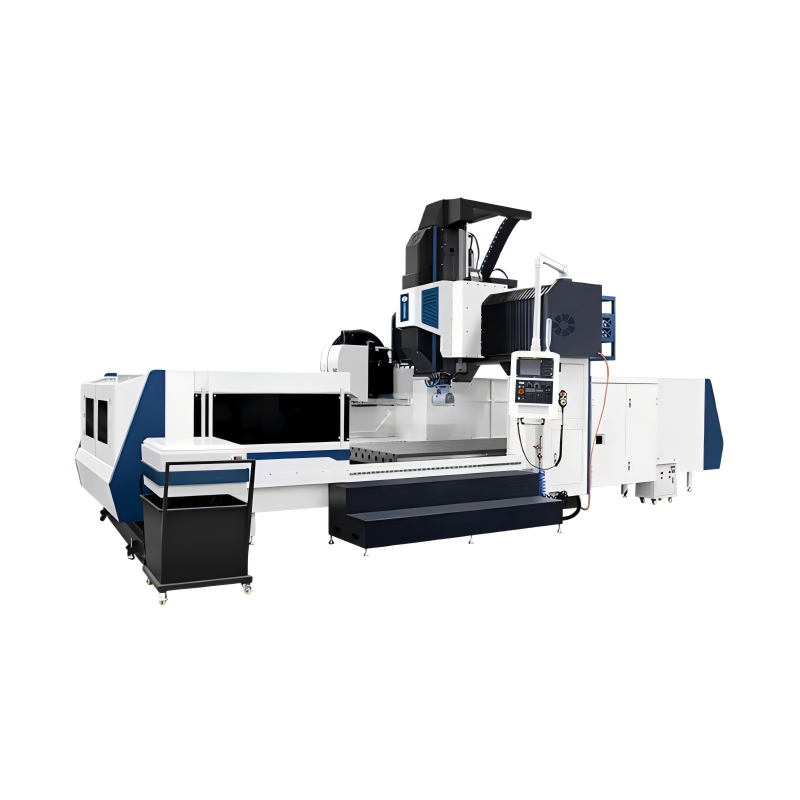
In the realm of modern manufacturing, precision and efficiency are paramount. The integration of multi-axis CNC workcells has revolutionized how complex parts are machined, offering unparalleled accuracy and versatility. This report delves into the transformative impact of multi-axis CNC workcells on manufacturing processes, exploring their role in enhancing precision, reducing production time, and improving overall product quality. By examining the latest advancements and best practices, this document aims to provide a comprehensive understanding of how multi-axis CNC workcells can be leveraged to achieve superior manufacturing outcomes.
Multi-axis CNC workcells offer enhanced machining capabilities by allowing for more complex geometries and intricate designs. With the ability to move along multiple axes simultaneously, these systems can produce parts with higher precision and complexity than traditional 3-axis machines. This capability is particularly valuable in industries such as aerospace, automotive, and medical devices, where intricate and precise components are essential.
One of the key advantages of multi-axis CNC workcells is the reduction in setup time and tool changes. These systems can perform multiple operations in a single setup, eliminating the need for frequent repositioning and recalibration. This not only speeds up the production process but also minimizes the risk of errors and inconsistencies, leading to higher quality products and increased productivity.
Multi-axis CNC workcells are equipped with advanced control systems that enable precise and accurate machining. These systems use high-resolution encoders and sophisticated algorithms to ensure that the cutting tool follows the programmed path with minimal deviation. This level of control is crucial for achieving tight tolerances and consistent results, which are critical in high-precision applications.
Optimizing the tool path is another way multi-axis CNC workcells enhance precision. Advanced CAM software can generate highly efficient tool paths that minimize vibration, reduce wear on the cutting tool, and improve surface finish. By carefully planning the tool path, manufacturers can achieve optimal material removal rates while maintaining the highest levels of accuracy and surface quality.
Multi-axis CNC workcells can be integrated with other automation technologies, such as robotic arms and conveyor systems, to create a fully automated production line. This integration allows for seamless part handling, loading, and unloading, significantly reducing manual labor and increasing throughput. Additionally, the use of automation ensures consistent and repeatable processes, further enhancing productivity and efficiency.
Modern multi-axis CNC workcells often come with real-time monitoring and data analysis capabilities. Sensors and IoT (Internet of Things) devices can collect data on machine performance, tool condition, and part quality, providing valuable insights for continuous improvement. By analyzing this data, manufacturers can identify and address potential issues before they become major problems, leading to reduced downtime and improved overall equipment effectiveness (OEE).
While the initial investment in multi-axis CNC workcells may be higher compared to traditional machining methods, the long-term cost savings can be substantial. These systems reduce the need for multiple setups and tool changes, leading to lower labor costs and faster production times. Additionally, the ability to produce high-precision parts with fewer defects reduces scrap and rework, further lowering operational costs.
Multi-axis CNC workcells offer scalability and flexibility, allowing manufacturers to adapt to changing market demands and production requirements. These systems can be easily reprogrammed to handle different part geometries and materials, making them ideal for both small-batch and high-volume production. The flexibility of multi-axis CNC workcells ensures that manufacturers can stay competitive and responsive to market trends, ultimately driving higher returns on investment.
The integration of artificial intelligence (AI) and machine learning (ML) is one of the most promising trends in multi-axis CNC workcells. AI and ML can be used to optimize tool paths, predict maintenance needs, and even detect and correct errors in real-time. These technologies have the potential to further enhance the precision and efficiency of multi-axis CNC workcells, making them even more valuable in the manufacturing industry.
Another exciting development is the integration of additive manufacturing (AM) with multi-axis CNC workcells to create hybrid systems. These hybrid systems combine the benefits of both subtractive and additive manufacturing, allowing for the creation of complex parts with unique geometries and internal structures. This combination opens up new possibilities for innovation and design, enabling manufacturers to push the boundaries of what is possible in terms of part complexity and functionality.
 05/06/2026
In the realm of advanced manufacturing, the multi-axis CNC workcell stands out as a pinnacle of precision and versatility. This report delves into the capabilities of such a system, exploring its potential to transform production processes through enhance
Read More05/06/2026In this comprehensive guide, we will delve into the intricate world of multi-axis CNC workcells, providing an in-depth look at their design, functionality, and applications. The multi-axis CNC workcell is a sophisticated manufacturing system that enables
Read More05/06/2026A Comprehensive Guide to Choosing the Right Multi-Axis CNC Workcell offers an in-depth analysis of the key factors that influence the selection process for multi-axis CNC workcells. This guide is designed to help manufacturers and engineers make informed
Read More05/06/2026In the rapidly evolving landscape of automotive manufacturing, multi-axis CNC workcells have emerged as a transformative force, significantly enhancing production efficiency, precision, and flexibility. These advanced systems are not only revolutionizing
Read More04/06/2026With the rapid advancements in manufacturing technology, multi-axis CNC workcells have emerged as a game-changer, transforming industries by enhancing productivity, precision, and flexibility. These advanced systems are capable of performing complex opera
Read More04/06/2026In the realm of modern manufacturing, multi-axis CNC workcells have emerged as a transformative force, reshaping how products are designed and produced. These advanced systems, which combine multiple axes of motion with computer numerical control (CNC), o
Read More04/06/2026In the realm of advanced manufacturing, the multi-axis CNC workcell stands out as a beacon of precision and flexibility. This technology integrates multiple axes of movement, allowing for complex geometries to be machined with unparalleled accuracy. The m
Read More04/06/2026In the rapidly evolving landscape of manufacturing, the integration of advanced technologies such as multi-axis CNC workcells is reshaping the industry. These sophisticated systems are not only enhancing productivity and precision but also enabling manufa
Read More04/06/2026In today's competitive manufacturing landscape, maximizing efficiency is crucial for staying ahead. A multi-axis CNC workcell offers a powerful solution to enhance productivity and precision. This report explores the benefits of integrating a multi-axis C
Read More04/06/2026In the rapidly evolving landscape of manufacturing, multi-axis CNC (Computer Numerical Control) workcells are emerging as a transformative force. These advanced systems offer unparalleled precision, flexibility, and efficiency, making them indispensable i
Read More04/06/2026In today's manufacturing landscape, the selection of an appropriate multi-axis CNC workcell is critical for enhancing productivity, precision, and flexibility. This technical report aims to guide manufacturers through the process of choosing the right mul
Read More04/06/2026In today's fast-paced manufacturing environment, the integration of a multi-axis CNC workcell can significantly enhance productivity and efficiency. This report delves into how adopting such advanced machinery not only optimizes production processes but a
Read More04/06/2026In the rapidly evolving landscape of precision machining, the multi-axis CNC workcell stands out as a transformative technology. This advanced manufacturing solution not only enhances the efficiency and accuracy of production processes but also opens up n
Read More04/06/2026In the rapidly evolving landscape of modern manufacturing, the integration of multi-axis CNC workcells has become a game-changer. These advanced systems offer unparalleled precision, flexibility, and efficiency, enabling manufacturers to produce complex p
Read MoreOur professional sales team is always ready to assist you.