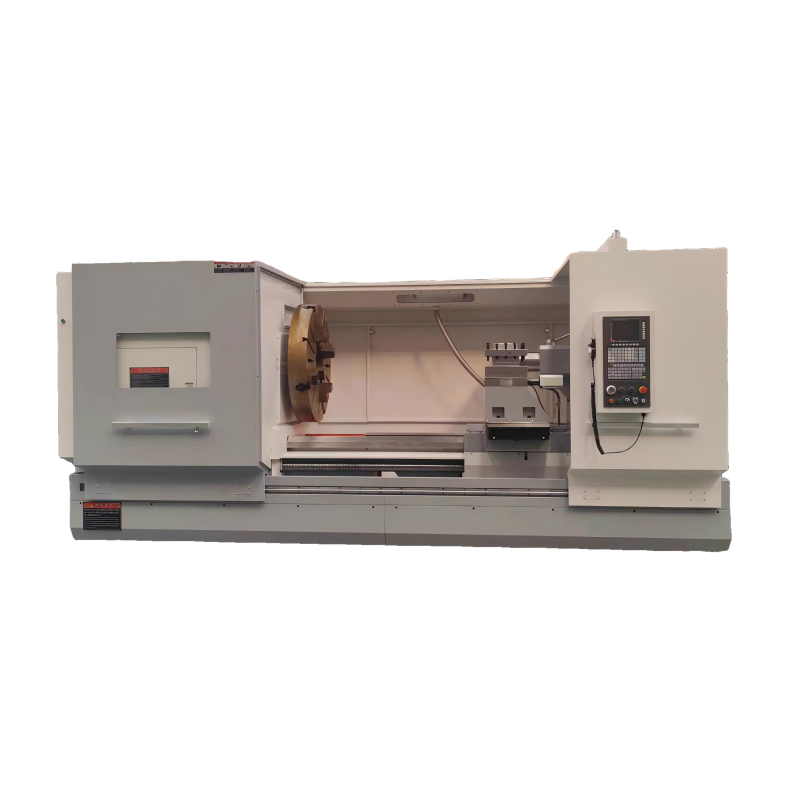
In the world of precision manufacturing, the role of CNC lathes cannot be overstated. These machines are pivotal for producing parts with high accuracy and repeatability. Among the various components that contribute to a CNC Lathe's performance, the guiding system, particularly the hard rails, plays a crucial role in enhancing stability. This report delves into how Box way / Hard rail CNC lathe configurations improve operational stability, focusing on several key aspects.
Hard rails, often referred to as box ways, are solid, robust structures that provide the linear motion guidance for the moving parts of a CNC lathe. Unlike linear guides, which use ball bearings or rollers, hard rails utilize a sliding mechanism. The contact area between the rail and the moving component is significantly larger, leading to enhanced rigidity and load-bearing capacity. This design is particularly advantageous in heavy-duty applications where the machine is subjected to high cutting forces and vibrations.
The material composition of hard rails is another critical factor. Typically made from high-quality cast iron or steel, these materials offer excellent wear resistance and durability. The surface of the rails is often hardened through processes like induction hardening or flame hardening, further increasing their lifespan and reducing maintenance needs. The combination of these factors ensures that the Box way / Hard rail CNC lathe can maintain its precision over extended periods, even under demanding conditions.
One of the most significant advantages of using hard rails in a CNC lathe is the superior vibration damping they provide. During machining operations, vibrations can lead to tool chatter, poor surface finish, and reduced tool life. The large contact area and the inherent rigidity of hard rails help to absorb and dissipate these vibrations more effectively than other guiding systems. This results in smoother operation and improved part quality.
Moreover, the damping properties of hard rails are further enhanced by the use of lubricants. Proper lubrication not only reduces friction but also helps to stabilize the sliding motion, ensuring consistent and predictable performance. In many cases, automated lubrication systems are integrated into the Box way / Hard rail CNC lathe to ensure continuous and optimal lubrication, thereby maintaining the highest levels of stability and accuracy.
The ability to handle heavy loads is a defining characteristic of hard rail systems. The large contact area between the rail and the moving components distributes the load more evenly, reducing the risk of deformation and wear. This is particularly important in applications involving large or heavy workpieces, where the machine must maintain its structural integrity and precision.
Rigidity is another key benefit. The rigid structure of hard rails minimizes deflection, ensuring that the tool path remains accurate even under high cutting forces. This is essential for achieving tight tolerances and complex geometries. The increased rigidity also contributes to the overall stability of the machine, allowing it to perform consistently across a wide range of operating conditions. For manufacturers, this means higher productivity, better part quality, and lower scrap rates, all of which translate into cost savings and improved efficiency.
Hard rails are known for their long-term durability, which is a critical factor in the total cost of ownership (TCO) of a CNC lathe. The robust construction and wear-resistant materials used in hard rails mean that they can withstand the rigors of daily use with minimal wear and tear. This longevity is further supported by regular maintenance practices, such as proper lubrication and periodic inspection.
Maintenance of hard rails is relatively straightforward compared to other guiding systems. The primary focus is on keeping the rails clean and well-lubricated. Many modern Box way / Hard rail CNC lathe systems come equipped with advanced lubrication systems that automatically apply the right amount of lubricant at the right intervals, reducing the need for manual intervention. Additionally, the wear patterns of hard rails are predictable, making it easier to plan for and execute preventive maintenance, thus extending the life of the machine and minimizing downtime.
The integration of hard rails in CNC lathes, such as the Box way / Hard rail CNC lathe, offers numerous benefits that enhance the overall performance and reliability of the machine. From superior vibration damping and increased load capacity to long-term durability and ease of maintenance, hard rails provide a robust solution for a wide range of manufacturing applications. As technology continues to advance, the role of hard rails in CNC lathes will remain a cornerstone of precision and stability, ensuring that manufacturers can meet the demands of an ever-evolving industry.
 16/06/2026
In the realm of heavy-duty CNC lathe applications, the choice between box way and hard rail systems is a critical decision that can significantly impact the performance, durability, and overall efficiency of the machine. This technical report delves into
Read More16/06/2026In the realm of precision manufacturing, CNC lathes are indispensable tools that demand meticulous maintenance to ensure optimal performance and longevity. Among the various components of a CNC lathe, the box way, also known as the hard rail, plays a crit
Read More16/06/2026In the realm of precision machining, CNC lathes are indispensable tools that enable manufacturers to produce parts with high accuracy and efficiency. Among the different types of CNC lathes, those equipped with hard rail systems, also known as box way lat
Read More15/06/2026Understanding the Basics of Box Way Technology in CNC LathesIn the realm of precision machining, the choice between box way and linear guide systems for CNC lathe applications significantly impacts overall performance. Box ways, also known as box slides,
Read More15/06/2026In the realm of modern manufacturing, precision is not just a preference but a necessity. One of the key components that ensure this precision in CNC lathes is the box way or hard rail system. This technical report aims to provide an in-depth understandin
Read MoreOur professional sales team is always ready to assist you.