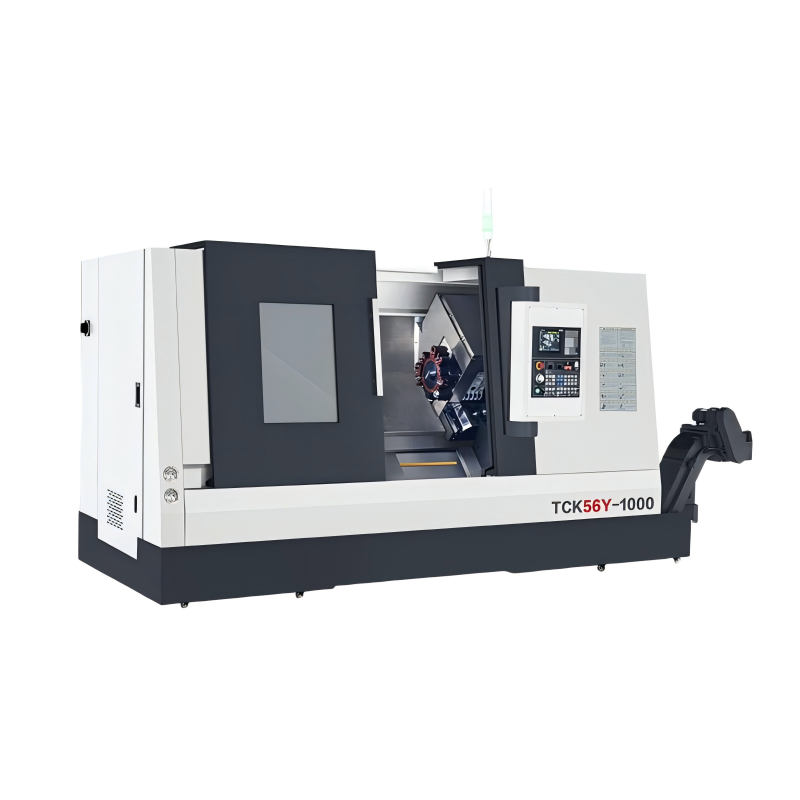
Heavy-duty vertical CNC Machining Centers are pivotal in modern manufacturing, offering precision, versatility, and efficiency. These machines are designed to handle large and complex parts, making them indispensable for industries such as aerospace, automotive, and heavy machinery. This report aims to explore how to maximize the efficiency of a Heavy-duty vertical CNC machining center, focusing on several key areas that can significantly enhance performance and productivity.
One of the primary factors influencing the efficiency of a heavy-duty vertical CNC machining center is the choice and management of cutting tools. High-quality, durable tools not only ensure consistent performance but also reduce downtime due to tool changes and maintenance. It is essential to select tools that are specifically designed for the materials and operations at hand. For example, carbide tools are ideal for high-speed cutting of hard materials, while diamond-coated tools offer excellent wear resistance for abrasive materials.
Tool management systems (TMS) can further enhance efficiency by automating the process of tool selection, monitoring, and replacement. A TMS tracks the usage and condition of each tool, allowing operators to replace them before they reach their end of life. This proactive approach minimizes unexpected tool failures, which can lead to costly production delays. Additionally, advanced TMS can optimize tool paths and cutting parameters, ensuring that the machine operates at its highest efficiency.
Effective programming is another critical aspect of maximizing the efficiency of a heavy-duty vertical CNC machining center. Modern CAM (Computer-Aided Manufacturing) software provides powerful tools for generating efficient toolpaths, optimizing cutting speeds, and reducing cycle times. One of the most significant advancements in this area is the use of high-speed machining (HSM) techniques. HSM involves using smaller, faster cuts with higher feed rates, which can significantly reduce machining time and improve surface finish.
Another important technique is adaptive machining, where the machine automatically adjusts its cutting parameters based on real-time feedback from sensors. This dynamic adjustment ensures that the machine is always operating at optimal conditions, even when faced with variations in material properties or part geometry. Adaptive machining can also help in extending tool life by avoiding excessive wear and tear.
Simulation and verification tools within CAM software are also crucial for identifying potential issues before the actual machining process begins. By simulating the entire machining operation, operators can detect collisions, optimize toolpaths, and ensure that the final product meets all quality standards. This pre-emptive approach saves time and reduces the risk of errors, leading to more efficient and reliable production.
Regular maintenance and effective monitoring are essential for keeping a heavy-duty vertical CNC machining center in top condition. Preventive maintenance schedules should be established to ensure that all components, including the spindle, bearings, and linear guides, are regularly inspected and serviced. This proactive approach helps in identifying and addressing potential issues before they become major problems, thereby minimizing downtime and repair costs.
Condition monitoring systems (CMS) play a vital role in maintaining the health of the machine. These systems continuously monitor key parameters such as vibration, temperature, and power consumption. Any deviations from normal operating conditions can be detected early, allowing for timely corrective actions. For instance, an increase in vibration levels may indicate a misaligned component or worn-out bearing, which can be addressed before it leads to a catastrophic failure.
Additionally, predictive maintenance technologies, such as machine learning algorithms, can analyze historical data to predict future maintenance needs. This data-driven approach allows for more precise scheduling of maintenance activities, ensuring that the machine is always in optimal condition. By integrating these advanced monitoring and maintenance practices, manufacturers can significantly improve the reliability and longevity of their heavy-duty vertical CNC machining centers.
Efficient workflow and automation are key to maximizing the productivity of a heavy-duty vertical CNC machining center. One effective way to streamline the workflow is through the implementation of automated material handling systems. These systems, such as robotic arms and pallet changers, can load and unload workpieces, reducing the need for manual intervention and minimizing setup times. Automated material handling not only increases throughput but also improves safety by reducing the risk of operator injury.
Another aspect of workflow optimization is the integration of the CNC machining center with other manufacturing processes. For example, a fully integrated system can include pre-machining inspection, machining, post-machining inspection, and even finishing processes. This seamless integration ensures that parts move smoothly through the production line, reducing bottlenecks and improving overall efficiency.
Automation can also extend to the programming and setup stages. Offline programming and simulation tools allow operators to prepare and verify programs without interrupting the machine's operation. This means that the next job can be ready to go as soon as the current one is completed, eliminating idle time. Furthermore, the use of standardized fixtures and modular tooling systems can reduce setup times, making it easier to switch between different jobs and configurations.
Maximizing the efficiency of a heavy-duty vertical CNC machining center requires a holistic approach that encompasses tool selection and management, advanced programming techniques, enhanced maintenance and monitoring practices, and streamlined workflow and automation. By implementing these strategies, manufacturers can achieve higher productivity, improved quality, and reduced costs. As technology continues to advance, staying up-to-date with the latest trends and best practices will be crucial for maintaining a competitive edge in the manufacturing industry.
 25/06/2026
The field of manufacturing has seen significant advancements over the years, with the heavy-duty vertical CNC machining center being a prime example. This piece of equipment is not just a tool but a technological marvel that brings together precision, eff
Read MoreOur professional sales team is always ready to assist you.