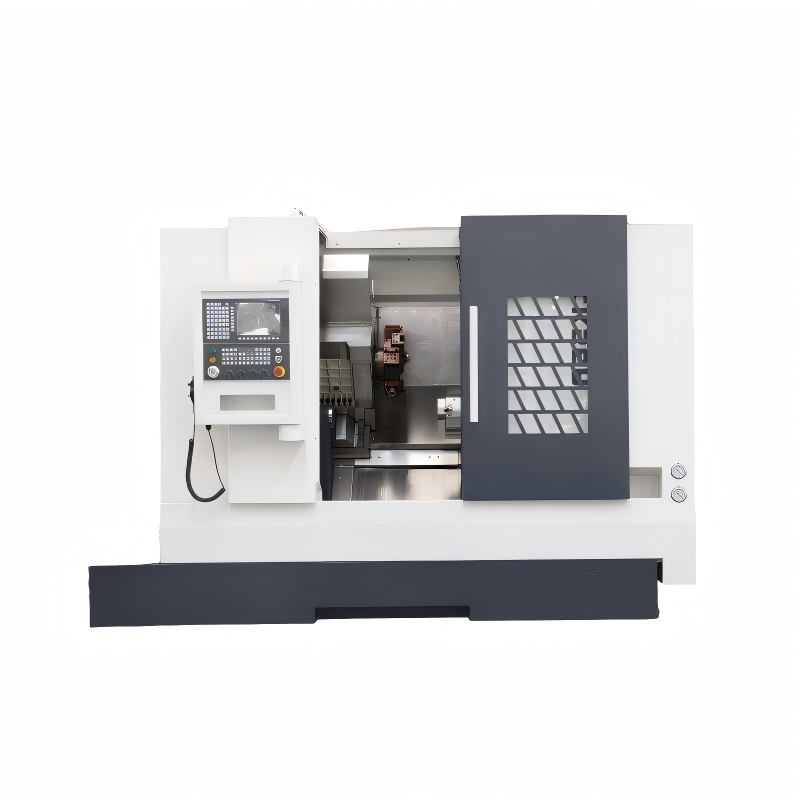
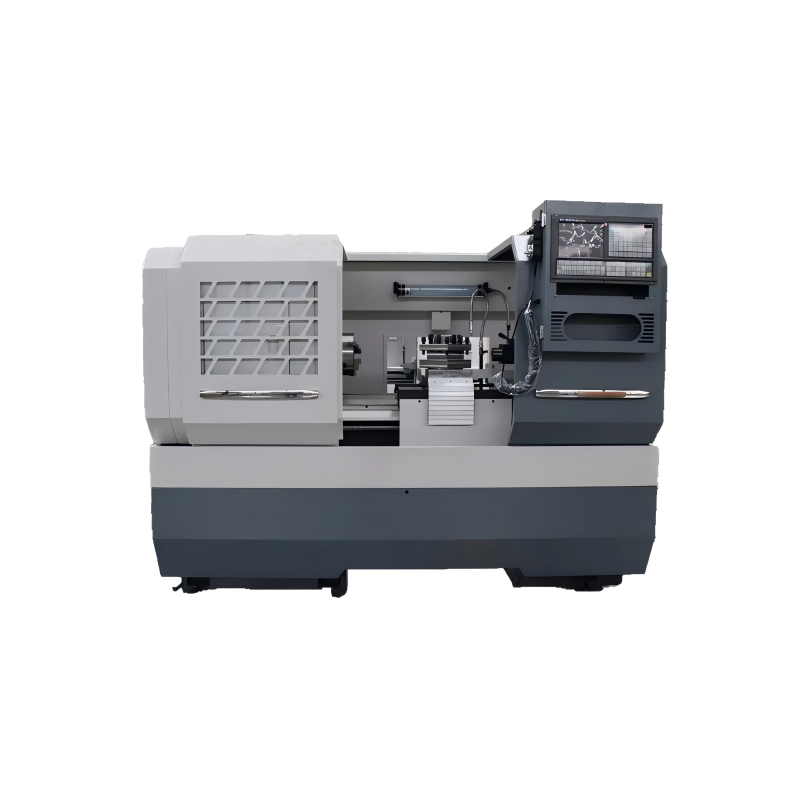
In the realm of modern manufacturing, precision and efficiency are paramount. A CNC lathe with flat bed represents a significant advancement in machining technology, offering unparalleled accuracy and versatility. This article delves into how to optimize your manufacturing process using a CNC Lathe with flat bed, exploring its capabilities, setup, and maintenance to ensure maximum productivity.
A CNC (Computer Numerical Control) lathe with flat bed is designed to provide high-precision turning operations. The flat bed design allows for greater stability and rigidity, which is crucial for maintaining tight tolerances and achieving consistent results. These machines are equipped with advanced control systems that can handle complex programming, enabling the production of intricate and precise parts. The ability to automate the machining process not only increases efficiency but also reduces the likelihood of human error, leading to higher quality products.
One of the key advantages of a CNC lathe with flat bed is its adaptability. It can be used for a wide range of materials, including metals, plastics, and composites. The machine's robust construction and powerful motors make it suitable for both small-batch and large-scale production runs. Additionally, the flat bed design provides a stable platform for the workpiece, reducing vibrations and ensuring smooth operation. This stability is particularly important when working with delicate or thin-walled components, where even the slightest movement can affect the final product's quality.
Proper setup and programming are critical for maximizing the efficiency of a CNC lathe with flat bed. Before starting any machining operation, it is essential to ensure that the machine is properly calibrated and that all tools and fixtures are correctly installed. This includes checking the alignment of the tooling, the clamping force, and the positioning of the workpiece. A well-calibrated machine will produce more accurate and consistent results, reducing the need for rework and minimizing scrap.
Programming the CNC lathe with flat bed requires a deep understanding of the machine's capabilities and the specific requirements of the part being machined. Modern CAD/CAM software can help streamline the programming process by generating toolpaths and G-code automatically. However, it is still important to review and fine-tune the code to ensure optimal performance. Factors such as cutting speed, feed rate, and tool selection should be carefully considered to achieve the best balance between productivity and tool life. Additionally, incorporating features like adaptive toolpaths and high-speed machining techniques can further enhance the machine's efficiency and reduce cycle times.
To ensure the long-term performance and reliability of a CNC lathe with flat bed, regular maintenance is essential. A well-maintained machine will not only operate more efficiently but also have a longer lifespan. Key maintenance tasks include cleaning the machine, lubricating moving parts, and inspecting for wear and tear. Regularly cleaning the machine removes debris and coolant residue, which can accumulate over time and affect the machine's performance. Lubrication is crucial for reducing friction and preventing premature wear on moving parts. It is also important to inspect the machine for signs of wear, such as worn bearings or damaged seals, and replace them as needed.
Another important aspect of maintenance is keeping the machine's control system up to date. Software updates often include bug fixes, performance improvements, and new features that can enhance the machine's capabilities. Regularly updating the control system ensures that the CNC lathe with flat bed is operating at its full potential. Additionally, training operators and maintenance personnel on the proper use and care of the machine is crucial. Well-trained staff can identify and address issues before they become major problems, helping to maintain the machine's performance and minimize downtime.
Quality control is a critical component of any manufacturing process, and a CNC lathe with flat bed is no exception. Implementing effective quality control measures ensures that the parts produced meet the required specifications and standards. One of the most important aspects of quality control is the use of in-process inspection. This involves regularly checking the dimensions and surface finish of the parts during the machining process. In-process inspection allows for early detection of any deviations from the desired specifications, enabling corrective action to be taken before the entire batch is affected.
Another key aspect of quality control is the use of statistical process control (SPC). SPC involves collecting and analyzing data on various process parameters, such as cutting speeds, feed rates, and tool wear. By monitoring these parameters, it is possible to identify trends and patterns that may indicate potential issues. SPC can help in making data-driven decisions to optimize the machining process and improve overall quality. Additionally, implementing a robust documentation system is essential for maintaining traceability and accountability. Keeping detailed records of the machining process, including setup parameters, tooling, and inspection results, ensures that any issues can be traced back to their source and addressed effectively.
Advancements in technology have opened up new possibilities for enhancing the productivity of a CNC lathe with flat bed. Integrating advanced technologies such as automation, robotics, and Industry 4.0 solutions can significantly improve the efficiency and flexibility of the manufacturing process. Automation, for example, can be used to load and unload workpieces, change tools, and perform other repetitive tasks. This not only reduces the workload on operators but also minimizes the risk of human error. Robotic systems can be integrated with the CNC lathe to create a fully automated cell, capable of running unattended for extended periods.
Industry 4.0 technologies, such as the Internet of Things (IoT) and artificial intelligence (AI), can also be leveraged to optimize the performance of a CNC lathe with flat bed. IoT sensors can be used to monitor the machine's condition in real-time, providing valuable data on factors such as temperature, vibration, and power consumption. This data can be analyzed using AI algorithms to predict potential failures and schedule preventive maintenance, reducing downtime and extending the machine's lifespan. Additionally, AI can be used to optimize the machining process by dynamically adjusting parameters based on real-time data, ensuring that the machine is always operating at its peak efficiency.
A CNC lathe with flat bed is a powerful tool for optimizing your manufacturing process. By understanding its capabilities, properly setting up and programming the machine, and maintaining it for long-term performance, you can achieve high levels of precision and efficiency. Implementing quality control measures and integrating advanced technologies can further enhance the machine's productivity and ensure consistent, high-quality results. With the right approach, a CNC lathe with flat bed can be a game-changer for your manufacturing operations.
 16/06/2026
In the realm of precision machining, the CNC lathe with flat bed stands out as a versatile and indispensable tool. This article delves into the role of CNC lathes with flat bed in precision machining, exploring their capabilities, advantages, and the impa
Read More15/06/2026In the realm of modern manufacturing, precision and efficiency are paramount. One tool that has significantly contributed to these aspects is the CNC lathe with flat bed. This article delves into the capabilities of such machines, exploring their unique f
Read More15/06/2026Introduction to CNC Lathes with Flat BedA CNC lathe with flat bed represents a significant advancement in the field of machining, offering precision, efficiency, and versatility. This type of lathe is distinguished by its design, which features a flat sur
Read More28/05/2026The development of CNC (Computer Numerical Control) lathes has revolutionized the manufacturing industry, offering unparalleled precision and efficiency. Among the many design considerations that go into creating a high-performance CNC lathe, the flat bed
Read More28/05/2026In the realm of precision machining, the CNC lathe with flat bed stands out as a versatile tool capable of producing high-accuracy parts efficiently. This type of machine is particularly popular in industries where both speed and accuracy are paramount. H
Read More28/05/2026In the realm of precision machining, the CNC lathe with flat bed stands out as a versatile and highly efficient tool. This report delves into the advantages of using a CNC lathe with flat bed, providing insights into its operational benefits, application
Read MoreOur professional sales team is always ready to assist you.