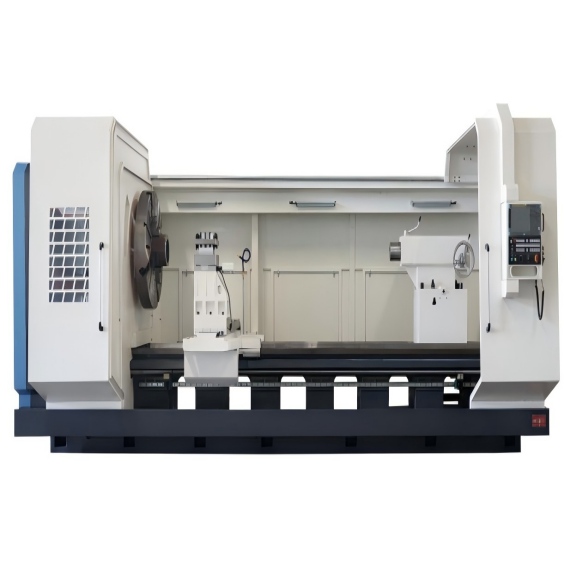
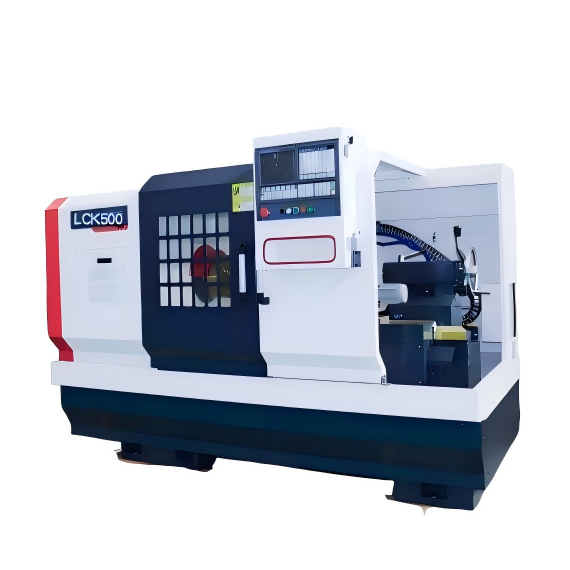
The manufacturing industry has seen significant advancements over the years, with precision and accuracy becoming paramount in parts production. Among the tools that have contributed to this progress, the Box Way VMC (Vertical Machining Center) machine stands out for its ability to achieve high levels of accuracy. This report explores how the Box Way VMC Machine contributes to precision in parts production, drawing a parallel with the Slant Bed Lathe, another critical tool in the machining world. It will discuss the specific features and operational advantages of the Box Way VMC, as well as how it compares to other machining technologies.
The Box Way VMC is a type of CNC (Computer Numerical Control) machine designed for vertical milling operations. Unlike traditional VMCs that use linear guides, the Box Way VMC employs box ways, which are known for their robustness and stability. These box ways provide a solid foundation for the machine's moving components, ensuring minimal deflection and vibration during operation. The result is a higher level of precision and repeatability, making the Box Way VMC an ideal choice for applications where tight tolerances are required.
One of the key features of the Box Way VMC is its rigid structure, which includes a heavy-duty base and column. This design helps to absorb vibrations and maintain the machine's stability, even when cutting at high speeds or under heavy loads. Additionally, the box ways are typically made from high-quality materials such as cast iron, which further enhances the machine's durability and performance.
The Box Way VMC offers several advantages that make it particularly well-suited for high-accuracy parts production. One of the primary benefits is its exceptional rigidity, which is crucial for maintaining dimensional accuracy and surface finish quality. The box ways, with their large contact area, distribute the load more evenly, reducing wear and tear on the machine and ensuring consistent performance over time.
Another advantage is the Box Way VMC's ability to handle a wide range of materials, including those that are difficult to machine. The robust construction and stable platform allow for efficient and precise machining of materials such as hardened steels, titanium, and other alloys. This versatility makes the Box Way VMC a valuable asset in industries that require high-precision components, such as aerospace, automotive, and medical device manufacturing.
Furthermore, the Box Way VMC is equipped with advanced control systems and software, which enable operators to program complex machining operations with ease. These systems often include features like automatic tool changers, coolant systems, and real-time monitoring, all of which contribute to the overall efficiency and accuracy of the machining process.
While the Box Way VMC excels in high-accuracy parts production, it is important to compare it with other machining technologies to understand its unique strengths and limitations. For example, the Slant Bed Lathe, a common tool in turning operations, also plays a critical role in achieving precision in parts production. However, the two machines serve different purposes and have distinct characteristics.
The Slant Bed Lathe is specifically designed for turning operations, where the workpiece is rotated while a cutting tool removes material. Its slanted bed design provides better chip evacuation and improved access to the workpiece, making it suitable for long, slender parts. In contrast, the Box Way VMC is more versatile, capable of performing a wide range of milling, drilling, and tapping operations. While the Slant Bed Lathe is excellent for turning, the Box Way VMC is better suited for complex 3D shapes and multi-axis machining.
Another key difference is the method of movement. The Slant Bed Lathe typically uses linear guides, which offer less rigidity compared to the box ways of the VMC. This means that while the Slant Bed Lathe can achieve high precision in turning, it may not be as stable or accurate in more demanding milling operations. On the other hand, the Box Way VMC's rigid structure and box ways make it more suitable for heavy-duty and high-precision milling tasks.
Beyond its precision capabilities, the Box Way VMC also offers several features that enhance productivity and efficiency in the manufacturing process. One such feature is the automatic tool changer, which allows for quick and seamless transitions between different tools. This reduces downtime and increases the overall throughput of the machine. Additionally, the machine's advanced control systems enable operators to program and execute complex machining sequences with minimal setup time.
Real-time monitoring and diagnostic tools are another key feature of the Box Way VMC. These tools allow operators to monitor the machine's performance, detect any issues, and make adjustments in real-time. This not only improves the quality of the parts produced but also helps to prevent costly errors and downtime. Furthermore, the Box Way VMC's ability to handle multiple operations in a single setup reduces the need for additional setups and handling, leading to a more streamlined and efficient production process.
In conclusion, the Box Way VMC machine plays a vital role in achieving high accuracy in parts production. Its robust design, advanced control systems, and versatility make it an indispensable tool in modern manufacturing. While the Slant Bed Lathe is excellent for turning operations, the Box Way VMC offers superior stability and precision for milling and other complex machining tasks. By leveraging the strengths of the Box Way VMC, manufacturers can produce high-precision components with greater efficiency and reliability, ultimately contributing to the success of their operations.
 22/06/2026
The landscape of manufacturing is constantly evolving, driven by advancements in technology and the increasing demand for precision and efficiency. Among these developments, the Slant Bed Lathe, particularly the Economic Horizontal CNC Lathe from China, s
Read More28/05/2026The advent of the Slant Bed Lathe has significantly transformed the landscape of metalworking industries, marking a pivotal shift in manufacturing technologies. This technical report delves into the evolution, advantages, and future prospects of the slant
Read More28/05/2026Introduction to Slant Bed Lathes The evolution of manufacturing technology has brought about significant advancements in the field, one of which is the introduction and adoption of slant bed lathes. These machines, designed with a tilted bed, offer a uniq
Read More28/05/2026The evolution of machining technology has seen the introduction and widespread adoption of various types of lathes, each designed to cater to specific needs in precision engineering. Among these, the slant bed lathe stands out as a versatile and efficient
Read MoreOur professional sales team is always ready to assist you.