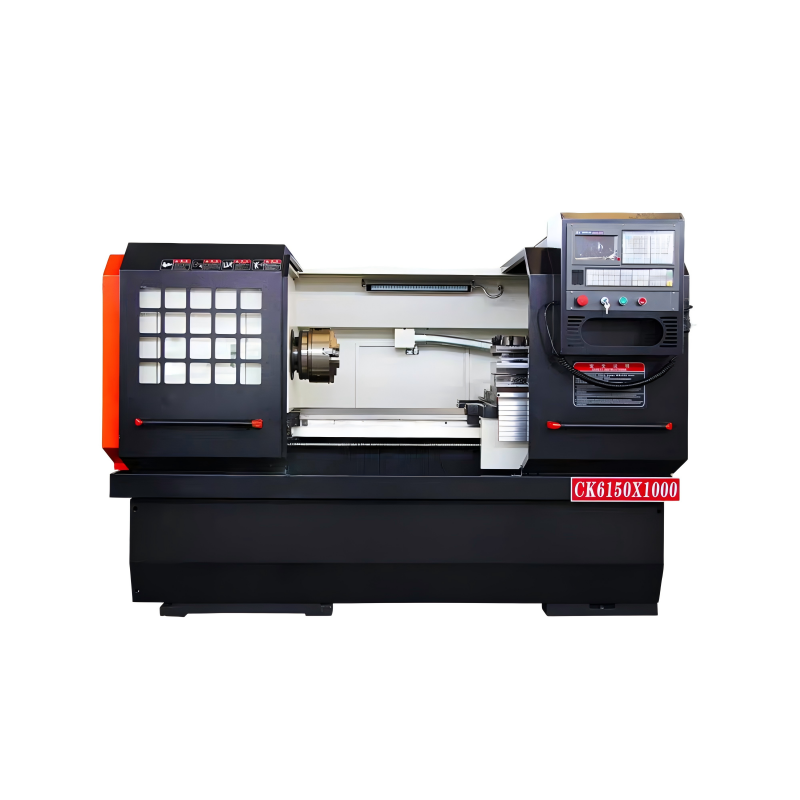
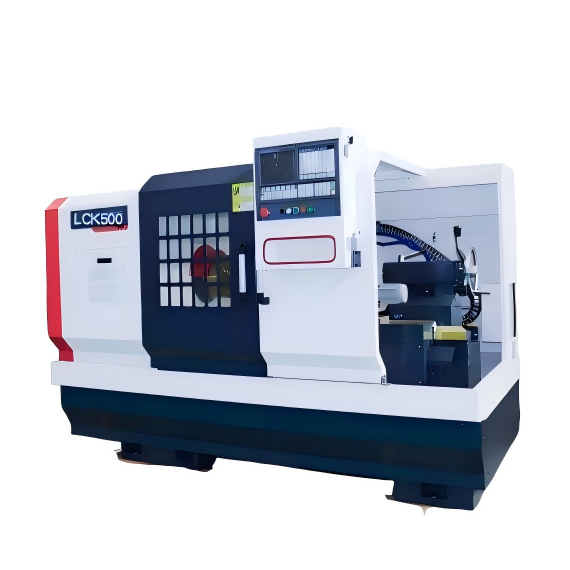
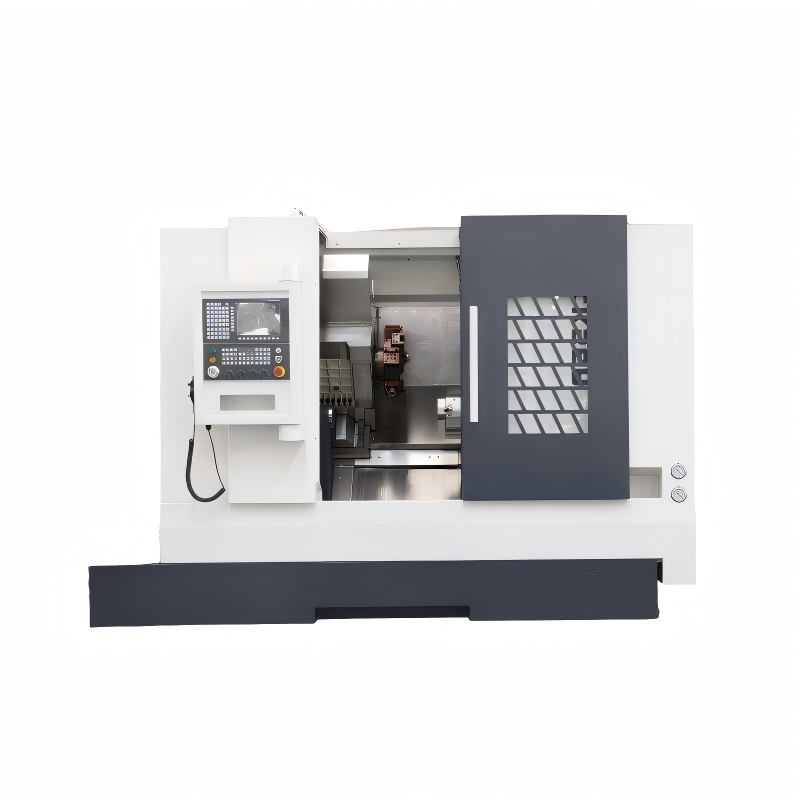
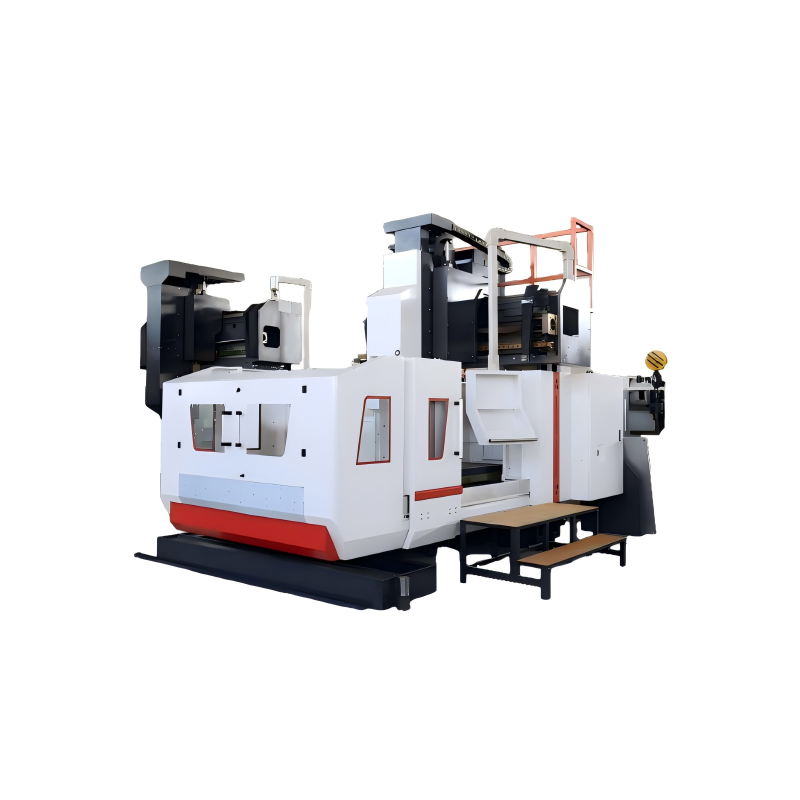
In the realm of precision engineering, the role of Machining Centers cannot be overstated. These sophisticated machines, including models like the CK6150, are pivotal in transforming raw materials into highly accurate components that meet stringent industry standards. This report delves into how machining centers, particularly those equipped with advanced features, contribute to the field of precision engineering. It will explore the capabilities, advantages, and future prospects of these technologies.
Machining centers, such as the CK6150, are distinguished by their advanced control systems, which play a crucial role in achieving high levels of precision. The integration of CNC (Computer Numerical Control) technology allows for the automation of complex operations, ensuring that each component is manufactured to exact specifications. CNC systems use digital instructions from a computer-aided design (CAD) file to guide the machine's movements, enabling the production of parts with tolerances as tight as a few micrometers. This level of accuracy is essential in industries such as aerospace, automotive, and medical devices, where even the slightest deviation can lead to catastrophic failures or suboptimal performance.
The CK6150, for instance, leverages a robust CNC system that not only controls the cutting process but also monitors and adjusts parameters in real-time. This capability ensures consistent quality and reduces the likelihood of errors, thereby enhancing overall productivity. Additionally, the use of servo motors and feedback sensors further refines the precision of the machining center, allowing for smoother and more controlled movements. The result is a manufacturing process that is both efficient and reliable, capable of producing high-precision components at scale.
One of the most significant advancements in machining centers is the integration of multi-axis capabilities. Traditional 3-axis machines are limited to moving along three linear axes: X, Y, and Z. However, modern machining centers, including the CK6150, often incorporate additional rotational axes, such as A, B, and C, to enable the machining of complex geometries. This multi-axis capability is particularly valuable in precision engineering, where components may have intricate shapes and require precise machining from multiple angles.
For example, in the aerospace industry, turbine blades and engine components often have complex curved surfaces and internal structures that require high-precision machining. The CK6150, with its 5-axis capability, can handle such tasks with ease, ensuring that all surfaces are machined to the required specifications. The ability to rotate the workpiece or the cutting tool during the machining process eliminates the need for multiple setups, reducing setup time and increasing overall efficiency. Moreover, multi-axis machining minimizes the risk of positional errors, as the entire machining process can be completed in a single setup, leading to higher accuracy and better surface finishes.
Another key advantage of modern machining centers is their versatility in handling a wide range of materials. The CK6150, for instance, is designed to work with various metals, including aluminum, steel, titanium, and exotic alloys, as well as non-metallic materials such as composites and plastics. This material versatility is crucial in precision engineering, where different applications may require different materials with varying properties.
High-speed machining (HSM) is another feature that sets modern machining centers apart. HSM involves using high spindle speeds and feed rates to achieve faster material removal while maintaining high precision. The CK6150, equipped with a high-speed spindle, can perform HSM, significantly reducing cycle times and increasing productivity. HSM also results in better surface finishes and reduced tool wear, as the cutting forces are distributed over a smaller area, leading to less heat generation and improved tool life. This capability is particularly beneficial in industries where high-volume production and quick turnaround times are critical, such as the automotive and electronics sectors.
The integration of automation technologies is a key trend in the evolution of machining centers. Automated systems, such as robotic arms, pallet changers, and automated tool changers, enhance the efficiency and productivity of machining centers. The CK6150, for example, can be configured with an automatic tool changer (ATC) that allows for rapid and seamless switching between different tools, minimizing downtime and maximizing throughput. Additionally, the use of pallet changers enables the continuous operation of the machining center, as one workpiece can be loaded while another is being machined.
Furthermore, the integration of machining centers with other manufacturing processes, such as inspection and assembly, through Industry 4.0 technologies, enhances the overall efficiency of the production line. Real-time data collection and analysis, enabled by sensors and IoT (Internet of Things) devices, allow for predictive maintenance and optimized production planning. This integration not only improves the reliability of the machining process but also ensures that any issues are detected and addressed promptly, reducing the risk of defects and rework.
The future of machining centers in precision engineering is promising, with ongoing advancements in technology driving further improvements in precision, speed, and automation. One emerging trend is the use of artificial intelligence (AI) and machine learning (ML) to optimize machining processes. AI algorithms can analyze large datasets to identify patterns and make real-time adjustments to the machining parameters, leading to enhanced precision and efficiency. For example, AI can predict tool wear and suggest optimal cutting conditions, thereby extending tool life and reducing costs.
Another trend is the development of hybrid machining centers that combine traditional subtractive manufacturing with additive manufacturing (AM) techniques. Hybrid machines, like the CK6150, can perform both milling and 3D printing, allowing for the creation of complex parts with unique geometries. This combination of technologies opens up new possibilities in design and manufacturing, enabling the production of lightweight and highly functional components with reduced material waste.
In conclusion, machining centers, such as the CK6150, play a vital role in precision engineering by providing the necessary precision, versatility, and efficiency. With continued advancements in control systems, multi-axis capabilities, material handling, and automation, these machines are poised to drive the next wave of innovation in manufacturing. As the industry evolves, the integration of AI, ML, and hybrid manufacturing techniques will further enhance the capabilities of machining centers, ensuring they remain at the forefront of precision engineering.
 14/06/2026
In the world of precision machining, the CK6150 lathe stands out as a reliable and efficient solution for turning operations. This technical report delves into why the CK6150 is the go-to choice for many manufacturing professionals. We will explore its ad
Read More14/06/2026The CK6150 is a sophisticated machine tool that has been designed to provide high precision and efficiency in manufacturing processes. This technical report aims to offer an in-depth analysis of the CK6150's interface, focusing on its control systems, use
Read More14/06/2026The CK6150, a versatile and highly efficient CNC lathe, has significantly impacted the operational capabilities of small to medium-sized production facilities. This report delves into how the CK6150 has revolutionized machining processes, enhanced product
Read More10/06/2026The CK6150 lathe machine represents a significant advancement in machining technology, offering versatility and precision that can greatly enhance the capabilities of any workshop. This report delves into how integrating the CK6150 into your setup can not
Read More08/06/2026Understanding the maintenance requirements of the CK6150 lathe is crucial for ensuring its longevity and optimal performance. This technical report delves into the various aspects of maintaining this versatile machine, covering everything from routine che
Read More07/06/2026The CK6150, a versatile CNC lathe, plays an increasingly significant role in the modern manufacturing landscape. This report delves into how the CK6150 contributes to enhancing efficiency, precision, and flexibility across various industrial applications.
Read More06/06/2026Exploring the potential of the CK6150 in a workshop environment reveals how this versatile machine can significantly enhance productivity and operational efficiency. By understanding its capabilities, from precision machining to automation, operators can
Read More05/06/2026Understanding the advanced features of the CK6150 lathe is crucial for both novice and experienced machinists looking to optimize their production processes. This technical report delves into the intricacies of the CK6150, highlighting its precision, vers
Read More04/06/2026CK6150 is a versatile CNC lathe machine designed for precision machining applications. This article provides an in-depth technical analysis of the CK6150, covering its key features, operational capabilities, and how it stands out in the competitive landsc
Read MoreOur professional sales team is always ready to assist you.