In the realm of precision machining, the Turning Hard Rail CNC Lathe stands out as a critical tool for achieving high accuracy and efficiency. This article delves into the techniques and best practices that can be employed to maximize the potential of a Turning Hard Rail CNC Lathe, ensuring that machined parts meet the highest standards of quality and precision.
Understanding the Fundamentals of Turning Hard Rail CNC Lathes
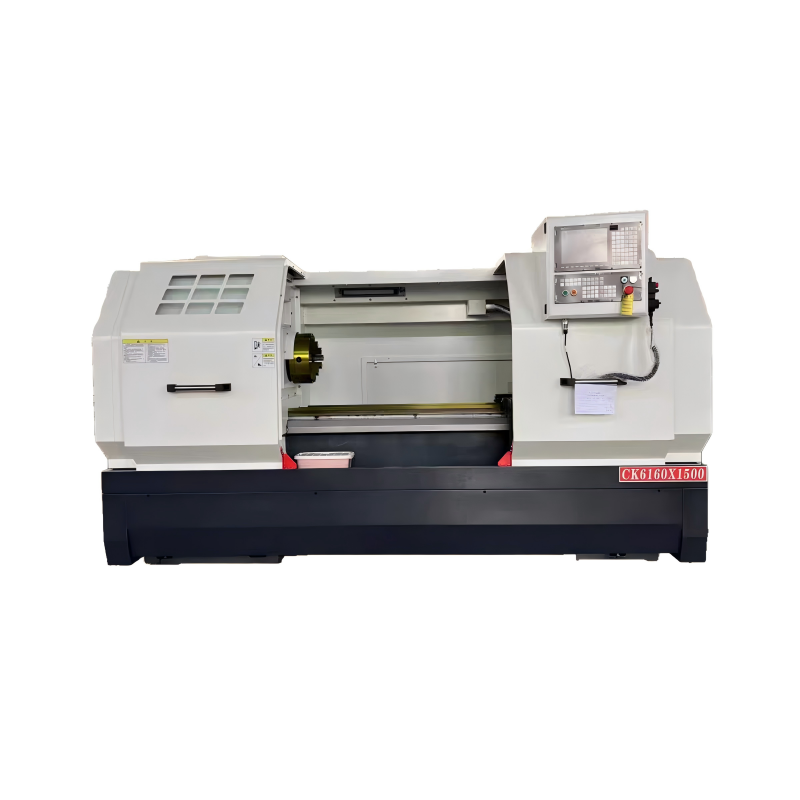
A Turning Hard Rail CNC Lathe is a specialized machine designed for turning operations, where the workpiece rotates while the cutting tool remains stationary or moves along a linear path. The "hard rail" in this context refers to the rigid, stable structure of the lathe, which is essential for maintaining accuracy during high-precision machining. The CNC (Computer Numerical Control) aspect allows for precise control over the cutting process, enabling complex shapes and tight tolerances to be achieved with ease.
The stability and precision of a Turning Hard Rail CNC Lathe are crucial for applications that require high repeatability and minimal deviation. These machines are commonly used in industries such as aerospace, automotive, and medical device manufacturing, where the quality of the final product is paramount.
Optimizing Tooling and Setup for Precision Machining
To achieve the best results from a Turning Hard Rail CNC Lathe, it is essential to optimize the tooling and setup. The choice of cutting tools, their geometry, and the cutting parameters (such as speed, feed rate, and depth of cut) all play a significant role in the overall performance of the machine.
High-quality carbide or ceramic inserts are often preferred for their durability and ability to maintain sharp edges under high temperatures. The tool holder should be selected based on the specific requirements of the job, ensuring that it provides the necessary rigidity and support. Additionally, the workholding system must be robust and capable of securely clamping the workpiece without causing deformation or vibration.
Proper alignment and calibration of the lathe are also critical. Regular maintenance and inspection of the machine's components, such as the spindle, bearings, and guideways, help ensure that the lathe operates at its optimal level. Any misalignment or wear can lead to inaccuracies in the machined parts, so it is important to follow a strict maintenance schedule.
Implementing Advanced CNC Programming Techniques
Advanced CNC programming techniques can significantly enhance the capabilities of a Turning Hard Rail CNC Lathe. Modern CNC lathes are equipped with sophisticated software that allows for the creation of complex toolpaths and the implementation of advanced features such as high-speed machining, adaptive cutting, and multi-axis operations.
One of the key benefits of advanced CNC programming is the ability to simulate the machining process before actual cutting begins. This simulation helps identify potential issues, such as collisions or tool breakage, and allows for adjustments to be made in the program. It also enables the optimization of toolpaths to minimize cycle time and improve surface finish.
Another important aspect is the use of parametric programming, which allows for the creation of flexible and reusable programs. By using variables and subroutines, the same program can be easily adapted to different part sizes and geometries, reducing setup time and increasing productivity. Additionally, the integration of probing systems can further enhance the precision of the machining process by providing real-time feedback and automatic adjustments.
Ensuring Quality Control and Inspection
Quality control and inspection are integral parts of the precision machining process. After the parts have been machined, they must be thoroughly inspected to ensure that they meet the required specifications. This involves measuring critical dimensions, checking for surface finish, and verifying the overall geometry of the part.
Modern metrology tools, such as coordinate measuring machines (CMMs) and optical comparators, provide accurate and reliable measurements. These tools can be integrated into the CNC lathe's workflow to perform in-process inspections, allowing for immediate correction if any deviations are detected. In addition, the use of statistical process control (SPC) can help monitor and control the variability in the machining process, ensuring consistent quality over time.
Regular calibration of the measurement equipment and adherence to industry standards, such as ISO 9001, are also essential for maintaining high levels of quality. By implementing a robust quality control system, manufacturers can ensure that the parts produced by the Turning Hard Rail CNC Lathe meet the stringent requirements of their customers.
Conclusion
The Turning Hard Rail CNC Lathe is a powerful tool for precision machining, but its full potential can only be realized through careful planning, optimization, and implementation of best practices. By understanding the fundamentals of the machine, optimizing tooling and setup, utilizing advanced CNC programming techniques, and ensuring rigorous quality control, manufacturers can achieve exceptional results and deliver high-quality products to their customers.
 04/06/2026



