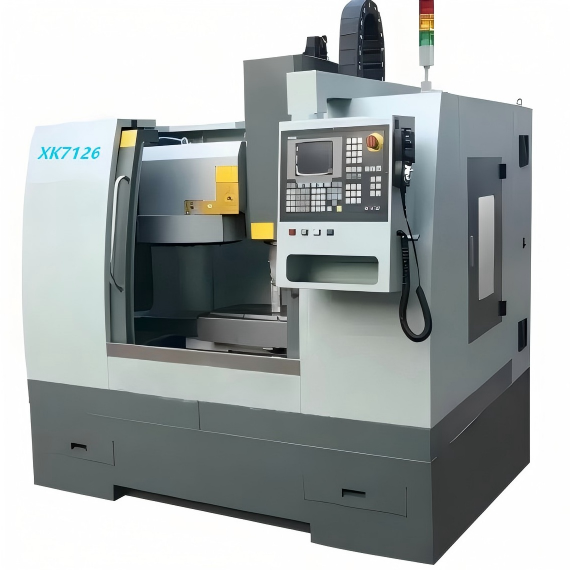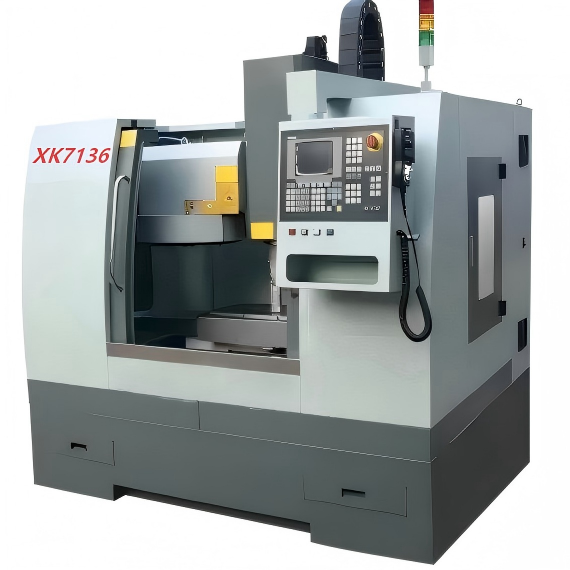
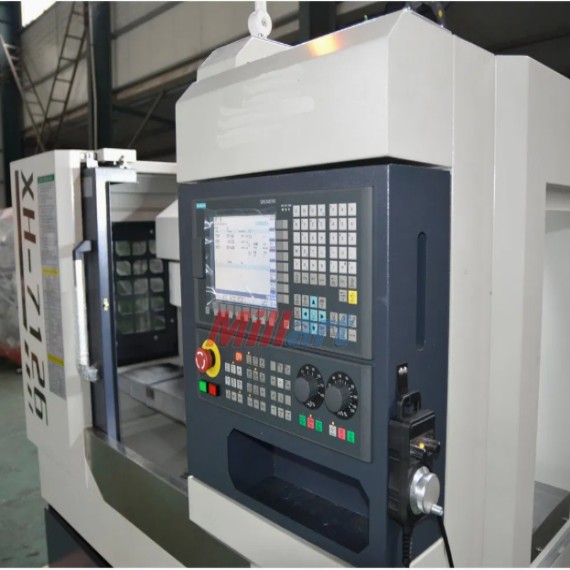
XK7136 High Speed Vertical Machine Center
Key Advantages of XK7136 CNC Milling Machine
Larger Workspace & Higher Load Capacity for Versatile Machining
With a 1250×360 mm worktable and 900×400×500 mm three-axis travel, the machine offers a significantly expanded processing range compared to compact models. Combined with a 400 kg table load capacity, it easily handles larger or heavier workpieces, supporting multi-face and complex machining operations in a single setup.
Enhanced Spindle Power & Precision for Efficient Heavy-Duty Cutting
Equipped with a 5.5 kW spindle motor and a maximum speed of 8000 rpm, it delivers stronger cutting performance for heavy-duty material removal while maintaining high-speed machining capability. Backed by ±0.01 mm positioning accuracy and ±0.005 mm repeatability, it ensures consistent precision and surface quality even in prolonged, high-load processing.
- Overview
- Recommended Products
Technical Specification
Specification | Unit | XK7136 |
Table size | mm | 1250*360 |
X-axis travel | mm | 900 |
Y-axis travel | mm | 400 |
Z-axis travel | mm | 500 |
Spindle end to worktable distance | mm | 100-600 |
Spindle center to column guide surface distance | mm | 460 |
T-slot /width /spacing | mm | 3/18/80 |
Spindle taper hole | BT40 | |
Spindle maximum speed | rpm | 8000 |
Workbench load bearing | kg | 400 |
X/Y/Z to fast feed | m/min | 18/18/15 |
Triaxial power×/Y/Z | N.m | 7.7/7.7/10 |
Spindle motor power | kw | 5.5 |
positioning accuracy | mm | ±0.01 |
Repeatability | mm | ±0.005 |
Machine weight | kg | 3600 |
Machine dimensions(length ×width ×height) | mm | 2350*2100*2550 |
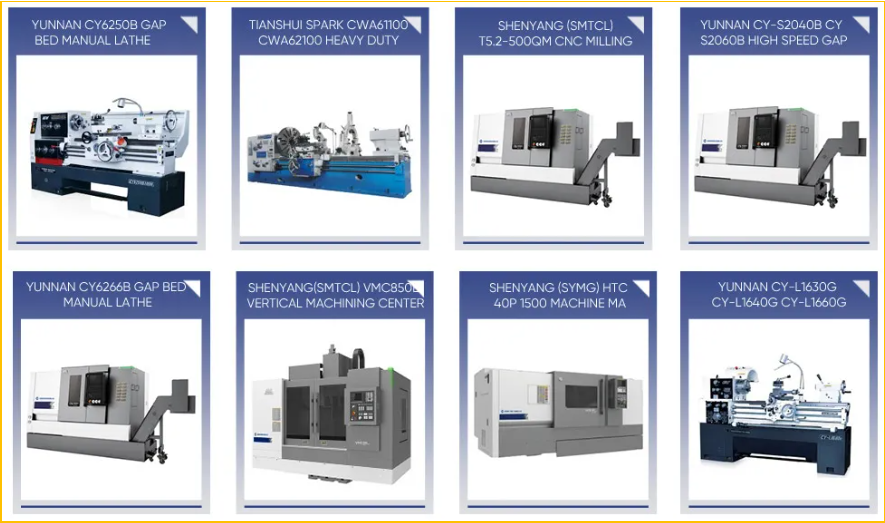
Products Showcase
Key Components
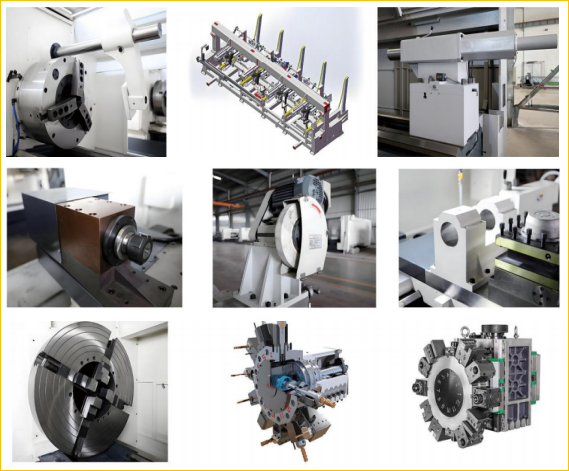
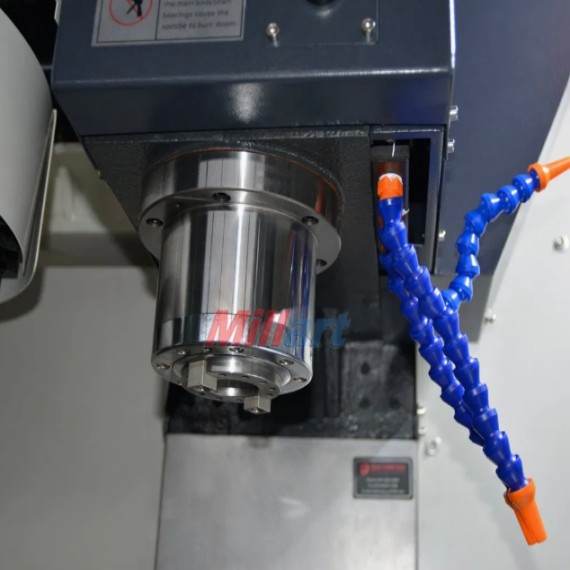
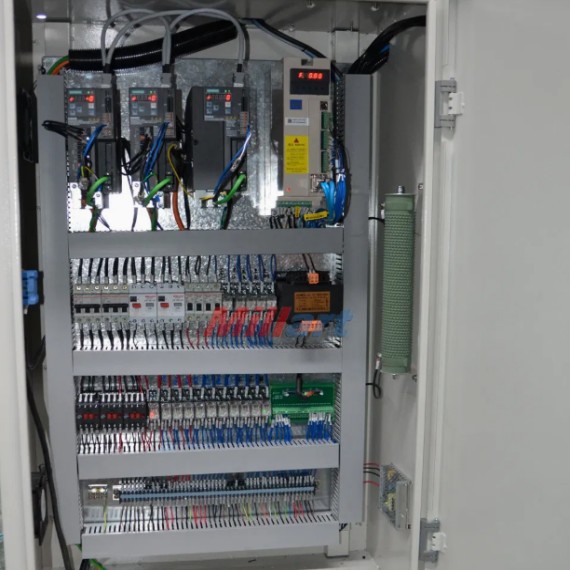
Our machine tools support a wide range of customizable options that can be flexibly configured to meet actual production needs: Equipping the machine with an automatic loader enables automated workpiece feeding, significantly improving production efficiency and operational safety; pairing it with a hydraulic tailstock provides stable support for long-axis workpieces, enhancing machining rigidity and precision; Installing a length-setting device allows for precise control of workpiece length, meeting the needs of batch processing at fixed dimensions; users can also opt for higher-specification CNC systems, tool magazines, cooling systems, and inspection components to fully adapt to precision machining scenarios across various industries, providing users with personalized production solutions.
Manufacturing Process
The CNC machining process starts with creating a G-code program based on the workpiece’s 3D model, defining cutting paths, speeds, and tool changes. The program is uploaded to the CNC system, which interprets instructions to control the spindle, feed axes, and tool turret. After clamping the workpiece securely with a chuck, the machine initiates automatic machining—executing turning, milling, drilling, or threading as programmed. During operation, real-time monitoring ensures precision, with coolant and chip removal systems maintaining stability. Once completed, the workpiece is inspected for accuracy, and the program is saved for future batch production.
Multi-Layer Process Inspection
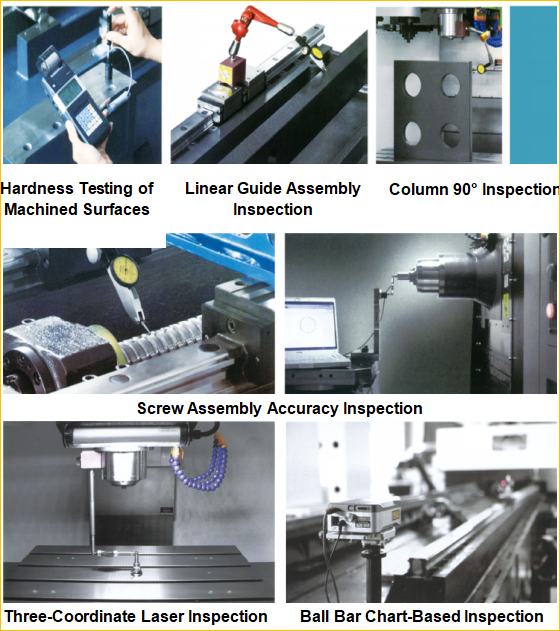
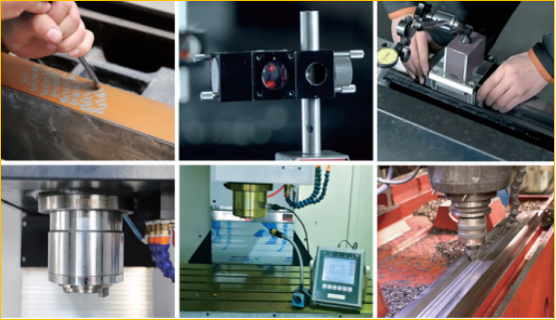
The precision and reliability of machine tools are core to ensuring the quality of high-end manufacturing, which requires a systematic, multi-dimensional inspection process for validation. The key steps are as follows:
Hardness Testing of Machined Surfaces: A portable hardness tester is used to measure the hardness of machined workpiece surfaces or key structural components, verifying that the material’s mechanical properties meet design specifications and laying a foundation for subsequent machining stability and workpiece durability.
Linear Guide Assembly Inspection: Specialized measuring tools and devices are employed to check the parallelism, straightness, and smooth motion of linear guide assemblies, ensuring precise guidance even under high-speed and heavy-load conditions and avoiding deviations during machine tool movement.
Column 90° Inspection: High-precision right-angle measuring tools or laser goniometers are used to calibrate the perpendicularity between the machine column and critical components such as the worktable and spindle head, guaranteeing the machine’s geometric accuracy and preventing issues like inclined machined surfaces or dimensional errors caused by column tilt.
Screw Assembly Accuracy Inspection: Dial indicators or micrometers are used to detect the axial play, radial runout, and positioning accuracy of ball screws, ensuring the stability and positioning precision of screw transmission—this is a core step in maintaining the machine’s feed accuracy.
Three-Coordinate Laser Inspection: A laser interferometer and other high-precision measuring equipment are utilized to comprehensively scan the positioning accuracy, repeat positioning accuracy, straightness, and geometric errors of the machine’s three (or multiple) axes, obtaining 3D spatial accuracy data to provide a quantitative basis for machine tool accuracy compensation.
Ball Bar Chart-Based Inspection: A ball bar instrument is used to quickly collect circular motion data of the machine tool and generate accuracy analysis charts, which can intuitively diagnose issues such as backlash, servo lag, and perpendicularity errors. This is a key method for efficiently evaluating the machine’s dynamic accuracy and servo performance.
Through the above full-process inspection—from basic geometric accuracy to dynamic motion accuracy—the assembly quality and operational performance of the machine tool can be fully verified, ensuring it meets the high-precision and high-efficiency requirements of industrial production.
Packing and Shipping
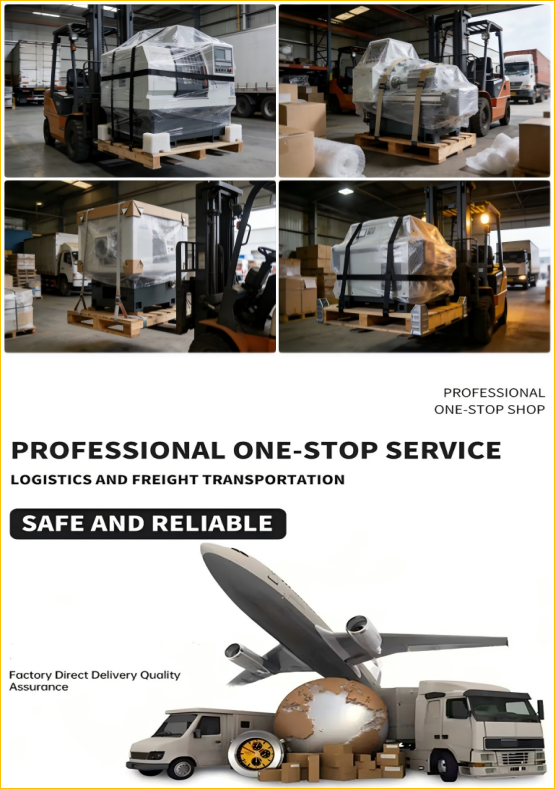
After production is completed, our equipment is packed in customized solid wood fumigated crates, ensuring a tight, secure, and reliable package. Shock-absorbing foam and steel reinforcements are used inside to control any movement of the machine’s core components to within millimeter-level precision during transportation.
From packaging and loading to warehousing and shipment, we extend the same strict standards we apply to machining accuracy to every stage of logistics. Because the true value of a machine tool lies not only in its processing capability, but also in our commitment to “zero-loss” delivery from shipment to commissioning.
Choosing us means choosing safe, reliable transportation and full responsibility at every step of the logistics process.
FAQ
1. Can we visit your factory before order?
A: Sure.All new and old friends are welcomed to visit us at our factory.Besides,we can pick up you at the station or airport if needed.We will be very honored to help with tickets and accommodation booking.
2. What's the MOQ?
A: One set only.
3. Do you have professional engineers ?
A: Yes.we have professional engineers and designers.We can provide OEM services.
4. Do you have CE certificate?
A: Yes,we have CE certification,machine quality is guaranteed.
5. What is your payment terms?
A: 30%T/T in advance,70%T/T before shipment,Meanwhile it can be discussed according to your situation.
6. What is your delivery time?
A: Our fastest delivery time for 1~5 sets will be within one month for standard model. Special model will depends on different machines with different configurations.Please contact us to confirm it is in stock or not.
7. How is the warranty?
A: We will supply standard ports and accessories with our machine.
Within one year after receiving our machines,in the right operation,if there are any damaged parts or accessories,we will replace them by air or express immediately free of charge.