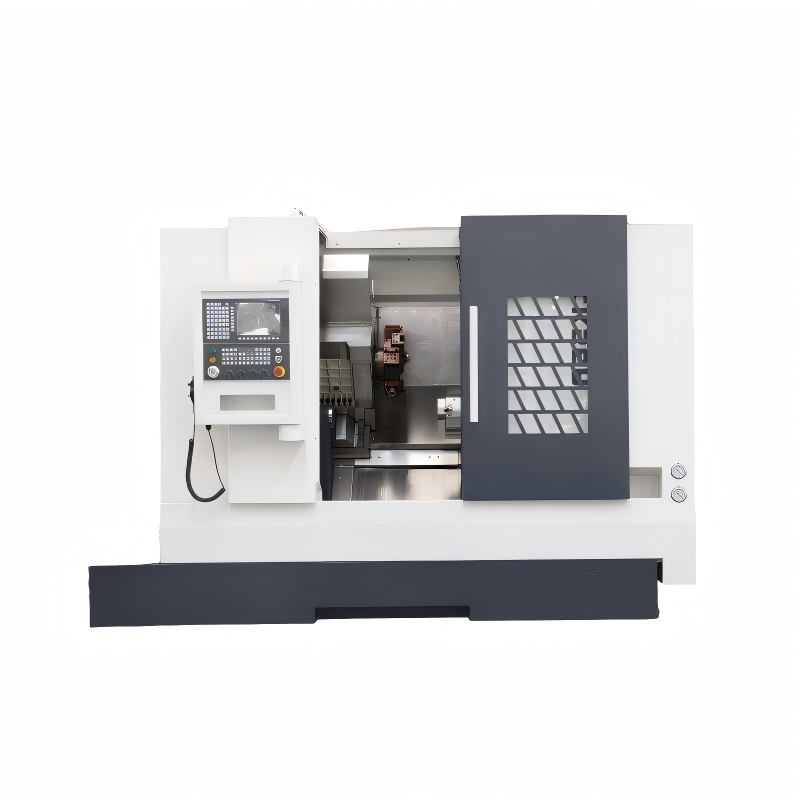
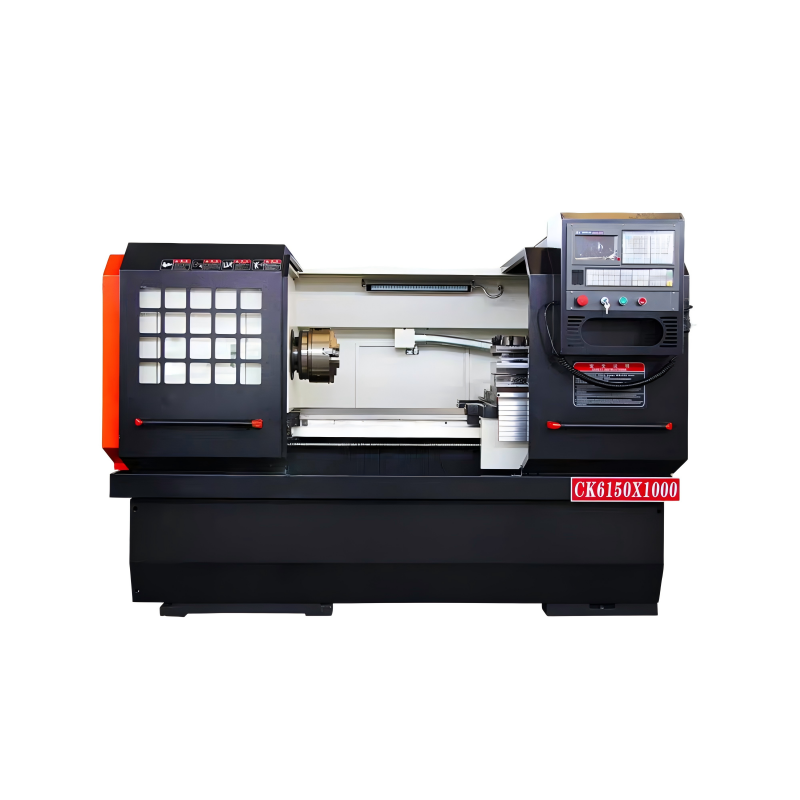
The 2-Axis Flat Bed CNC Lathe is a fundamental tool in modern manufacturing, designed to perform precise turning operations. Unlike its more complex counterparts, this lathe focuses on two primary axes: X and Z. The X-axis controls the cross slide, enabling movements perpendicular to the workpiece's length, while the Z-axis manages the longitudinal movement along the spindle. This design ensures that the machine can achieve high levels of precision and efficiency, making it ideal for a wide range of applications, from small batch production to large-scale industrial operations. Understanding these basic components and their functions is crucial for anyone looking to master the 2-Axis Flat Bed CNC Lathe.
To fully grasp how a 2-Axis Flat Bed CNC Lathe operates, one must be familiar with its key components. At the heart of the machine lies the spindle, which holds and rotates the workpiece. The spindle's speed and direction are controlled by the CNC (Computer Numerical Control) system, allowing for adjustments based on the specific requirements of the job. Another critical component is the cutting tool, which is mounted on the turret. The turret can move along both the X and Z axes, providing the flexibility needed to create intricate shapes and profiles. Additionally, the bed of the lathe, which supports the entire structure, plays an essential role in maintaining stability during operation. By understanding the interplay between these components, operators can maximize the performance and lifespan of the 2-Axis Flat Bed CNC Lathe.
Effective programming is the cornerstone of successful 2-Axis Flat Bed CNC Lathe operations. G-code, the standard programming language for CNC machines, is used to instruct the lathe on how to execute each step of the process. A well-structured G-code program ensures that the machine performs the desired operations accurately and efficiently. Operators must also be proficient in setting up the machine, including loading the workpiece, selecting the appropriate cutting tools, and configuring the spindle speed and feed rates. Furthermore, advanced techniques such as tool radius compensation and thread cutting can significantly enhance the quality and versatility of the finished products. Mastering these programming and operation techniques is essential for achieving optimal results with the 2-Axis Flat Bed CNC Lathe.
Regular maintenance is vital to ensure the longevity and reliability of the 2-Axis Flat Bed CNC Lathe. Key maintenance tasks include lubricating moving parts, checking for wear and tear, and ensuring that all components are properly aligned. Regular cleaning of the machine, especially the chip removal system, prevents debris buildup and reduces the risk of malfunctions. In addition, operators should be trained to identify and troubleshoot common issues, such as incorrect tool settings or programming errors. By addressing these problems promptly, downtime can be minimized, and the overall productivity of the 2-Axis Flat Bed CNC Lathe can be maintained at a high level.
The field of CNC machining is constantly evolving, and the 2-Axis Flat Bed CNC Lathe is no exception. Recent advancements include the integration of more powerful CNC systems, which offer enhanced control and automation capabilities. Additionally, improvements in cutting tool materials and designs have led to increased cutting speeds and longer tool life. Future trends in 2-Axis Flat Bed CNC Lathe technology may include the incorporation of artificial intelligence and machine learning algorithms to optimize operations further. These innovations will not only improve the efficiency and accuracy of the lathe but also make it more user-friendly and accessible to a broader range of industries. Staying informed about these advancements is crucial for anyone involved in the operation and management of 2-Axis Flat Bed CNC Lathes.
 23/06/2026
In the world of precision machining, choosing the right tool for your workshop is crucial. One such versatile and efficient machine is the 2-Axis Flat Bed CNC Lathe. This technical report will explore the reasons why a 2-Axis Flat Bed CNC Lathe might be t
Read More23/06/2026The 2-Axis Flat Bed CNC Lathe is a sophisticated piece of machinery that plays a crucial role in the manufacturing industry. It combines precision, efficiency, and versatility to produce high-quality components. This technical report aims to provide an in
Read More22/06/2026China, as a global leader in manufacturing, has been at the forefront of technological advancements that enhance productivity and efficiency. One such innovation is the 2-Axis Flat Bed CNC Lathe, which has significantly improved industrial processes, part
Read More22/06/2026In the realm of precision machining, the 2-Axis Flat Bed CNC Lathe stands out as a versatile and efficient tool for manufacturing. This technical report aims to explore how this machine can enhance production efficiency, reduce costs, and improve overall
Read More22/06/2026The 2-Axis Flat Bed CNC Lathe has become an indispensable tool in the field of precision engineering, offering unparalleled accuracy and efficiency. This technical report aims to explore the critical role played by the 2-Axis Flat Bed CNC Lathe in modern
Read More22/06/2026In the realm of modern machining, the 2-Axis Flat Bed CNC Lathe has emerged as a versatile and indispensable tool for manufacturing precision components. This report delves into the advantages that this machine brings to the table, exploring how it enhanc
Read MoreOur professional sales team is always ready to assist you.