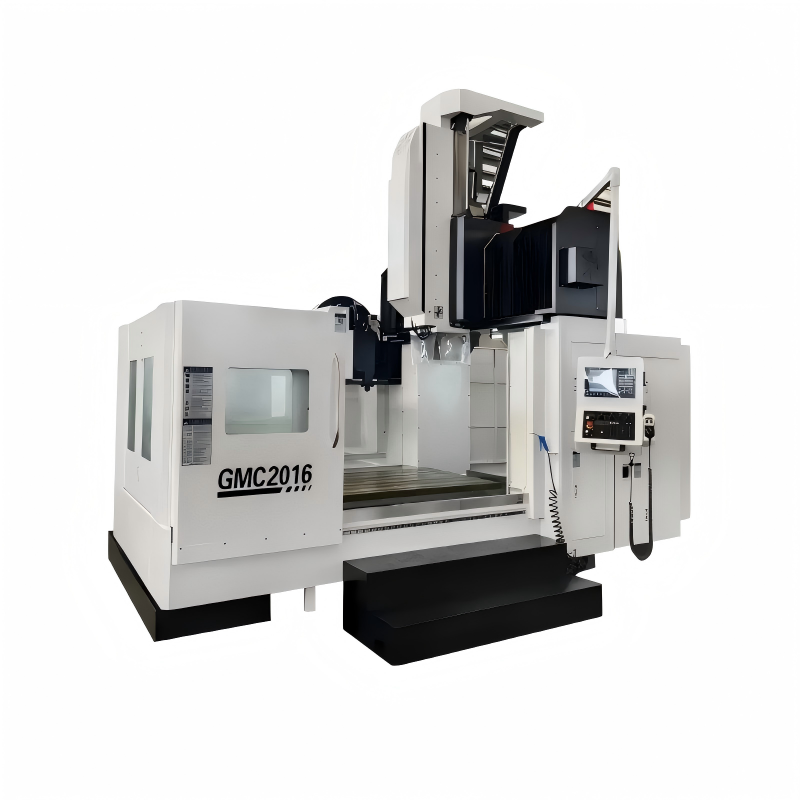
The advent of CNC Gantry Machining Center technology has significantly transformed the landscape of modern manufacturing. These machines, designed for high-precision and large-scale operations, represent a leap forward in both efficiency and capability. This section will explore the fundamental aspects of CNC Gantry Machining Centers, including their design, operational principles, and the benefits they bring to the manufacturing process.
One of the key areas where CNC Gantry Machining Center innovations have made a significant impact is in the realm of features that enhance both the efficiency and precision of manufacturing processes. Modern CNC gantry machining centers are equipped with advanced control systems, which allow for more accurate and faster machining. Additionally, these systems often incorporate real-time monitoring and feedback mechanisms, ensuring that any deviations from the desired specifications are immediately corrected. This not only reduces waste but also ensures that the final product meets the highest standards of quality.
Another notable feature is the integration of multi-axis capabilities. Unlike traditional machines that operate on three axes (X, Y, and Z), many of today's CNC gantry machining centers can work with up to five or even six axes. This multi-axis functionality allows for the machining of complex geometries and intricate designs, which would be impossible with conventional equipment. The result is a more versatile machine that can handle a wider range of tasks, from simple drilling and milling to more sophisticated operations like contouring and engraving.
Furthermore, the use of high-speed spindles and advanced tool changers has also contributed to the enhanced performance of these machines. High-speed spindles enable faster cutting speeds, reducing the time required for each operation and increasing overall productivity. Advanced tool changers, on the other hand, minimize downtime by quickly and accurately switching between different tools, allowing for seamless transitions between various machining operations.
The introduction of CNC Gantry Machining Center technology has had a profound impact on manufacturing processes, leading to increased productivity and cost savings. One of the most significant advantages is the ability to automate repetitive and labor-intensive tasks. This automation not only reduces the need for manual intervention but also minimizes the risk of human error, resulting in higher quality products and a more consistent output.
Moreover, the use of CNC gantry machining centers has enabled manufacturers to achieve greater flexibility in their production lines. These machines can be easily reprogrammed to accommodate changes in product design or to switch between different parts, making them ideal for both small-batch and high-volume production. This flexibility is particularly valuable in industries where demand fluctuates frequently, as it allows companies to respond quickly to market changes without incurring significant setup costs.
Another important aspect is the reduction in material waste. With their precise control and high accuracy, CNC gantry machining centers can optimize the use of raw materials, minimizing scrap and reducing the overall cost of production. This not only benefits the manufacturer by lowering expenses but also contributes to more sustainable manufacturing practices, as less material is wasted during the production process.
Despite the numerous advantages offered by CNC Gantry Machining Center technology, there are still several challenges that need to be addressed. One of the main concerns is the initial investment cost, which can be quite high. However, the long-term benefits, such as increased productivity and reduced operational costs, often outweigh the initial expense. Another challenge is the need for skilled operators and maintenance personnel, as these machines require specialized knowledge to operate and maintain effectively.
Looking ahead, the future of CNC gantry machining centers is likely to be shaped by ongoing advancements in technology. For example, the integration of artificial intelligence (AI) and machine learning (ML) could further enhance the capabilities of these machines, enabling them to learn from past operations and continuously improve their performance. Additionally, the development of more advanced materials and cutting tools could lead to even greater precision and efficiency in the manufacturing process.
Furthermore, the trend towards Industry 4.0 and smart manufacturing is expected to play a significant role in the evolution of CNC gantry machining centers. By incorporating sensors, data analytics, and connectivity, these machines can become part of a larger, interconnected system, allowing for real-time monitoring, predictive maintenance, and optimized production workflows. This integration will not only enhance the performance of individual machines but also contribute to the overall efficiency and competitiveness of manufacturing operations.
In conclusion, the CNC Gantry Machining Center represents a pivotal innovation in modern manufacturing, offering unparalleled precision, efficiency, and versatility. Through the integration of advanced features such as multi-axis capabilities, high-speed spindles, and real-time monitoring, these machines have revolutionized the way products are manufactured. While there are challenges to be addressed, the future of CNC gantry machining centers looks promising, with ongoing technological advancements poised to further enhance their capabilities and drive the next wave of manufacturing innovation.
Our professional sales team is always ready to assist you.