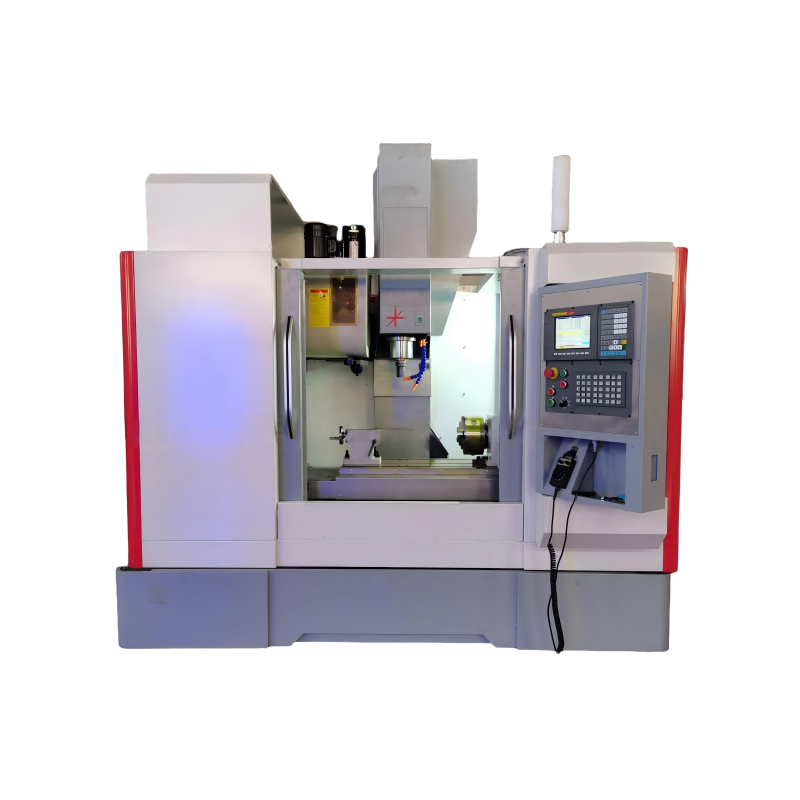
In the ever-evolving landscape of modern manufacturing, precision and efficiency are paramount. The 3 axis CNC Machining Center has emerged as a cornerstone technology, revolutionizing how parts and components are produced. This article delves into the advantages of 3 axis CNC Machining Centers, highlighting their role in enhancing productivity, accuracy, and versatility in today’s manufacturing processes.
Enhanced Precision and Accuracy
The 3 axis CNC machining center is renowned for its ability to deliver high levels of precision and accuracy. Unlike traditional manual machining, where human error can lead to inconsistencies, CNC machines operate based on pre-programmed instructions. These instructions are generated from CAD (Computer-Aided Design) files, ensuring that each part is manufactured to exact specifications. The three axes—X, Y, and Z—allow for precise movement along these dimensions, enabling the machine to cut, drill, and shape materials with micron-level accuracy. This level of precision is crucial in industries such as aerospace, automotive, and medical devices, where even the slightest deviation can have significant consequences.
Moreover, the repeatability of 3 axis CNC machining centers ensures that every part produced is identical. This consistency is vital for maintaining quality control and meeting stringent industry standards. Advanced features like automatic tool changers and real-time monitoring systems further enhance the accuracy and reliability of the machining process, reducing the likelihood of errors and defects.
Increased Productivity and Efficiency
One of the most significant advantages of 3 axis CNC machining centers is their ability to increase productivity and efficiency. Traditional machining methods often require multiple setups and manual adjustments, which can be time-consuming and labor-intensive. In contrast, 3 axis CNC machining centers can perform complex operations in a single setup, reducing the need for frequent repositioning of the workpiece. This streamlined process not only saves time but also minimizes the potential for errors that can occur during manual handling.
Additionally, 3 axis CNC machining centers can operate continuously, 24/7, with minimal supervision. This capability allows manufacturers to maximize their production capacity and meet tight deadlines. The integration of automation technologies, such as robotic loading and unloading, further enhances the efficiency of the machining process. By automating repetitive tasks, manufacturers can allocate their workforce to more value-added activities, leading to improved overall productivity and cost savings.
Versatility and Flexibility
The 3 axis CNC machining center is highly versatile and can handle a wide range of materials and applications. Whether it's cutting, drilling, milling, or engraving, these machines can perform a variety of operations with ease. This versatility makes them an ideal choice for manufacturers who need to produce a diverse array of parts and components. From soft materials like wood and plastic to harder materials like steel and titanium, 3 axis CNC machining centers can accommodate different material properties and requirements.
Furthermore, the flexibility of 3 axis CNC machining centers extends to their ability to adapt to changing production needs. With the ability to quickly reprogram and adjust settings, manufacturers can switch between different jobs and projects without significant downtime. This adaptability is particularly valuable in industries where product designs and specifications frequently change, such as consumer electronics and prototyping. The ease of reprogramming and the availability of advanced software tools enable manufacturers to respond swiftly to market demands and stay competitive.
Cost-Effectiveness and Return on Investment
While the initial investment in a 3 axis CNC machining center may seem substantial, the long-term benefits and cost savings make it a worthwhile investment. The increased productivity and efficiency of these machines lead to lower operational costs over time. Reduced labor costs, minimized material waste, and decreased downtime all contribute to a more cost-effective manufacturing process. Additionally, the high precision and accuracy of 3 axis CNC machining centers result in fewer defective parts, reducing the need for rework and scrap, which can be a significant cost-saving factor.
Moreover, the longevity and durability of 3 axis CNC machining centers ensure a strong return on investment. These machines are built to last and can withstand the rigors of continuous operation. Regular maintenance and timely upgrades can extend their lifespan, providing years of reliable service. The ability to integrate with other manufacturing systems, such as ERP (Enterprise Resource Planning) and MES (Manufacturing Execution System), further enhances the overall efficiency and cost-effectiveness of the manufacturing process.
Conclusion
The 3 axis CNC machining center is a transformative technology that offers numerous advantages in modern manufacturing. Its enhanced precision and accuracy, increased productivity and efficiency, versatility and flexibility, and cost-effectiveness make it an indispensable tool for manufacturers across various industries. As technology continues to advance, the capabilities of 3 axis CNC machining centers will only continue to grow, driving innovation and excellence in manufacturing. Embracing this technology is key to staying ahead in a competitive and rapidly evolving market.