The CNC Pipe Thread Lathe is a critical tool in modern industrial manufacturing, offering unparalleled precision and versatility. This advanced machine has become an indispensable asset across various sectors, from oil and gas to automotive and construction. In this technical report, we will explore the unique features and applications of the CNC Pipe Thread Lathe, highlighting its importance in enhancing productivity and quality in industrial settings.
Understanding the Basics of CNC Pipe Thread Lathe
A CNC (Computer Numerical Control) Pipe Thread Lathe is a specialized machine designed to cut threads on pipes and other cylindrical objects. Unlike traditional lathes, which require manual operation, CNC Pipe Thread Lathes are controlled by computer programs, allowing for precise and consistent thread cutting. The machine's ability to handle a wide range of materials, including steel, brass, and aluminum, makes it highly versatile. Additionally, the CNC system enables the lathe to perform complex operations with high accuracy, reducing the margin of error and increasing efficiency.
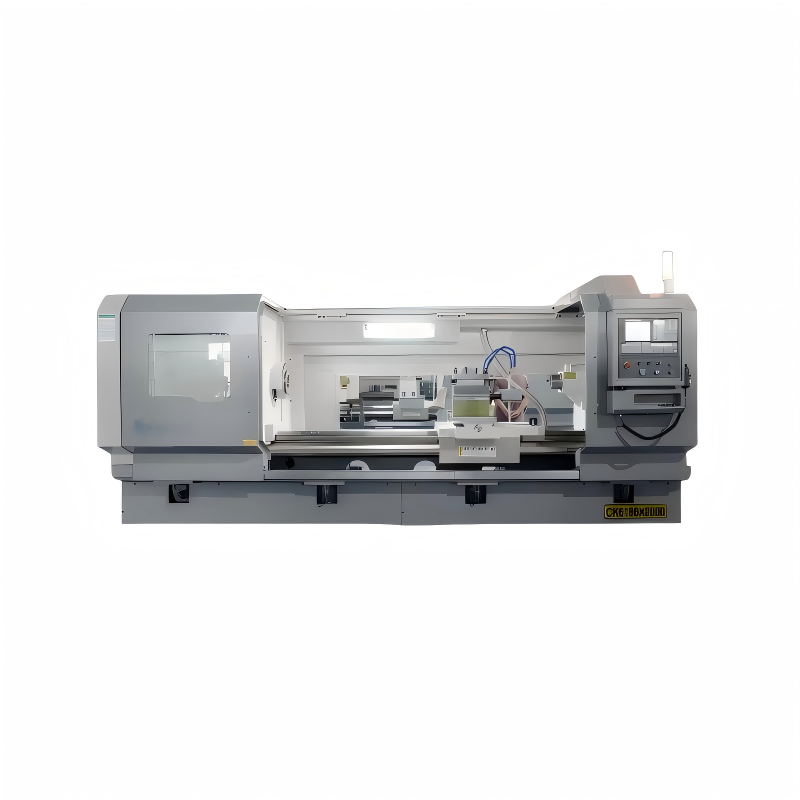
The key components of a CNC Pipe Thread Lathe include the spindle, which holds and rotates the workpiece; the tool turret, which houses the cutting tools; and the control panel, where the operator inputs the program. The combination of these elements allows for the execution of intricate threading patterns, ensuring that each piece meets the required specifications. The use of advanced software also facilitates the creation of custom thread profiles, making the CNC Pipe Thread Lathe a valuable tool for both standard and specialized applications.
Advantages of Using CNC Pipe Thread Lathe in Industrial Applications
The adoption of CNC Pipe Thread Lathes in industrial applications brings numerous benefits, including enhanced precision, increased production speed, and improved quality control. One of the primary advantages is the high level of precision that can be achieved. The CNC system ensures that each thread is cut to exact specifications, reducing the likelihood of errors and inconsistencies. This precision is particularly important in industries where the integrity of the threaded connection is crucial, such as in the oil and gas sector, where even a small deviation can lead to significant safety and operational issues.
Another significant advantage is the increased production speed. Traditional lathes require skilled operators to manually adjust the machine and perform the threading process, which can be time-consuming and labor-intensive. In contrast, CNC Pipe Thread Lathes automate the entire process, allowing for continuous and rapid production. This not only reduces the time required to complete a job but also minimizes the need for human intervention, leading to cost savings and increased efficiency.
Quality control is another area where CNC Pipe Thread Lathes excel. The consistent and accurate nature of the CNC system ensures that each piece is produced to the same high standards, reducing the risk of defects and rework. This consistency is particularly beneficial in large-scale manufacturing, where maintaining uniform quality across thousands of parts is essential. Furthermore, the ability to monitor and adjust the machine's performance in real-time through the control panel allows for immediate corrections, further enhancing the overall quality of the output.
Innovative Features and Capabilities of Modern CNC Pipe Thread Lathes
Modern CNC Pipe Thread Lathes come equipped with a range of innovative features and capabilities that set them apart from their predecessors. One of the most notable advancements is the integration of multi-axis systems, which allow for more complex and precise machining. These multi-axis systems enable the lathe to perform multiple operations simultaneously, such as turning, milling, and drilling, all within a single setup. This not only increases the machine's versatility but also reduces the need for additional equipment and setup time.
Another significant feature is the use of advanced software and programming tools. Modern CNC Pipe Thread Lathes often come with user-friendly interfaces and powerful CAD/CAM (Computer-Aided Design/Computer-Aided Manufacturing) software, which simplifies the programming process and allows for the creation of intricate and customized thread profiles. This software also provides real-time monitoring and feedback, enabling operators to make adjustments on the fly and optimize the machining process.
Additionally, many modern CNC Pipe Thread Lathes incorporate advanced sensors and monitoring systems. These sensors can detect various parameters, such as temperature, vibration, and wear, providing valuable data for predictive maintenance and performance optimization. By continuously monitoring the machine's condition, operators can identify potential issues before they become critical, thereby extending the lifespan of the equipment and reducing downtime.
Finally, the integration of automation and robotics is another trend in modern CNC Pipe Thread Lathes. Automated loading and unloading systems, as well as robotic arms, can be used to handle and position the workpieces, further streamlining the production process and reducing the need for human intervention. This level of automation not only increases efficiency but also enhances safety, as it minimizes the exposure of operators to potentially hazardous tasks.
Case Studies: Real-World Applications of CNC Pipe Thread Lathe
To illustrate the practical applications and benefits of CNC Pipe Thread Lathes, let's examine a few case studies from different industries.
In the oil and gas industry, a major manufacturer of pipeline components implemented a CNC Pipe Thread Lathe to improve the quality and consistency of their threaded connections. Prior to the adoption of the CNC system, the company relied on manual lathes, which resulted in frequent variations in thread quality and occasional defects. After switching to the CNC Pipe Thread Lathe, the company reported a 95% reduction in defect rates and a 30% increase in production speed. The high precision and consistency of the CNC system ensured that each pipe thread met the stringent industry standards, significantly enhancing the reliability and safety of their products.
In the automotive sector, a leading manufacturer of engine components utilized a CNC Pipe Thread Lathe to produce high-precision threads for fuel injectors. The company needed to ensure that the threads were perfectly aligned and free from any defects, as even minor imperfections could lead to fuel leaks and engine failures. The CNC Pipe Thread Lathe provided the necessary precision and consistency, resulting in a 40% reduction in scrap rates and a 25% improvement in production efficiency. The machine's ability to handle complex threading patterns and maintain high accuracy throughout the process was instrumental in meeting the company's quality and production goals.
In the construction industry, a large-scale manufacturer of plumbing fixtures adopted a CNC Pipe Thread Lathe to streamline the production of threaded pipe fittings. The company faced challenges with inconsistent thread quality and high labor costs associated with manual lathes. By implementing the CNC Pipe Thread Lathe, the company was able to achieve a 60% reduction in labor costs and a 50% increase in production capacity. The automated and precise nature of the CNC system allowed for the efficient and consistent production of high-quality pipe fittings, meeting the demands of the construction market and enhancing the company's competitive edge.
Future Trends and Developments in CNC Pipe Thread Lathe Technology
The field of CNC Pipe Thread Lathe technology continues to evolve, driven by advancements in automation, software, and materials. One of the key trends is the integration of Industry 4.0 technologies, such as the Internet of Things (IoT) and artificial intelligence (AI). IoT-enabled CNC Pipe Thread Lathes can collect and analyze data in real-time, providing insights into machine performance, maintenance needs, and production metrics. AI algorithms can then be used to optimize the machining process, predict potential issues, and suggest corrective actions, leading to more efficient and reliable operations.
Another area of development is the use of advanced materials and coatings. As the demand for high-performance and durable threads increases, manufacturers are exploring new materials and surface treatments that can enhance the strength and longevity of the threads. For example, the use of advanced alloys and coatings can improve the wear resistance and corrosion resistance of the threads, making them suitable for harsh environments and demanding applications.
Furthermore, the trend towards sustainability and energy efficiency is also influencing the design and operation of CNC Pipe Thread Lathes. Manufacturers are developing machines that consume less energy and produce fewer emissions, aligning with the growing emphasis on environmental responsibility. This includes the use of energy-efficient motors, optimized cooling systems, and the implementation of recycling and waste reduction practices.
Lastly, the advancement of additive manufacturing (3D printing) is opening up new possibilities for the integration of CNC Pipe Thread Lathes. While 3D printing is primarily used for creating complex geometries and prototypes, it can also be combined with CNC machining to produce hybrid parts that combine the benefits of both technologies. For example, a part can be 3D printed to create a near-net shape, and then finished using a CNC Pipe Thread Lathe to achieve the desired thread profile and surface finish. This hybrid approach can lead to more efficient and cost-effective production processes, particularly for small batch and custom orders.
In conclusion, the CNC Pipe Thread Lathe is a versatile and essential tool in modern industrial manufacturing. Its ability to provide high precision, increased production speed, and superior quality control makes it an invaluable asset across various sectors. As technology continues to advance, the future of CNC Pipe Thread Lathes looks promising, with innovations in automation, materials, and sustainability driving the next generation of machines. By embracing these advancements, manufacturers can further enhance their productivity, quality, and competitiveness in the global market.


 18/06/2026



