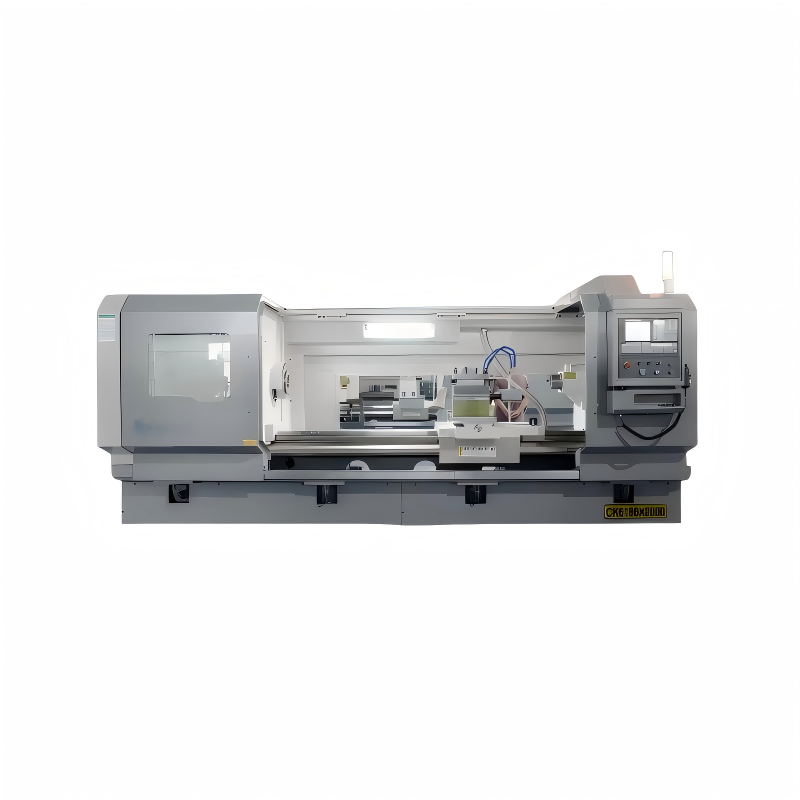
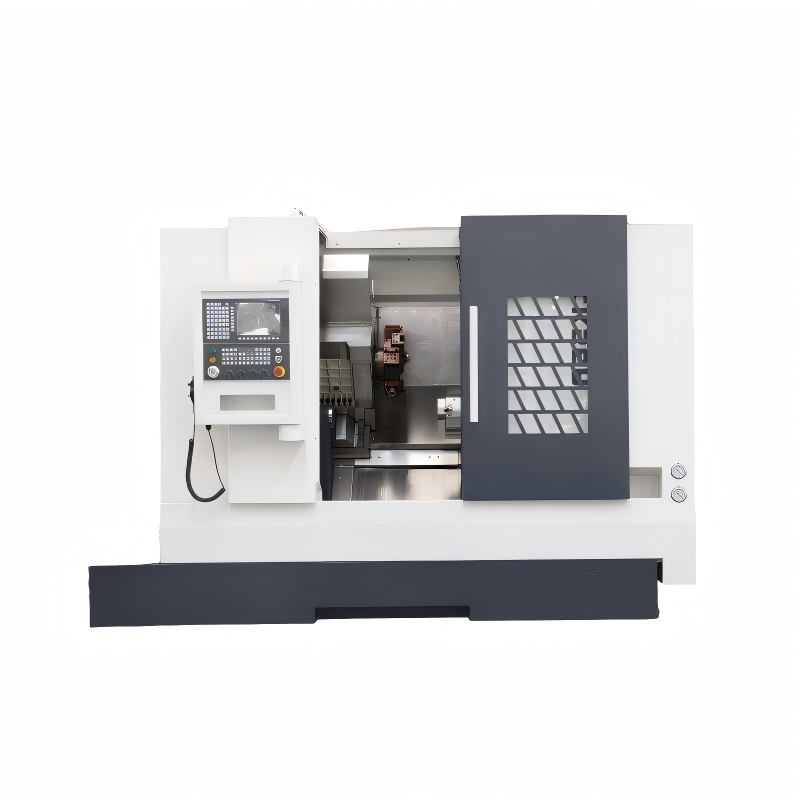
In the realm of industrial manufacturing, precision and efficiency are paramount. One tool that has significantly contributed to these aspects is the CNC Pipe Thread Lathe. This machine, through its advanced capabilities, not only improves the quality of threaded pipes but also enhances overall production efficiency. In this technical report, we will explore how a CNC Pipe Thread Lathe can be leveraged to maximize efficiency in pipe threading operations.
A CNC (Computer Numerical Control) Pipe Thread Lathe is a specialized piece of machinery designed for creating threads on pipes. Unlike traditional lathes, which require manual operation, a CNC Lathe operates under the control of a computer program. This automation allows for highly precise and repeatable thread cutting, essential for applications where accuracy is critical. The use of CNC technology in pipe threading has revolutionized the industry by reducing human error and increasing productivity. A key feature of these machines is their ability to handle a wide range of pipe sizes and materials, making them versatile tools in various manufacturing settings.
The primary advantage of using a CNC Pipe Thread Lathe lies in its automated nature. Automation brings several benefits, with the most notable being increased speed and consistency. By automating the threading process, manufacturers can achieve higher output rates without compromising on quality. Additionally, the reduced need for manual intervention minimizes the risk of errors, leading to a more reliable end product. Moreover, CNC lathes can run continuously, 24/7, provided they are properly maintained, thereby further enhancing production capacity. This constant operation capability is particularly beneficial in high-demand environments where time is of the essence. The integration of automation into pipe threading processes not only boosts efficiency but also contributes to cost savings over the long term, as it reduces labor costs and material waste.
One of the standout features of a CNC Pipe Thread Lathe is its ability to produce extremely precise threads. The machine's computer-controlled system ensures that each thread is cut to exact specifications, every single time. This level of precision is crucial in industries such as oil and gas, where even minor deviations in thread dimensions can lead to significant issues. Furthermore, modern CNC lathes come equipped with advanced software that allows for the customization of thread profiles, enabling manufacturers to meet specific requirements with ease. Another important aspect is the machine's ability to adjust to different pipe diameters and materials, ensuring that the same high standards of accuracy are maintained across a variety of applications. Such versatility, combined with unparalleled precision, makes the CNC Pipe Thread Lathe an indispensable tool in today’s manufacturing landscape.
Maintenance and ease of operation are often overlooked factors when considering the efficiency of a CNC Pipe Thread Lathe. However, these elements play a crucial role in ensuring the machine operates at its best. Regular maintenance, including lubrication, calibration, and replacement of worn parts, is essential to keep the lathe running smoothly. Many CNC lathes come with built-in diagnostic systems that can alert operators to potential issues before they become major problems, thereby minimizing downtime. Additionally, user-friendly interfaces and comprehensive training programs make it easier for operators to learn and effectively use the machine, further contributing to its overall efficiency. By streamlining both maintenance and operational procedures, manufacturers can ensure that their CNC Pipe Thread Lathes remain productive and reliable, driving continuous improvement in their production processes.
Efficiency in pipe threading operations is not just about the speed and accuracy of the CNC Pipe Thread Lathe; it also involves optimizing the entire workflow. An efficient workflow minimizes downtime and maximizes throughput. One way to achieve this is by implementing a well-structured production schedule that aligns with the machine's capabilities and the demands of the production line. Batch processing, for example, can be used to group similar tasks together, reducing the time required for setup changes and tooling adjustments. Additionally, integrating the CNC lathe with other automated systems, such as material handling and inspection equipment, can create a seamless and streamlined production process. This integration not only reduces the likelihood of bottlenecks but also ensures that the machine is always supplied with the necessary materials and that the finished products are promptly inspected and moved to the next stage. By focusing on workflow optimization, manufacturers can fully leverage the capabilities of their CNC Pipe Thread Lathes to achieve maximum efficiency and productivity.
The CNC Pipe Thread Lathe is a powerful tool that offers numerous advantages in terms of precision, automation, and efficiency. By understanding and leveraging its advanced features, manufacturers can significantly enhance their production processes. Whether it's through the consistent and accurate creation of threads, the reduction of manual labor, or the optimization of workflow, the CNC Pipe Thread Lathe proves to be an invaluable asset in the modern manufacturing environment. As technology continues to evolve, the capabilities of these machines are likely to expand, further solidifying their role in driving industrial efficiency and innovation.
 18/06/2026
The manufacturing industry has seen a significant shift towards automation and precision, with CNC (Computer Numerical Control) machines playing a pivotal role in this transformation. Among these, the CNC Pipe Thread Lathe stands out for its ability to pr
Read More18/06/2026In the realm of modern manufacturing, precision and efficiency stand as the cornerstones of success. Among the various innovations that have significantly impacted this sector, the advent of CNC Pipe Thread Lathe technology has proven to be a game-changer
Read More18/06/2026Understanding the Importance of Regular MaintenanceThe CNC Pipe Thread Lathe, a specialized piece of machinery designed for threading pipes with precision and efficiency, represents a significant investment for any manufacturing or industrial operation. T
Read More18/06/2026Introduction to CNC Pipe Thread Lathe TechnologyThe advent of CNC Pipe Thread Lathe technology marks a significant advancement in the manufacturing and machining industry. This innovation has revolutionized the way pipe threading is performed, offering un
Read More18/06/2026In the realm of precision machining, a CNC Pipe Thread Lathe stands out as an essential tool for creating threads on pipes and other cylindrical workpieces. This comprehensive guide aims to provide a thorough understanding of how to operate such a machine
Read More18/06/2026Introduction to CNC Pipe Thread Lathe TechnologyThe advent of Computer Numerical Control (CNC) technology has revolutionized the manufacturing industry, particularly in the production of precise and complex components. One such machine that exemplifies th
Read More18/06/2026Understanding the Basics of CNC Pipe Thread LatheA CNC Pipe Thread Lathe is a specialized machine designed for cutting threads on pipes, which can be used in various industrial applications. These lathes are controlled by computer numerical control (CNC)
Read More18/06/2026The CNC Pipe Thread Lathe is a critical tool in modern industrial manufacturing, offering unparalleled precision and versatility. This advanced machine has become an indispensable asset across various sectors, from oil and gas to automotive and constructi
Read More18/06/2026In the realm of modern manufacturing, precision is not just a desirable trait but an absolute necessity. The introduction and continuous evolution of CNC (Computer Numerical Control) machines have significantly enhanced our ability to achieve this level o
Read More17/06/2026In the world of heavy industries, where precision and durability are paramount, the CNC Pipe Thread Lathe has emerged as an indispensable tool. This technical report delves into the capabilities, applications, and advancements of large diameter pipe threa
Read More08/06/2026In the realm of modern manufacturing, precision and efficiency are paramount. This report delves into how CNC milling machine gantries, alongside advancements in technologies like the CNC Pipe Thread Lathe, can significantly boost productivity and accurac
Read MoreOur professional sales team is always ready to assist you.