In the realm of industrial manufacturing, the 4 axis heavy horizontal Machining Center stands out as a pinnacle of precision and versatility. This piece of machinery is not just another tool in the workshop; it represents a significant leap forward in what can be achieved with modern machining technology. By exploring its capabilities, we uncover why this machine has become an indispensable asset for many industries, from aerospace to automotive.
Over the years, there has been a steady progression in machining technology, driven by the need for higher precision, faster production times, and more complex geometries. Traditional 3-axis machines, while still widely used, have limitations when it comes to handling parts that require intricate designs or multiple operations. The introduction of the 4 axis heavy Horizontal Machining Center marks a significant step in overcoming these challenges. By adding an additional axis, typically a rotary table, this machine can perform operations on four sides of a workpiece without the need for manual repositioning, thus saving time and improving accuracy.
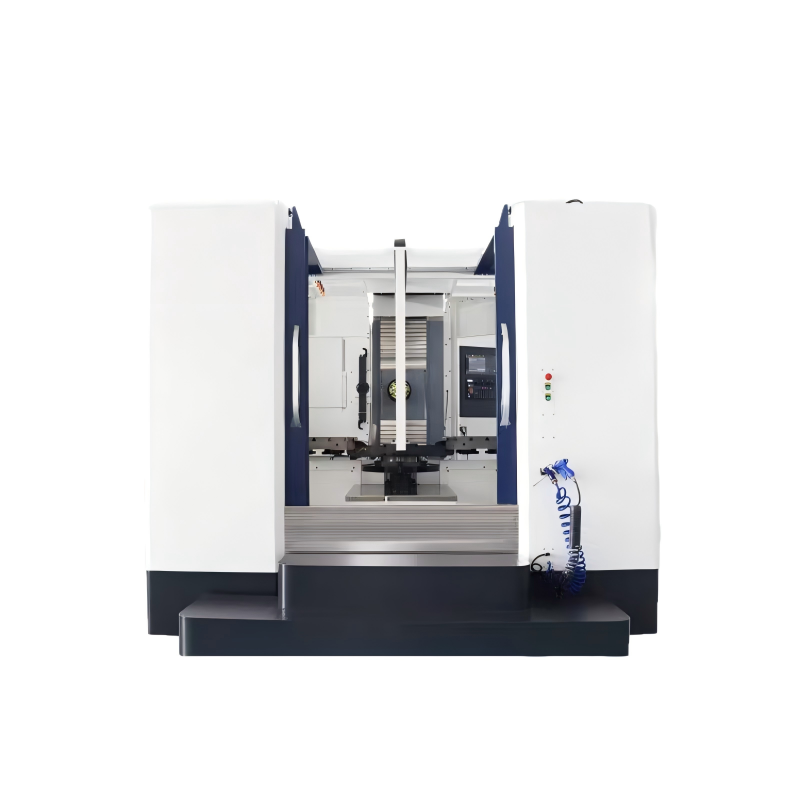
A 4 axis heavy horizontal machining center is equipped with several key features that set it apart from other types of machining centers. Firstly, its horizontal orientation allows for better chip evacuation, which is crucial for maintaining the quality of the machined surface. Secondly, the addition of the fourth axis enables the machine to handle a wider range of part geometries, including those with undercuts or complex contours. This capability is particularly valuable in industries such as aerospace, where components often have very specific and demanding requirements. Additionally, these machines are designed to handle heavy loads, making them suitable for working with large, dense materials like steel or titanium.
The versatility of the 4 axis heavy horizontal machining center makes it a go-to solution for a variety of applications. In the aerospace industry, for example, it is used to manufacture critical components such as turbine blades, landing gear, and structural parts. These parts require extremely high precision and must meet stringent safety standards. The ability of the 4 axis machine to achieve tight tolerances and smooth finishes is essential for ensuring the reliability and performance of these components. Similarly, in the automotive sector, this type of machine is utilized for producing engine blocks, transmission housings, and other parts that demand both strength and precision. The increased productivity and reduced setup times offered by the 4 axis heavy horizontal machining center contribute to more efficient manufacturing processes, ultimately leading to cost savings and improved product quality.
While the 4 axis heavy horizontal machining center offers numerous advantages, there are also some challenges and considerations that must be addressed. One of the primary concerns is the initial investment cost, which can be significantly higher compared to traditional 3-axis machines. However, the long-term benefits, such as increased productivity and reduced labor costs, often justify the expense. Another challenge is the complexity of programming and operating these machines. Operators need to be well-trained and experienced to fully leverage the capabilities of the 4 axis machine. Additionally, maintenance and upkeep are critical to ensure the longevity and optimal performance of the equipment. Regular inspections, lubrication, and calibration are necessary to prevent downtime and maintain the high level of precision that these machines are known for.
As technology continues to advance, the 4 axis heavy horizontal machining center is likely to see further improvements and innovations. One area of focus is the integration of automation and robotics, which can further enhance the efficiency and flexibility of these machines. Automated part loading and unloading, as well as in-process inspection systems, can help to reduce human intervention and improve overall throughput. Another trend is the development of more advanced control systems and software, which can simplify the programming process and provide real-time monitoring and diagnostics. These advancements will not only make the 4 axis heavy horizontal machining center more accessible to a broader range of users but also push the boundaries of what is possible in terms of machining precision and complexity.
The 4 axis heavy horizontal machining center is a testament to the ongoing evolution of machining technology. Its unique combination of precision, versatility, and robustness makes it an invaluable tool for a wide range of industries. As we continue to push the limits of what can be achieved with modern manufacturing, the 4 axis heavy horizontal machining center will undoubtedly play a central role in shaping the future of industrial production.
 17/06/2026
The 4 axis heavy horizontal machining center is a highly advanced piece of equipment, designed to handle complex parts with precision and efficiency. This report will delve into the key features and benefits that make this machine an indispensable tool in
Read More17/06/2026Understanding the 4 Axis Heavy Horizontal Machining CenterThe 4 axis heavy horizontal machining center is a significant advancement in the field of industrial manufacturing, offering unparalleled precision and efficiency. This type of machine is character
Read More17/06/2026Understanding the Basics of 4 Axis Heavy Horizontal Machining CentersA 4 axis heavy horizontal machining center is a sophisticated piece of machinery designed for high-precision and heavy-duty manufacturing tasks. Unlike 3-axis machines, which operate alo
Read More17/06/2026In the realm of modern manufacturing, the advent and evolution of the 4 axis heavy horizontal machining center have revolutionized the way complex parts are produced. These advanced machines offer unparalleled precision, efficiency, and versatility, makin
Read MoreOur professional sales team is always ready to assist you.