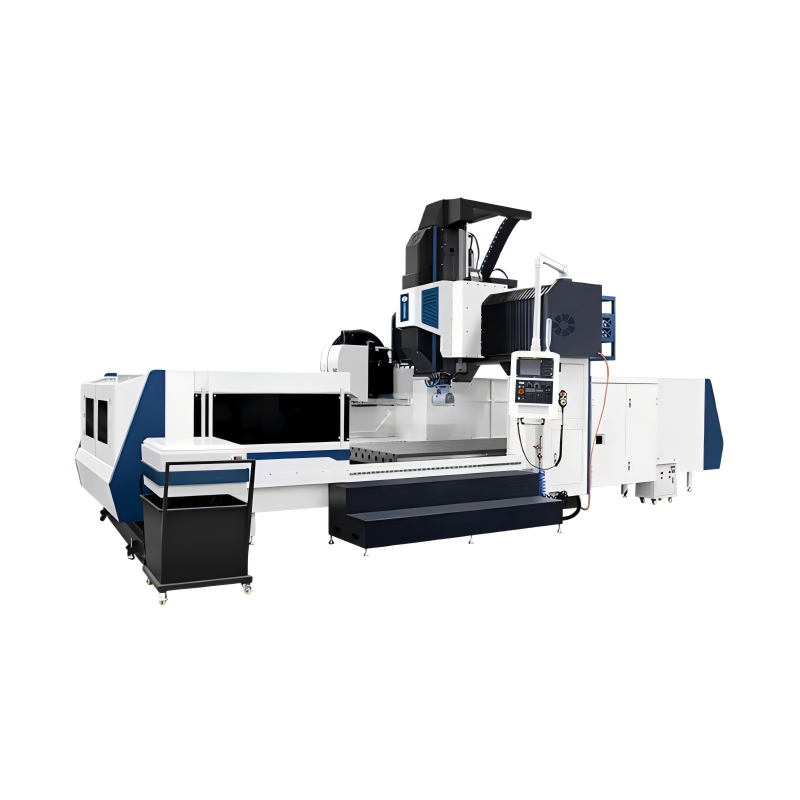
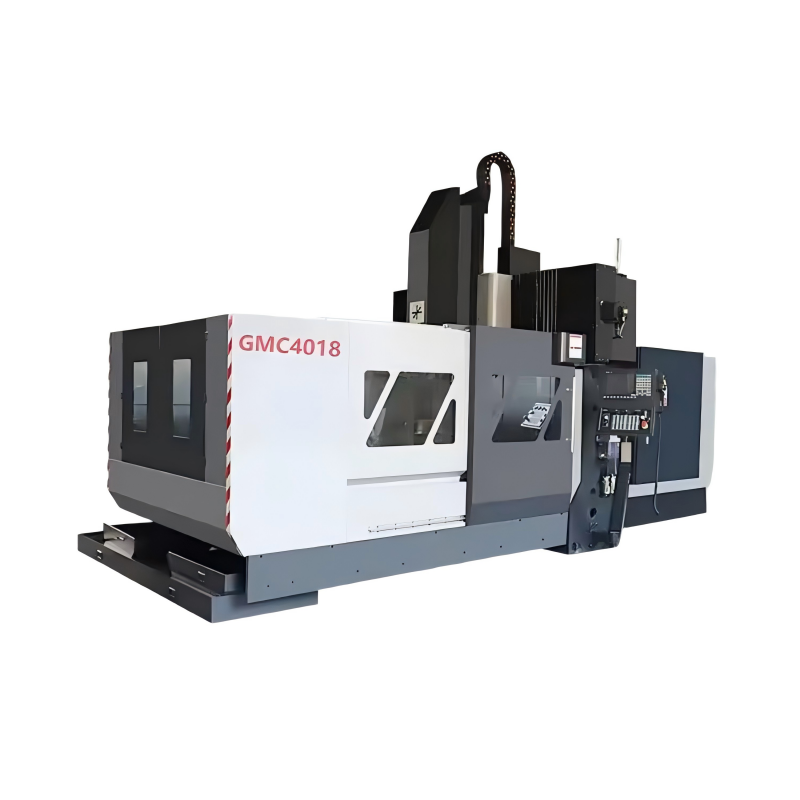
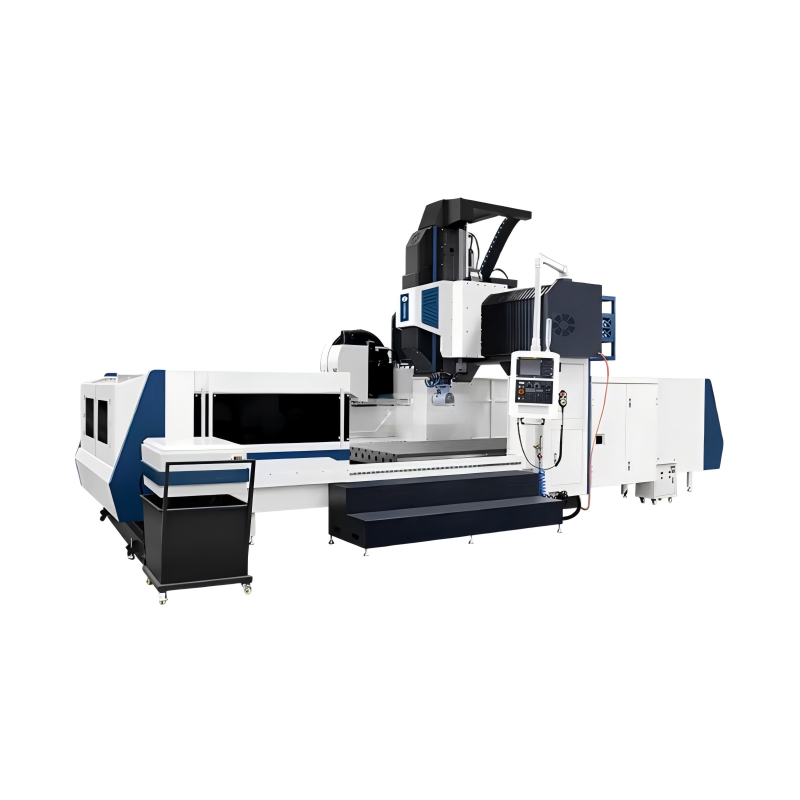
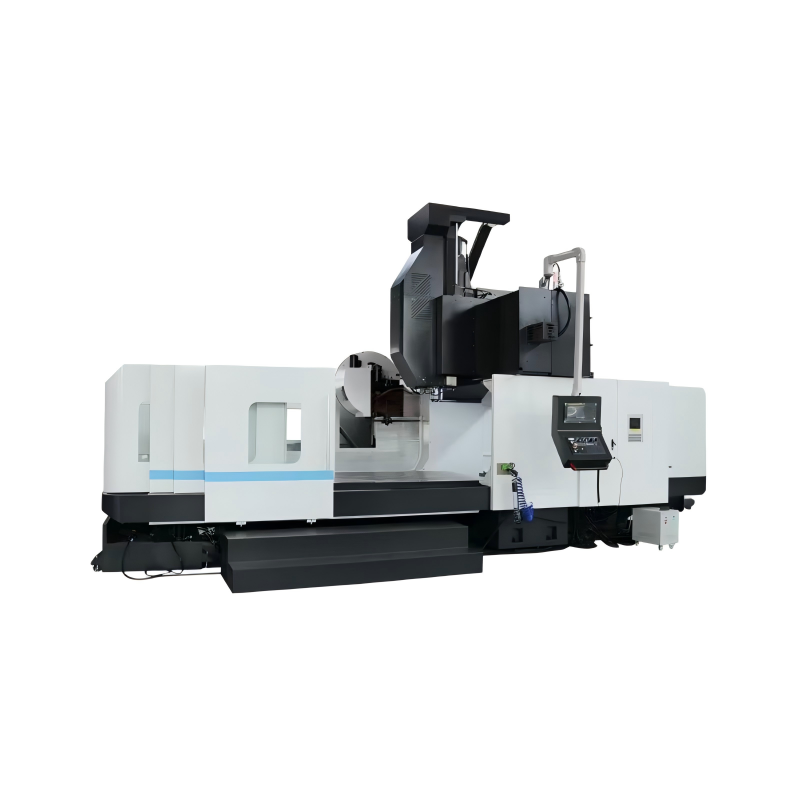
In the realm of precision manufacturing, the Gantry CNC Machining Center has emerged as a pivotal technology, transforming how complex and large-scale parts are produced. This report delves into recent advancements in gantry CNC technology, highlighting key innovations that have significantly enhanced machining capabilities. Through an examination of these developments, we will explore how they contribute to superior machining outcomes.
One of the most significant improvements in gantry CNC technology is the focus on enhancing structural stability. Modern gantry designs incorporate advanced materials such as high-strength alloys and composites, which not only increase the rigidity of the machine but also reduce vibrations. These materials, combined with optimized design principles, ensure that the gantry maintains its position with minimal deflection, even under heavy loads or during high-speed operations. The result is a marked improvement in machining accuracy and surface finish quality, making it possible to achieve tighter tolerances and more intricate geometries.
The integration of advanced control systems represents another critical innovation in Gantry CNC Machining Centers. These systems leverage sophisticated software algorithms and real-time data processing to optimize tool paths, minimize idle time, and enhance overall productivity. For instance, adaptive control technologies can automatically adjust cutting parameters based on the material being machined, ensuring optimal performance while reducing wear and tear on tools. Additionally, predictive maintenance features monitor the machine's health, alerting operators to potential issues before they lead to downtime. Such advancements not only boost efficiency but also extend the lifespan of the equipment, leading to cost savings over time.
A notable trend in the evolution of gantry CNC machining centers is the incorporation of multi-tasking capabilities. Today’s machines often feature multiple spindles, turrets, and rotary axes, allowing for simultaneous operations on different parts of a workpiece. This versatility is particularly advantageous for industries requiring the production of large, complex components, such as aerospace and automotive sectors. By enabling various processes—such as milling, drilling, turning, and even grinding—to be performed in a single setup, multi-tasking gantry CNCs significantly reduce setup times and improve part accuracy. Furthermore, this capability minimizes the need for repositioning the workpiece, thereby decreasing the risk of errors and improving overall throughput.
Automation plays a crucial role in the modernization of gantry CNC machining centers. The integration of automated systems, such as robotic loading and unloading, pallet changers, and tool changers, streamlines the entire manufacturing process. These systems not only reduce manual labor requirements but also ensure consistent and reliable operations. For example, automatic tool changers can switch out tools in seconds, minimizing downtime and increasing the number of parts that can be produced per hour. Additionally, automated pallet changers allow for continuous operation by enabling the next workpiece to be set up while the current one is being machined. This level of automation not only enhances productivity but also improves the safety and ergonomics of the work environment.
The advancements in gantry CNC technology have revolutionized the field of precision machining, offering unprecedented levels of accuracy, efficiency, and versatility. Enhanced structural stability, advanced control systems, multi-tasking capabilities, and the integration of automation are key drivers of these improvements. As these technologies continue to evolve, the future of gantry CNC machining centers looks increasingly promising, with the potential to further transform the manufacturing landscape.
 01/06/2026
In the realm of high-precision manufacturing, the role of a Gantry CNC Machining Center is pivotal, especially in environments where high-volume production is required. This type of machinery not only accelerates the production process but also ensures th
Read More30/05/2026The advent of modern technology has revolutionized the manufacturing industry, with Gantry CNC Machining Center being at the forefront. These advanced machines offer unparalleled precision, efficiency, and versatility, making them indispensable in today's
Read More29/05/2026In the realm of industrial manufacturing, precision and efficiency are paramount. Among the many technological advancements that have significantly contributed to these aspects, the Gantry CNC Machining Center stands out as a revolutionary tool. This repo
Read More28/05/2026The advent of Gantry CNC Machining Centers has revolutionized the manufacturing industry, offering unparalleled precision and efficiency. These machines are designed to handle large-scale projects with high accuracy, making them indispensable in various i
Read More27/05/2026As manufacturing processes continue to evolve, the integration of advanced technologies such as Artificial Intelligence (AI) into traditional machinery is becoming increasingly essential. One key area where this transformation is taking place is within Ga
Read More26/05/2026The Gantry CNC Machining Center represents a paradigm shift in large-scale precision manufacturing. Unlike conventional bridge-type or fixed-table configurations, its structural rigidity, symmetrical load distribution, and dual-driven axis architecture en
Read More25/05/2026Modern high-performance Gantry CNC Machining Center systems operate at the frontier of precision manufacturing. Their structural rigidity, large work envelope, and multi-axis synchronization enable machining of aerospace monoliths, energy turbine housings
Read More24/05/2026Modern large-scale manufacturing demands precision, repeatability, and adaptability—especially for aerospace, energy, and heavy machinery sectors. The Gantry CNC Machining Center has emerged as a critical platform for high-volume, high-accuracy part produ
Read More23/05/2026The Gantry CNC Machining Center represents a cornerstone architecture in large-scale precision manufacturing. Its rigid, bridge-like structure enables high-stiffness motion across expansive work envelopes—commonly exceeding 3,000 mm in X and Y axes. Unlik
Read More22/05/2026Thermal stability is a decisive factor in high-precision manufacturing environments. In large-scale Gantry CNC Machining Center applications—particularly those involving aerospace components, heavy-duty dies, and precision molds—dimensional drift due to t
Read More21/05/2026Automotive Original Equipment Manufacturers (OEMs) face unprecedented pressure to reduce cycle times, improve dimensional consistency, and accommodate rapid model proliferation—all while maintaining sub-50 µm geometric tolerances across large structural c
Read More20/05/2026Modern manufacturing demands unprecedented precision, rigidity, and scalability—especially for large-part machining in aerospace, energy, and heavy machinery sectors. The Gantry CNC Machining Center has emerged as the structural cornerstone for such appli
Read More19/05/2026Modern heavy-duty industrial manufacturing demands unprecedented levels of dimensional stability, dynamic rigidity, and scalable work envelope performance. Conventional bridge-type or fixed-table CNC machining centers increasingly reach operational limits
Read More18/05/2026Modern aerospace manufacturing demands extreme precision, structural integrity, and scalability—especially for wing spars, fuselage panels, and engine nacelles. These components often exceed 10 meters in length and require micron-level tolerance across va
Read More29/04/20261. Structural Rigidity and Dynamic Stability in Gantry ArchitectureThe foundational advantage of the Gantry CNC Machining Center lies not in its size alone, but in the inherent structural integrity conferred by its bridge-type architecture. Unlike floor-m
Read More29/04/2026The fabrication of wind turbine tower structures presents a unique confluence of scale, geometric complexity, and metrological rigor. As turbine heights exceed 160 meters and tower diameters approach 5.5 meters, traditional machining approaches—such as mu
Read MoreOur professional sales team is always ready to assist you.