Understanding the 4 Axis Vertical Machining Center
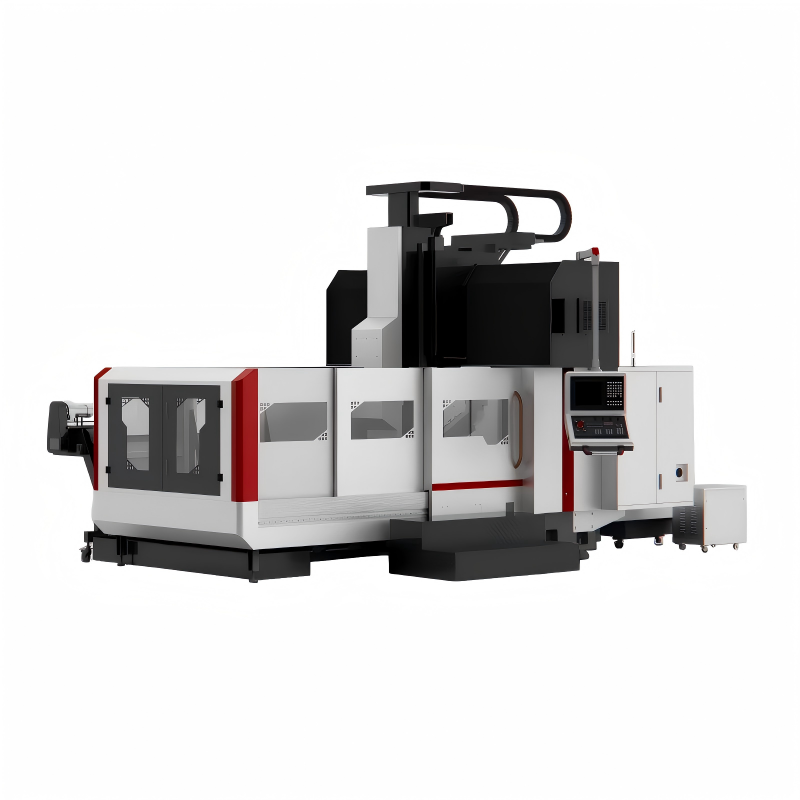
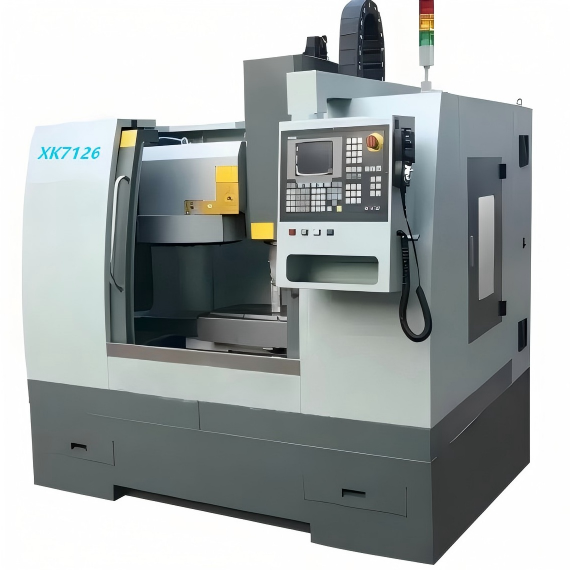
The advent of advanced manufacturing technologies has significantly transformed the production landscape, with the 4 Axis Vertical Machining Center (VMC) standing out as a pivotal tool in modern manufacturing. This machine is designed to enhance efficiency and precision, making it an indispensable asset for manufacturers aiming to stay competitive. A 4 Axis VMC typically includes three linear axes (X, Y, and Z) and one rotary axis (A or B), which allows for more complex and intricate machining operations compared to traditional 3-axis machines.
One of the key advantages of a 4 Axis VMC is its ability to perform multi-sided machining in a single setup, reducing the need for multiple setups and minimizing the risk of human error. This not only saves time but also ensures higher accuracy and consistency in the final product. The integration of a fourth axis enables the machine to rotate the workpiece, allowing for the machining of parts with complex geometries and features that would be difficult or impossible to achieve with a 3-axis machine.
Enhancing Productivity through Automation and Integration
Modern 4 Axis VMCs are equipped with advanced automation features, such as automatic tool changers, pallet changers, and robotic loading systems. These features enable continuous, unattended operation, which can significantly boost productivity. For example, an automatic tool changer allows the machine to switch between different tools without operator intervention, reducing downtime and increasing throughput. Similarly, pallet changers and robotic loading systems can handle multiple workpieces simultaneously, further enhancing the machine's efficiency.
Integration with other manufacturing systems, such as CAD/CAM software and enterprise resource planning (ERP) systems, is another critical aspect of maximizing the potential of a 4 Axis VMC. Seamless integration ensures that the machine can receive and process data directly from design and planning stages, streamlining the entire manufacturing process. This not only reduces the likelihood of errors but also enables real-time monitoring and adjustments, leading to improved overall efficiency.
Cost-Effectiveness and Return on Investment
While the initial investment in a 4 Axis VMC may be higher than that of a 3-axis machine, the long-term cost savings and increased productivity make it a worthwhile investment. The ability to perform complex operations in a single setup reduces the need for additional machinery and labor, leading to lower operational costs. Additionally, the reduced cycle times and higher throughput contribute to a faster return on investment (ROI).
Moreover, the 4 Axis VMC's versatility and precision can lead to higher quality products, which can command premium prices in the market. This, combined with the potential for increased production volumes, can result in significant financial benefits for manufacturers. In many cases, the ROI for a 4 Axis VMC can be achieved within a few years, making it a strategic investment for companies looking to enhance their manufacturing capabilities.
Ensuring Precision and Quality
One of the primary reasons for the popularity of 4 Axis VMCs is their ability to achieve high levels of precision and quality. The additional rotary axis allows for more precise control over the workpiece, enabling the machine to produce parts with tight tolerances and complex geometries. This is particularly important in industries such as aerospace, medical devices, and automotive, where precision and quality are paramount.
Advanced features such as thermal compensation, dynamic stiffness, and vibration damping further enhance the machine's precision. Thermal compensation systems monitor and adjust for temperature variations, ensuring consistent performance even in varying environmental conditions. Dynamic stiffness and vibration damping technologies help to minimize deflections and vibrations during machining, resulting in smoother surfaces and higher quality finishes.
Future Trends and Innovations
As manufacturing technology continues to evolve, the 4 Axis VMC is also undergoing significant advancements. One of the key trends is the integration of Industry 4.0 technologies, such as the Internet of Things (IoT), artificial intelligence (AI), and machine learning (ML). These technologies enable predictive maintenance, real-time monitoring, and data-driven decision-making, further enhancing the machine's efficiency and reliability.
Another area of innovation is the development of hybrid 4 Axis VMCs that combine milling, turning, and grinding capabilities in a single machine. This multi-functional approach allows for even more complex and diverse machining operations, providing manufacturers with greater flexibility and efficiency. Additionally, advances in materials and tooling technologies are also contributing to the ongoing evolution of 4 Axis VMCs, making them more robust and capable of handling a wider range of materials and applications.


 23/06/2026



