The advent of Computer Numerical Control (CNC) technology has revolutionized the manufacturing industry, offering unparalleled precision and efficiency. Among the various types of CNC machines, the 2-Axis Flat Bed CNC Lathe stands out as a versatile tool for producing cylindrical parts with high accuracy. However, mastering the programming of such a machine can be a daunting task, especially for beginners. This report aims to guide you through the learning curve of 2-Axis Flat Bed CNC Lathe programming, providing insights and practical tips to help you become proficient in this skill.
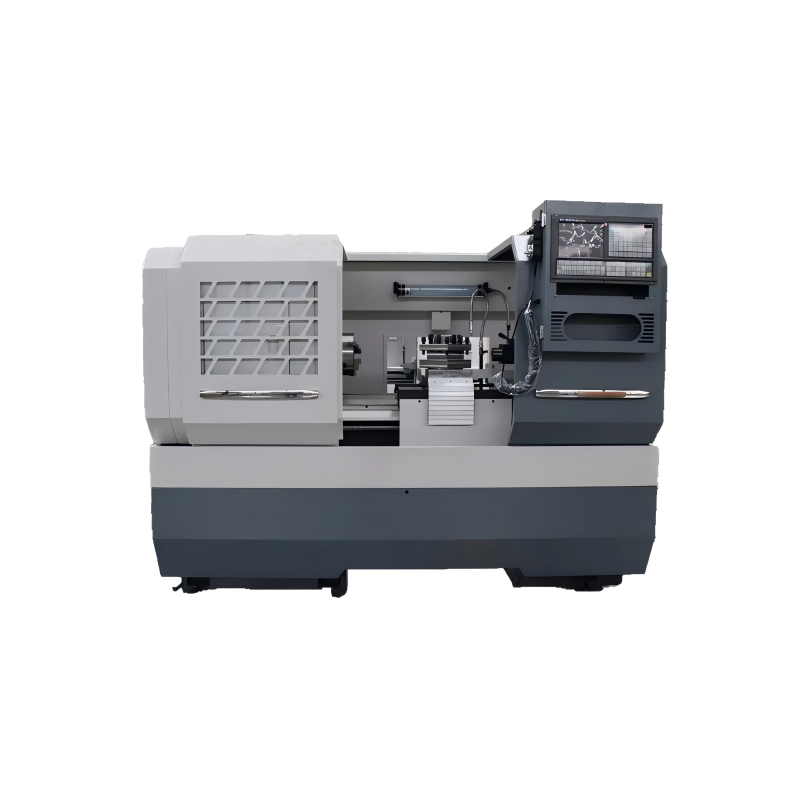
A 2-Axis Flat Bed CNC Lathe operates on two primary axes: X and Z. The X-axis controls the cross-slide, which moves the cutting tool perpendicular to the workpiece, while the Z-axis controls the carriage, moving the tool parallel to the workpiece. Understanding these axes is crucial for effective programming. The lathe's flat bed design allows for easy setup and operation, making it ideal for both small and large-scale production.
To begin, familiarize yourself with the machine's control panel and the G-code commands used to program it. G-codes are the standard language for CNC programming, and they instruct the machine on how to move and perform specific operations. Common G-codes include G00 (rapid move), G01 (linear interpolation), G02 (circular interpolation clockwise), and G03 (circular interpolation counterclockwise).
Mastering the 2-Axis Flat Bed CNC Lathe programming requires a deep understanding of several key techniques. One of the most important is the use of subroutines. Subroutines allow you to break down complex programs into smaller, reusable blocks of code. This not only simplifies the programming process but also makes it easier to maintain and modify your programs.
Another essential technique is the use of loops. Loops enable you to repeat a set of instructions multiple times, which is particularly useful for tasks that require repetitive actions, such as threading or facing. For example, a loop can be used to create a series of identical grooves along the length of a workpiece, ensuring uniformity and precision.
Additionally, tool compensation is a critical aspect of CNC lathe programming. Tool compensation accounts for the wear and tear of the cutting tool over time, ensuring that the dimensions of the finished part remain within the specified tolerances. By adjusting the tool offset, you can compensate for any changes in the tool's geometry, maintaining the quality and accuracy of your machined parts.
Efficiency is a key factor in the success of any manufacturing process. To optimize the workflow of your 2-Axis Flat Bed CNC Lathe, consider implementing the following strategies:
By adopting these strategies, you can significantly enhance the efficiency and productivity of your 2-Axis Flat Bed CNC Lathe, leading to higher quality parts and a more streamlined manufacturing process.
As you become more proficient in 2-Axis Flat Bed CNC Lathe programming, you may want to explore advanced features and customization options to further enhance your capabilities. Many modern CNC lathes offer additional features such as live tooling, which allows for milling and drilling operations on the same machine. This can greatly expand the range of parts you can produce and reduce the need for secondary operations.
Custom macros are another powerful tool for advanced users. Macros are user-defined subroutines that can perform complex operations with a single command. For example, you can create a macro to automatically calculate and apply the correct tool compensation based on the current tool wear. This not only saves time but also ensures consistent and accurate results.
Finally, consider integrating your CNC lathe with other manufacturing systems, such as CAD/CAM software and ERP (Enterprise Resource Planning) systems. This integration allows for seamless data transfer and real-time monitoring of the production process, enabling you to make informed decisions and optimize your operations.
Navigating the learning curve of 2-Axis Flat Bed CNC Lathe programming requires a combination of theoretical knowledge and practical experience. By understanding the basics, mastering key programming techniques, optimizing your workflow, and exploring advanced features, you can become a skilled and efficient CNC programmer. With dedication and practice, you will be able to produce high-quality parts with precision and consistency, contributing to the success of your manufacturing operations.
 26/06/2026
In the realm of custom fabrication, the 2-Axis Flat Bed CNC Lathe stands out as a versatile and indispensable tool. This technical report aims to explore the capabilities of the 2-Axis Flat Bed CNC Lathe, highlighting its role in enhancing precision, effi
Read More26/06/2026In the realm of modern manufacturing, precision and efficiency are paramount. Among the tools that have revolutionized this field, the 2-Axis Flat Bed CNC Lathe stands out as a versatile and cost-effective solution for a wide range of applications. This r
Read More25/06/2026A 2-Axis Flat Bed CNC Lathe is a sophisticated piece of machinery used in various manufacturing processes, from automotive to aerospace. Its ability to precisely cut and shape materials makes it an indispensable tool in modern industry. However, like all
Read More25/06/2026Understanding the Basics of a 2-Axis Flat Bed CNC LatheThe 2-Axis Flat Bed CNC Lathe is an essential tool in modern manufacturing, designed for precision machining tasks. This type of lathe operates on two primary axes: X and Z. The X-axis controls the cr
Read More25/06/2026For manufacturers and hobbyists alike, the 2-Axis Flat Bed CNC Lathe is an indispensable tool for precision machining. However, like all machinery, it requires regular maintenance to ensure optimal performance and longevity. This technical report will del
Read More25/06/2026In the ever-evolving landscape of metalworking, the introduction and continuous improvement of 2-Axis Flat Bed CNC Lathe have significantly transformed the industry. This technological marvel has not only enhanced precision and efficiency but also opened
Read More24/06/2026In today’s competitive manufacturing landscape, the demand for high-precision and efficient machinery is at an all-time high. One such piece of equipment that has gained significant traction in recent years is the 2-Axis Flat Bed CNC Lathe. This article d
Read More24/06/2026The manufacturing industry is undergoing a transformative phase, driven by the integration of advanced technologies. One such technology that stands out is the 2-Axis Flat Bed CNC Lathe, which has become a cornerstone in precision machining. This report e
Read More24/06/2026Understanding the Basics of 2-Axis Flat Bed CNC LathesThe advent of 2-axis flat bed CNC (Computer Numerical Control) lathes has revolutionized machining processes, offering unparalleled precision and efficiency. These machines operate on two primary axes:
Read More24/06/2026Understanding the Basics of a 2-Axis Flat Bed CNC LatheA 2-Axis Flat Bed CNC Lathe is an essential piece of machinery in many manufacturing and engineering workshops. Its primary function lies in the precise shaping of metal or plastic parts through rotat
Read More23/06/2026As the global manufacturing industry continues to evolve, the demand for high-precision and reliable machinery has never been higher. One such machine that stands out in this context is the 2-Axis Flat Bed CNC Lathe. This article aims to provide a compreh
Read More23/06/2026In the world of precision machining, choosing the right tool for your workshop is crucial. One such versatile and efficient machine is the 2-Axis Flat Bed CNC Lathe. This technical report will explore the reasons why a 2-Axis Flat Bed CNC Lathe might be t
Read More23/06/2026The 2-Axis Flat Bed CNC Lathe is a sophisticated piece of machinery that plays a crucial role in the manufacturing industry. It combines precision, efficiency, and versatility to produce high-quality components. This technical report aims to provide an in
Read More23/06/2026Understanding the Basics of 2-Axis Flat Bed CNC LatheThe 2-Axis Flat Bed CNC Lathe is a fundamental tool in modern manufacturing, designed to perform precise turning operations. Unlike its more complex counterparts, this lathe focuses on two primary axes:
Read More22/06/2026China, as a global leader in manufacturing, has been at the forefront of technological advancements that enhance productivity and efficiency. One such innovation is the 2-Axis Flat Bed CNC Lathe, which has significantly improved industrial processes, part
Read More22/06/2026In the realm of precision machining, the 2-Axis Flat Bed CNC Lathe stands out as a versatile and efficient tool for manufacturing. This technical report aims to explore how this machine can enhance production efficiency, reduce costs, and improve overall
Read More22/06/2026The 2-Axis Flat Bed CNC Lathe has become an indispensable tool in the field of precision engineering, offering unparalleled accuracy and efficiency. This technical report aims to explore the critical role played by the 2-Axis Flat Bed CNC Lathe in modern
Read More22/06/2026In the realm of modern machining, the 2-Axis Flat Bed CNC Lathe has emerged as a versatile and indispensable tool for manufacturing precision components. This report delves into the advantages that this machine brings to the table, exploring how it enhanc
Read MoreOur professional sales team is always ready to assist you.