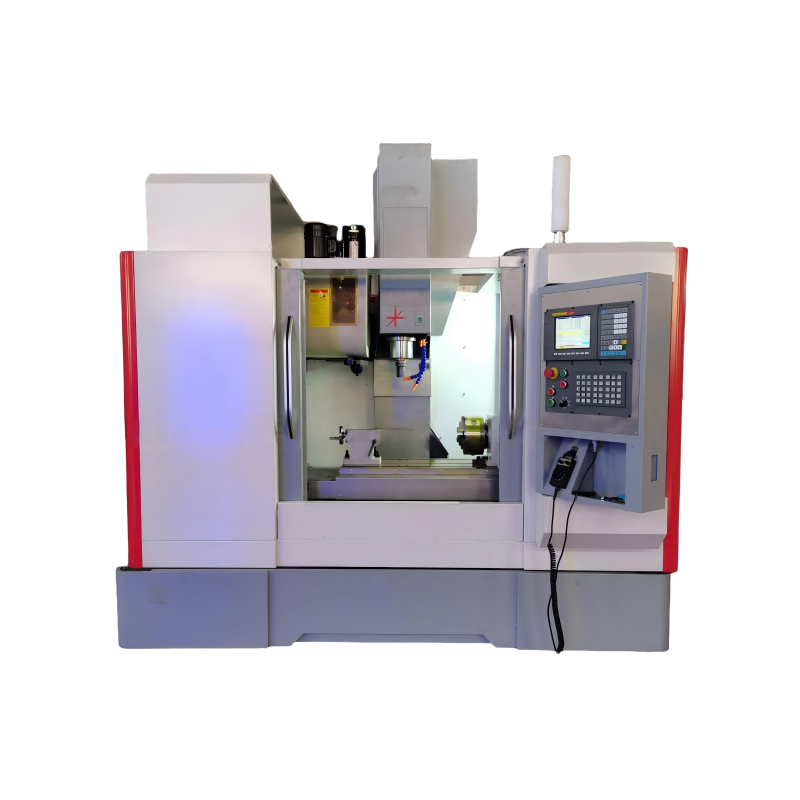
In the dynamic and ever-evolving landscape of aerospace manufacturing, the introduction of 5 axis Machining Centers has marked a significant leap forward. These advanced machines have not only enhanced the precision and efficiency of manufacturing processes but also opened up new possibilities for design and production. This report delves into the transformative impact of 5 axis machining centers on the aerospace industry, highlighting their key benefits and the future potential they hold.
The aerospace industry demands components that are not only highly precise but also capable of withstanding extreme conditions. Traditional 3-axis machining, while effective, often falls short when it comes to producing parts with complex geometries. The advent of 5 axis machining centers has revolutionized this aspect by enabling the manufacture of intricate and multifaceted parts with unparalleled accuracy. These machines can manipulate the workpiece and tool in five different axes, allowing for the creation of parts with complex curvatures and angles that were previously unattainable. This capability is particularly crucial in the aerospace sector, where the slightest deviation can have catastrophic consequences.
For instance, turbine blades, which are critical components in jet engines, require extremely tight tolerances and complex shapes to optimize performance and durability. 5 axis machining centers can produce these components with the necessary precision, ensuring that they meet the stringent requirements of the aerospace industry. This level of precision not only enhances the performance and reliability of aerospace components but also contributes to the overall safety and efficiency of aircraft.
One of the most significant advantages of 5 axis machining centers is their ability to reduce production time and increase overall efficiency. Traditional machining methods often require multiple setups and operations to complete a single part, leading to longer lead times and increased costs. In contrast, 5 axis machining centers can perform multiple operations in a single setup, significantly reducing the time and effort required to produce a part. This streamlined process not only speeds up production but also minimizes the risk of errors that can occur during multiple setups.
Furthermore, 5 axis machining centers can handle a wide range of materials, including high-strength alloys and composites, which are commonly used in aerospace applications. The ability to machine these materials efficiently and accurately is a game-changer for the industry, as it allows for the rapid development and production of advanced aerospace components. This increased efficiency translates into faster turnaround times and lower production costs, making 5 axis machining centers an indispensable tool for aerospace manufacturers.
The flexibility offered by 5 axis machining centers has a profound impact on the design and innovation capabilities of aerospace engineers. With the ability to create complex geometries and intricate designs, these machines enable engineers to push the boundaries of what is possible in terms of component design. This design flexibility is particularly important in the aerospace industry, where the need for lightweight, high-performance components is paramount.
For example, the use of 5 axis machining centers has facilitated the development of more aerodynamic and structurally efficient aircraft components. By optimizing the shape and weight of these components, aerospace manufacturers can improve the overall performance and fuel efficiency of aircraft. Additionally, the ability to machine complex internal features, such as cooling channels and lattice structures, allows for the creation of parts that are both strong and lightweight, further enhancing the performance of aerospace systems.
Moreover, the integration of 5 axis machining centers with advanced design software and simulation tools enables a seamless transition from concept to production. Engineers can quickly iterate and refine their designs, knowing that the final product can be manufactured with the required precision and quality. This synergy between design and manufacturing is a key driver of innovation in the aerospace industry, allowing for the continuous improvement and evolution of aerospace technology.
While the initial investment in 5 axis machining centers may be higher compared to traditional machining equipment, the long-term cost savings and sustainability benefits make them a worthwhile investment for aerospace manufacturers. The ability to produce parts with greater precision and in fewer setups reduces material waste and energy consumption, contributing to a more sustainable manufacturing process. Additionally, the reduced need for manual labor and the increased automation of 5 axis machining centers can lead to significant cost savings over time.
Furthermore, the versatility of 5 axis machining centers allows for the consolidation of multiple parts into a single, more efficient design. This not only simplifies the assembly process but also reduces the number of components and fasteners required, leading to lighter and more cost-effective aircraft. The ability to produce complex, multi-functional parts in a single operation also reduces the need for additional post-processing steps, further streamlining the manufacturing process and reducing costs.
From a sustainability perspective, the reduced material waste and energy consumption associated with 5 axis machining centers align with the growing emphasis on environmental responsibility in the aerospace industry. As the industry continues to prioritize sustainability, the adoption of 5 axis machining centers will play a crucial role in achieving these goals.
The integration of 5 axis machining centers into the aerospace manufacturing process has brought about a paradigm shift in the industry. These advanced machines offer enhanced precision, increased efficiency, and unprecedented design flexibility, all of which are essential for meeting the rigorous demands of the aerospace sector. As the industry continues to evolve, the role of 5 axis machining centers will only become more significant, driving innovation and sustainability in the years to come.
By embracing 5 axis machining centers, aerospace manufacturers can stay at the forefront of technological advancements, ensuring that they remain competitive and capable of delivering high-quality, reliable, and innovative solutions. The future of aerospace manufacturing is undoubtedly intertwined with the continued development and adoption of 5 axis machining centers, making them a cornerstone of the industry's ongoing success.
 28/06/2026
In the realm of precision manufacturing, 5 axis machining centers have emerged as indispensable tools for producing complex parts with high accuracy and efficiency. This report delves into the capabilities of these advanced machines, exploring their uniqu
Read More27/06/2026The advent of 5 axis machining centers has revolutionized the manufacturing industry, offering unparalleled precision and versatility. As we look to the future, these advanced machines are set to play an even more critical role in shaping the landscape of
Read More26/06/2026Understanding the Core of 5 Axis Machining CentersThe advent of 5 axis machining centers has revolutionized the manufacturing industry, offering unparalleled precision and efficiency. These advanced machines are capable of moving a tool or a part in five
Read More25/06/2026In the rapidly evolving landscape of modern manufacturing, the advent and adoption of 5 axis machining centers have revolutionized the way complex parts are produced. These advanced machines offer a level of precision, flexibility, and efficiency that tra
Read MoreOur professional sales team is always ready to assist you.