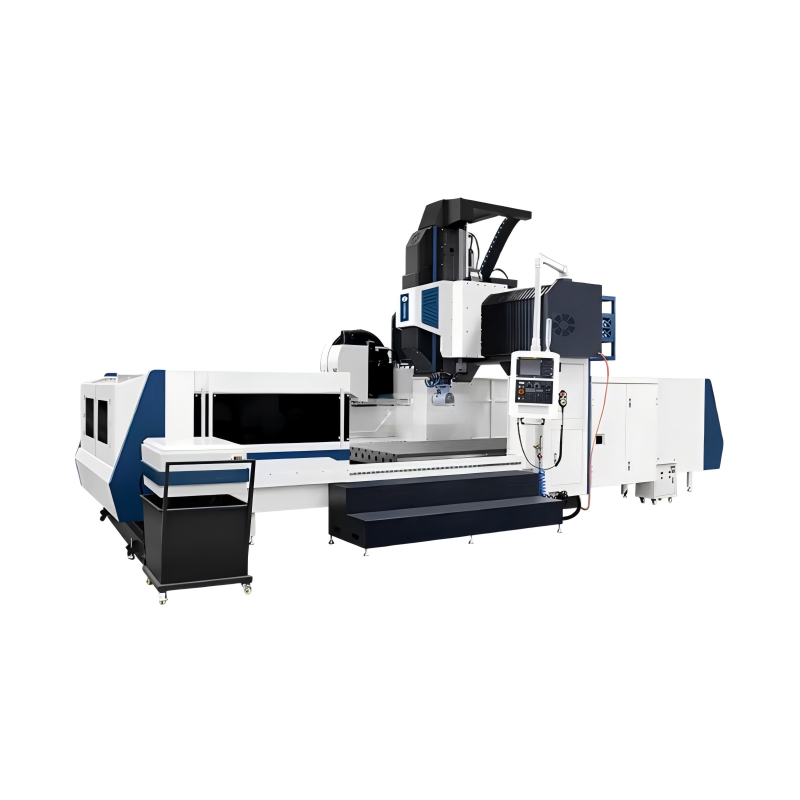
In the ever-evolving landscape of manufacturing, the integration of advanced technology has become a cornerstone for innovation and efficiency. One such technological advancement that is revolutionizing industries is the Mold Making VMC (Vertical Machining Center). This article delves into how VMC solutions are transforming traditional manufacturing processes, enhancing productivity, and driving the industry forward.
The advent of Mold Making VMCs has significantly improved the precision and accuracy of mold production. These machines are equipped with high-precision spindles and advanced control systems, allowing for intricate and complex designs to be machined with unparalleled accuracy. The ability to maintain tight tolerances ensures that the final products meet the highest quality standards, reducing the need for rework and minimizing waste. This level of precision is particularly crucial in industries such as automotive, aerospace, and medical, where even the slightest deviation can have significant consequences.
Moreover, the use of advanced software and simulation tools in VMCs allows for the optimization of tool paths and cutting parameters. This not only enhances the overall quality of the molds but also reduces the time required for setup and machining. The result is a more efficient and cost-effective production process, making VMCs an indispensable tool for modern manufacturers.
One of the key advantages of Mold Making VMCs is their ability to significantly increase productivity and efficiency. These machines are designed to handle a wide range of materials, from soft metals to hard alloys, and can operate at high speeds and feed rates without compromising on accuracy. The multi-axis capabilities of VMCs allow for simultaneous machining operations, reducing the number of setups required and minimizing downtime.
Additionally, the integration of automation and robotics in VMCs further enhances their productivity. Automated tool changers, pallet changers, and robotic arms can be seamlessly integrated into the machining process, allowing for continuous operation and minimal human intervention. This not only increases the throughput but also reduces the risk of human error, ensuring consistent and reliable results. The combination of high-speed machining, multi-axis capabilities, and automation makes VMCs a powerful solution for manufacturers looking to boost their productivity and stay competitive in the market.
While the initial investment in a Mold Making VMC may seem substantial, the long-term benefits in terms of cost savings and sustainability make it a worthwhile investment. The high precision and efficiency of VMCs lead to reduced material waste, lower energy consumption, and minimized rework, all of which contribute to significant cost savings over time. The ability to produce high-quality molds with fewer defects also reduces the need for post-processing and additional quality control measures, further lowering operational costs.
From a sustainability perspective, VMCs play a crucial role in promoting eco-friendly manufacturing practices. The reduction in material waste and energy consumption aligns with the growing emphasis on environmental responsibility in the manufacturing industry. Additionally, the use of advanced cooling and lubrication systems in VMCs helps to minimize the environmental impact by reducing the amount of coolant and lubricant required during the machining process. This not only contributes to a more sustainable manufacturing process but also helps companies meet their environmental and regulatory compliance requirements.
Mold Making VMCs offer a high degree of flexibility and versatility, making them suitable for a wide range of applications across various industries. These machines can be easily reconfigured to accommodate different workpieces and tooling, allowing manufacturers to adapt to changing production needs and market demands. The ability to switch between different materials and machining processes without significant downtime or setup changes is a significant advantage in today’s dynamic manufacturing environment.
Furthermore, the integration of Industry 4.0 technologies, such as IoT (Internet of Things) and AI (Artificial Intelligence), in VMCs enhances their flexibility and adaptability. Real-time monitoring and data analytics enable manufacturers to optimize machine performance, predict maintenance needs, and improve overall operational efficiency. The ability to collect and analyze data in real-time provides valuable insights into the machining process, allowing for continuous improvement and innovation. This level of flexibility and adaptability is essential for manufacturers looking to stay ahead in a rapidly evolving market.
As technology continues to advance, the future of Mold Making VMCs looks promising. Emerging trends such as additive manufacturing, hybrid machining, and smart manufacturing are likely to play a significant role in shaping the future of VMCs. Additive manufacturing, or 3D printing, can be integrated with VMCs to create hybrid machines capable of both subtractive and additive processes, offering new possibilities for mold making and rapid prototyping.
Hybrid machining, which combines the strengths of both milling and turning operations, is another area of innovation. These machines can perform multiple operations in a single setup, further increasing productivity and reducing the need for multiple machines. Smart manufacturing, powered by AI and machine learning, will enable VMCs to become more autonomous and self-optimizing, leading to even greater efficiency and productivity.
Additionally, the development of new materials and coatings for cutting tools and machine components will further enhance the performance and durability of VMCs. Advanced materials with higher wear resistance and thermal stability will enable VMCs to operate at higher speeds and feed rates, while also extending the lifespan of the machine and its components.
In conclusion, Mold Making VMCs are at the forefront of technological innovation in the manufacturing industry. Their ability to deliver high precision, increased productivity, cost savings, and flexibility makes them an essential tool for modern manufacturers. As the industry continues to evolve, the integration of emerging technologies and innovative solutions will further enhance the capabilities of VMCs, driving the industry towards a more efficient, sustainable, and competitive future.
 24/06/2026
In the ever-evolving world of manufacturing, the precision and efficiency of mold making have become increasingly critical. The advent of advanced machining technologies, such as Vertical Machining Centers (VMC), has revolutionized the way molds are desig
Read More24/06/2026In the rapidly evolving world of manufacturing, precision and efficiency are not just desirable; they are absolute necessities. This is especially true in mold making, where the slightest deviation can lead to significant quality issues. One technology th
Read More23/06/2026In the ever-evolving landscape of manufacturing, technological advancements are reshaping the way we produce goods. One such technology that has gained significant attention is Vertical Machining Center (VMC) technology. This report delves into the future
Read More23/06/2026With the rapid advancement in manufacturing technologies, the demand for precision and efficiency has never been higher. One of the key areas where this is evident is in mold making, particularly with the use of VMC (Vertical Machining Centers). This repo
Read More23/06/2026In the intricate world of manufacturing, precision is not just a preference but a necessity. The ability to create molds with high accuracy and consistency is crucial for industries ranging from automotive to electronics. This report delves into the art o
Read MoreOur professional sales team is always ready to assist you.