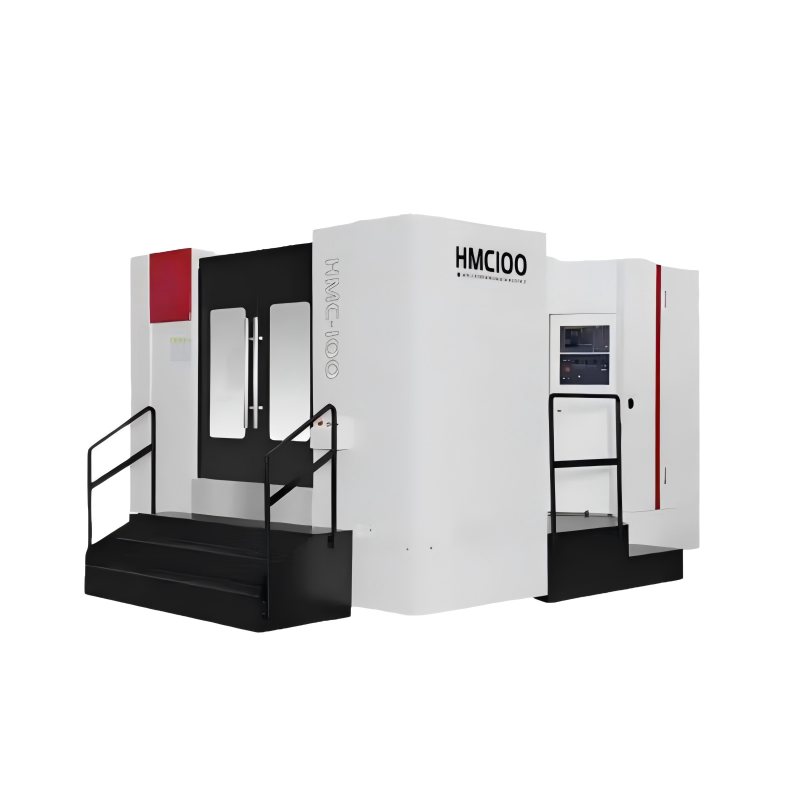
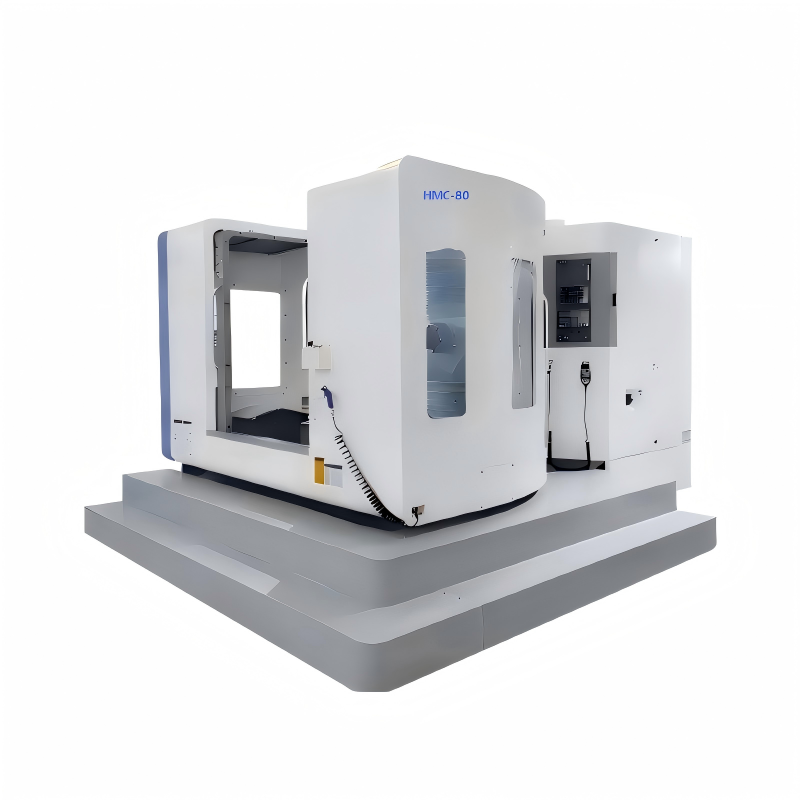
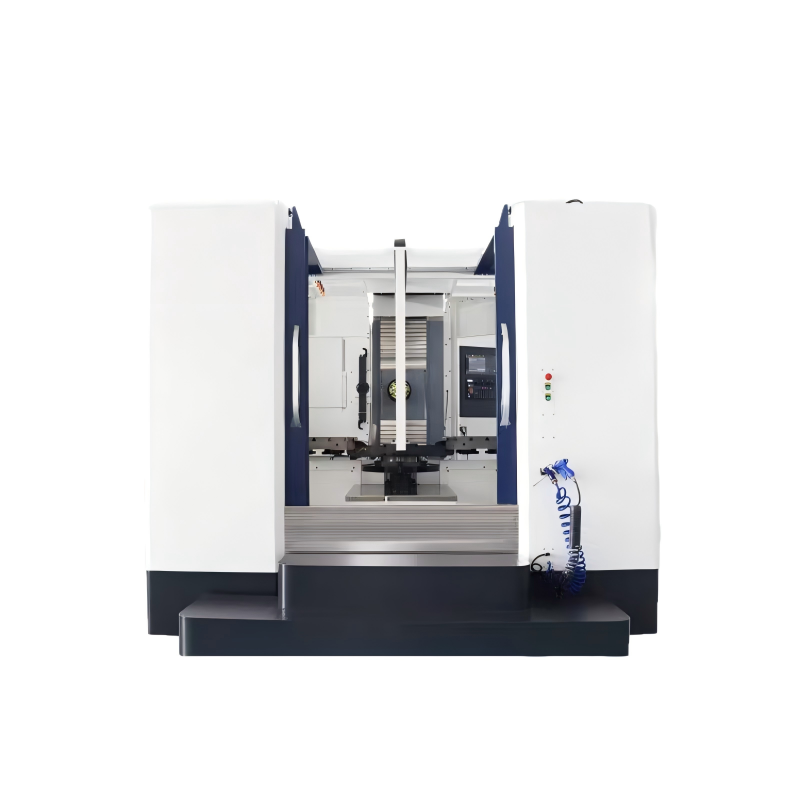
In the ever-evolving landscape of manufacturing, the introduction and continuous improvement of horizontal Machining Centers (HMCs) have played a pivotal role in enhancing productivity, precision, and efficiency. This technical report delves into how fully automatic horizontal CNC machines are revolutionizing production, offering a comprehensive analysis of their impact on modern manufacturing processes.
The integration of fully automatic systems within Horizontal Machining Centers has significantly elevated the capabilities of these machines. By automating not only the cutting process but also the loading, unloading, and tool changing operations, manufacturers can achieve unprecedented levels of productivity. The seamless workflow reduces downtime and minimizes human intervention, leading to a more consistent output and faster cycle times. For instance, a fully automatic horizontal CNC machine can operate 24/7 with minimal supervision, ensuring that production targets are met or even exceeded. This level of automation is particularly beneficial in high-volume production environments where speed and reliability are paramount.
One of the key advantages of using a horizontal machining center is its ability to deliver superior precision and consistency. Fully automatic horizontal CNC machines are equipped with advanced control systems and high-precision components, such as linear guides and ball screws, which ensure that every part is machined to exact specifications. The use of multi-axis configurations allows for complex geometries to be machined in a single setup, reducing the need for multiple setups and minimizing the risk of errors. Additionally, the closed-loop feedback systems continuously monitor and adjust the machining parameters, ensuring that each part meets the required tolerances. This level of precision is critical in industries such as aerospace, automotive, and medical devices, where even the slightest deviation can lead to significant quality issues.
Another significant benefit of fully automatic horizontal CNC machines is their scalability and flexibility. These machines can be easily reprogrammed and retooled to handle a wide range of parts and materials, making them ideal for both small-batch and large-scale production. The modular design of many HMCs allows for easy expansion and customization, enabling manufacturers to adapt to changing market demands and product requirements. For example, a manufacturer can quickly switch from producing one type of component to another by simply changing the tooling and updating the CNC program. This flexibility not only reduces setup times but also minimizes the need for additional equipment, thereby optimizing the use of factory floor space and resources.
The advent of Industry 4.0 has brought about a new era of connectivity and data-driven decision-making in manufacturing. Fully automatic horizontal machining centers are at the forefront of this transformation, as they can be seamlessly integrated with various Industry 4.0 technologies. For instance, these machines can be connected to the Internet of Things (IoT) to collect real-time data on machine performance, tool wear, and part quality. This data can then be analyzed using advanced analytics and machine learning algorithms to identify trends, predict maintenance needs, and optimize production processes. Furthermore, the integration of horizontal machining centers with other smart manufacturing systems, such as automated guided vehicles (AGVs) and robotic arms, creates a highly efficient and interconnected production environment. This level of integration not only enhances overall productivity but also enables predictive maintenance and proactive problem-solving, reducing downtime and improving operational efficiency.
While the initial investment in a fully automatic horizontal machining center may be higher than that of traditional machining solutions, the long-term cost savings and return on investment (ROI) make it a compelling choice for many manufacturers. The increased productivity, reduced labor costs, and minimized scrap rates contribute to a lower cost per part. Additionally, the ability to produce high-quality parts with fewer defects leads to higher customer satisfaction and potentially higher profit margins. Over time, the savings from reduced downtime, improved efficiency, and extended machine life can offset the initial investment, making fully automatic horizontal CNC machines a cost-effective solution for modern manufacturing. Moreover, the flexibility and scalability of these machines allow manufacturers to take on a wider range of projects, further enhancing their competitiveness and profitability.
In conclusion, fully automatic horizontal machining centers are transforming the manufacturing landscape by providing unmatched productivity, precision, and flexibility. Their integration with Industry 4.0 technologies and the potential for significant cost savings make them an essential tool for manufacturers looking to stay competitive in a rapidly evolving market. As technology continues to advance, the capabilities of these machines will only continue to grow, further cementing their role as a cornerstone of modern manufacturing.
 24/06/2026
In the ever-evolving landscape of manufacturing, the Horizontal Machining Center (HMC) stands out as a pivotal technology, driving precision and efficiency to new heights. This technical report explores the current state and future potential of HMCs, high
Read More15/06/2026Understanding the Basics of Horizontal Machining CentersThe Horizontal Machining Center (HMC) represents a significant advancement in the field of precision machining. Unlike its vertical counterpart, an HMC allows for more efficient and versatile operati
Read More05/06/2026Horizontal Machining Centers (HMCs) are essential tools in modern manufacturing, offering unparalleled precision and versatility. This report explores how a high-performance horizontal lathe machine can unlock new levels of productivity and efficiency in
Read More05/06/2026Horizontal Machining Centers (HMCs) have become indispensable tools in the aerospace industry, driving innovation and efficiency. This report explores how HMCs are revolutionizing the sector through their advanced capabilities, including precision, flexib
Read More05/06/2026Horizontal Machining Centers (HMCs) represent a significant advancement in the field of machining, offering unparalleled versatility and efficiency for complex manufacturing processes. This report delves into the technological advancements that have made
Read More05/06/2026Horizontal Machining Centers (HMCs) are integral to modern precision manufacturing, offering unparalleled capabilities in terms of efficiency, accuracy, and versatility. This report delves into the potential of HMCs, exploring how they can be leveraged to
Read More04/06/2026When it comes to selecting the right Horizontal Machining Center for your production needs, several factors must be considered to ensure that the investment not only meets current requirements but also provides flexibility for future growth. This guide wi
Read More04/06/2026Horizontal Machining Centers (HMCs) are essential tools in modern manufacturing, offering unparalleled precision and efficiency. This report explores how to maximize the efficiency of an HMC, focusing on key areas such as setup time reduction, tool manage
Read More04/06/2026Horizontal Machining Centers (HMCs) have become a cornerstone in modern manufacturing, offering unparalleled precision and efficiency. This report delves into the key advantages of HMCs, exploring how they enhance productivity, improve part quality, and o
Read More04/06/2026Horizontal Machining Centers (HMCs) are essential tools in the manufacturing industry, providing precision and efficiency in producing complex parts. This comprehensive guide aims to introduce beginners to the world of HMCs, covering their basic principle
Read More04/06/2026Horizontal Machining Centers (HMCs) have become indispensable in modern manufacturing, offering high precision and efficiency for a wide range of applications. This report delves into the latest innovations in HMC technology and their impact on the indust
Read More04/06/2026Maintaining a Horizontal Machining Center (HMC) is crucial for ensuring its longevity and optimal performance. Regular maintenance not only extends the life of the machine but also reduces downtime and repair costs. This article will provide comprehensive
Read More04/06/2026When it comes to selecting the right Horizontal Machining Center (HMC) for your specific manufacturing needs, several factors come into play. This decision can significantly impact productivity, part quality, and overall operational efficiency. In this te
Read More04/06/2026In the realm of precision engineering, the Horizontal Machining Center (HMC) stands out as a critical tool for achieving high-accuracy and complex machining tasks. This article delves into the pivotal role of HMCs in modern manufacturing, exploring their
Read More04/06/2026Horizontal Machining Centers (HMCs) are essential tools in modern manufacturing, offering unparalleled efficiency and precision. This report delves into the strategies and best practices for maximizing the performance of an HMC. By optimizing setup times,
Read More04/06/2026In the realm of modern manufacturing, the Horizontal Machining Center (HMC) has emerged as a pivotal tool for precision and efficiency. This report delves into the advantages that HMCs bring to the table, from enhanced productivity and flexibility to impr
Read More04/06/2026IntroductionThe machining industry has seen significant advancements in technology, with the introduction of both vertical and horizontal machining centers (HMCs) offering unique capabilities to manufacturers. Choosing between a vertical or Horizontal Mac
Read More03/06/2026In the aerospace industry, precision and efficiency are paramount. The implementation of a Horizontal Machining Center (HMC) in this sector has proven to be a game-changer, offering unparalleled benefits in terms of productivity, accuracy, and cost-effect
Read More02/06/2026IntroductionThe development of Horizontal Machining Centers (HMCs) has been a significant contributor to the evolution of manufacturing processes. These machines, characterized by their horizontal spindle orientation, have enabled industries to achieve hi
Read More01/06/2026IntroductionA Horizontal Machining Center (HMC) is a sophisticated piece of equipment used in manufacturing to produce complex parts with high precision and efficiency. To maximize the productivity of an HMC, it's crucial to adopt best practices in operat
Read More31/05/2026IntroductionA Horizontal Machining Center (HMC) is a type of CNC machine that performs machining operations on a horizontal spindle. These machines are widely used in manufacturing for their versatility and efficiency, capable of handling large workpieces
Read More30/05/2026When it comes to investing in a Horizontal Machining Center, making an informed decision is crucial. These machines are designed for precision, efficiency, and versatility, but not all models are created equal. Understanding the key features to look for c
Read More29/05/2026Introduction to Horizontal Machining Centers The advent of Horizontal Machining Centers (HMCs) has significantly transformed the manufacturing landscape, offering a versatile solution for complex machining tasks. These machines are designed with a horizon
Read More28/05/2026IntroductionThe advent of the Horizontal Machining Center (HMC) has revolutionized the manufacturing industry, particularly in the automotive sector. This technology plays a crucial role in enhancing production efficiency, accuracy, and versatility. The H
Read More27/05/2026IntroductionA Horizontal Machining Center (HMC) is an essential tool in modern manufacturing, designed to enhance production efficiency and quality. This report will explore how to maximize the potential of an HMC within a workshop setting, focusing on op
Read MoreOur professional sales team is always ready to assist you.