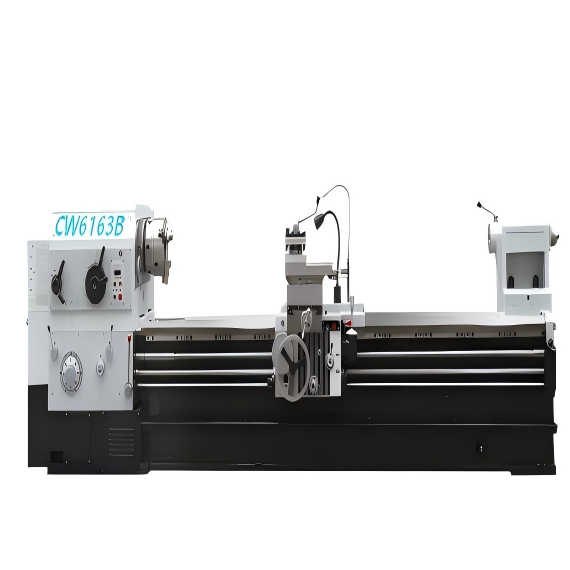
The manufacturing sector has seen significant transformations over the years, with advancements in technology leading to more efficient and precise production processes. Despite these changes, certain traditional machines continue to play a vital role in modern manufacturing. One such machine is the 630mm swing conventional lathe, which remains indispensable for many applications. This report aims to explore the importance of a 630mm swing conventional lathe in contemporary manufacturing environments.
1. Versatility in Material Processing
A 630mm swing conventional lathe offers remarkable versatility when it comes to material processing. The term "swing" refers to the maximum diameter of the workpiece that can be accommodated by the lathe. With a 630mm swing, this type of lathe can handle a wide range of materials, from metals like steel, aluminum, and brass, to plastics and even some types of wood. This versatility makes it an essential tool for manufacturers who deal with diverse material requirements. The ability to process different materials efficiently not only enhances productivity but also reduces the need for multiple specialized machines, thereby lowering capital investment and maintenance costs.
Moreover, the 630mm swing conventional lathe is capable of performing various operations, including turning, facing, drilling, and threading. These operations are fundamental in the production of components used in automotive, aerospace, and industrial machinery. The precision and consistency achieved through these operations are crucial for ensuring the quality and reliability of the final products. For instance, in the automotive industry, the 630mm swing conventional lathe is often used to manufacture engine parts, such as pistons, cylinders, and shafts, where high accuracy and durability are paramount.
2. Cost-Effectiveness and Reliability
One of the key advantages of a 630mm swing conventional lathe is its cost-effectiveness. Compared to more advanced CNC (Computer Numerical Control) lathes, conventional lathes are generally more affordable to purchase and maintain. This makes them an attractive option for small and medium-sized enterprises (SMEs) that may have limited budgets but still require high-quality machining capabilities. Additionally, the operational simplicity of a conventional lathe means that it can be operated by less skilled workers, reducing labor costs and training requirements.
Reliability is another critical factor. Conventional lathes, including the 630mm swing model, are known for their robust construction and long service life. They are designed to withstand the rigors of continuous operation and can perform consistently over extended periods without frequent breakdowns or the need for major repairs. This reliability is particularly important in industries where downtime can result in significant financial losses. For example, in the manufacturing of medical devices, where precision and reliability are non-negotiable, a 630mm swing conventional lathe can provide the necessary performance and dependability to meet stringent quality standards.
3. Adaptability to Customized and Small-Batch Production
In today's manufacturing landscape, there is a growing demand for customized and small-batch production. Customers increasingly seek unique, tailor-made products, and manufacturers must be able to respond quickly and efficiently to these demands. A 630mm swing conventional lathe excels in this area due to its flexibility and ease of setup. Unlike CNC Lathes, which require programming and setup time, a conventional lathe can be manually adjusted and set up quickly, making it ideal for small-batch and prototype production.
This adaptability is especially valuable in industries such as prototyping and custom fabrication, where rapid iteration and testing are essential. For example, in the development of new consumer electronics, a 630mm swing conventional lathe can be used to produce small quantities of prototype parts, allowing engineers to test and refine designs before moving to full-scale production. The ability to make quick adjustments and modifications on the fly enables manufacturers to stay agile and responsive to market changes, ultimately enhancing their competitiveness.
4. Educational and Training Value
The 630mm swing conventional lathe also holds significant educational and training value. Many technical schools and vocational training programs use conventional lathes to teach the fundamentals of machining. Students learn the basics of turning, facing, and other operations, which form the foundation of their understanding of metalworking. This hands-on experience is invaluable, as it provides students with practical skills that they can apply in real-world manufacturing settings.
Furthermore, the simplicity and manual nature of a 630mm swing conventional lathe make it an excellent tool for teaching problem-solving and critical thinking. Students must understand the principles of mechanical engineering, such as how to calculate feed rates and speeds, and how to adjust the machine to achieve the desired results. This deep understanding of the underlying mechanics is essential for developing well-rounded machinists and engineers who can adapt to new technologies and challenges in the field.
5. Integration with Modern Manufacturing Technologies
While the 630mm swing conventional lathe is a traditional machine, it can still integrate seamlessly with modern manufacturing technologies. For example, many manufacturers use a combination of conventional and CNC lathes to optimize their production processes. Conventional lathes can handle simpler, repetitive tasks, while CNC lathes are reserved for more complex and high-precision operations. This hybrid approach allows manufacturers to leverage the strengths of both types of machines, achieving a balance between cost, efficiency, and quality.
Additionally, advancements in digital tools and software can enhance the capabilities of a 630mm swing conventional lathe. For instance, computer-aided design (CAD) and computer-aided manufacturing (CAM) software can be used to create detailed part drawings and generate cutting instructions. While the lathe itself is manually operated, these digital tools can streamline the planning and setup process, reducing errors and improving overall productivity. This integration of traditional and modern technologies ensures that the 630mm swing conventional lathe remains relevant and effective in the evolving landscape of manufacturing.
In conclusion, the 630mm swing conventional lathe continues to play a crucial role in modern manufacturing. Its versatility in material processing, cost-effectiveness, and reliability, along with its adaptability to customized and small-batch production, make it an indispensable tool for many manufacturers. Furthermore, its educational and training value, as well as its ability to integrate with modern technologies, ensure that it remains a valuable asset in the manufacturing industry. As the sector continues to evolve, the 630mm swing conventional lathe will likely remain a cornerstone of precision and efficiency in the production of high-quality components.

 01/07/2026



