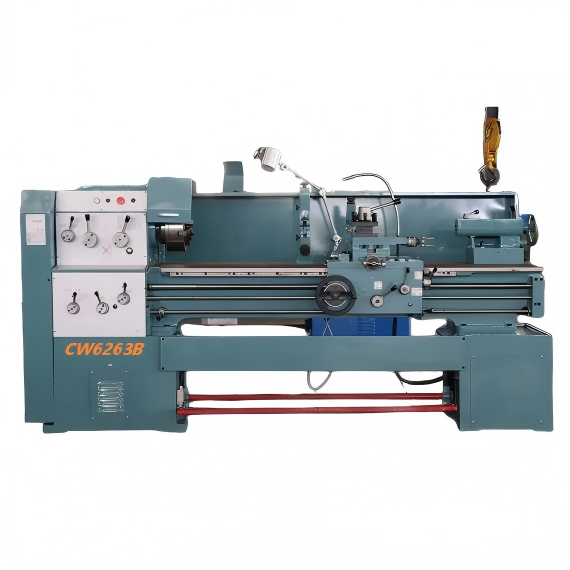
As a leading China lathe manufacturer, our company is dedicated to pushing the boundaries of precision and efficiency in machining. One of the key areas where we have made significant advancements is in the X-axis and Z-axis Movement techniques, which are crucial for achieving improved accuracy in various machining operations. This technical report will explore several innovative methods that have been implemented to enhance the performance of these axes, ensuring superior results for our clients.
Precision in the X-axis and Z-axis movements is fundamental to the overall quality and reliability of machined parts. The X-axis, which controls horizontal movement, and the Z-axis, responsible for vertical movement, must operate with minimal error to ensure that the final product meets the required specifications. Inaccuracies in these axes can lead to defects such as misalignment, dimensional errors, and surface finish issues, which can be costly and time-consuming to correct. Therefore, it is essential to employ advanced techniques that minimize these errors and improve the overall accuracy of the machine.
To achieve high precision, one of the most effective approaches is the integration of high-resolution feedback systems. These systems provide real-time data on the position and movement of the axes, allowing for immediate adjustments and corrections. By using encoders with resolutions as fine as 0.01 microns, our lathes can detect even the slightest deviations from the intended path. This level of detail ensures that the X-axis and Z-axis movements are highly accurate, resulting in parts that meet or exceed the tightest tolerances.
Moreover, the use of linear scales instead of traditional rotary encoders has further enhanced the precision of our machines. Linear scales provide direct measurement of the axis position, eliminating any potential inaccuracies that may arise from mechanical linkages. This technology is particularly beneficial in applications requiring ultra-high precision, such as aerospace and medical device manufacturing.
The control of servo motors is another critical factor in achieving precise X-axis and Z-axis movements. Our lathes utilize advanced servo motor control algorithms that optimize the speed and acceleration of the axes, ensuring smooth and consistent motion. These algorithms take into account factors such as load variations, friction, and inertia, and make real-time adjustments to maintain optimal performance.
One of the key features of our servo motor control system is the use of adaptive tuning. This technique allows the system to automatically adjust the control parameters based on the specific characteristics of the workpiece and the machining process. For example, if the material being machined is particularly hard, the system can increase the torque to overcome resistance, while still maintaining the desired accuracy. This adaptive approach ensures that the X-axis and Z-axis movements are always optimized, regardless of the conditions.
Another important aspect of improving X-axis and Z-axis accuracy is enhancing the rigidity and stability of the machine. A rigid structure reduces vibrations and deflections, which can otherwise cause inaccuracies in the movements. Our lathes are designed with robust cast iron frames and precision-ground guideways, providing a solid foundation for the axes. Additionally, the use of preloaded ball screws and linear guides minimizes backlash and ensures smooth, repeatable motion.
Furthermore, we have implemented active damping systems to further reduce vibrations. These systems use sensors to detect any unwanted oscillations and apply counteracting forces to stabilize the machine. This is especially important in high-speed machining operations, where even small vibrations can significantly impact the accuracy of the X-axis and Z-axis movements. By incorporating these advanced damping technologies, we can achieve unparalleled stability and precision.
In conclusion, the advancements in X-axis and Z-axis movement techniques have played a pivotal role in improving the accuracy of our lathes. By implementing high-resolution feedback systems, advanced servo motor control, and enhanced rigidity and stability, we have achieved a new level of precision that sets us apart as a leading China lathe manufacturer. These innovations not only enhance the quality of the machined parts but also increase the efficiency and reliability of the machining process, ultimately benefiting our clients in various industries.
As we continue to invest in research and development, we are committed to further refining these techniques and exploring new ways to push the boundaries of precision machining. Our goal is to provide our customers with the highest quality products and services, ensuring that they can rely on our lathes for their most demanding applications.
 30/06/2026
As the global manufacturing landscape continues to evolve, China has emerged as a key player in the production of high-quality lathes. This technical report aims to explore the capabilities of China lathe manufacturers, highlighting their advancements in
Read More18/06/2026China lathe manufacturer has been at the forefront of developing high-performance heavy-duty CNC lathes, which are essential in various industries for their precision, reliability, and efficiency. This technical report aims to explore the key features tha
Read More18/06/2026Advancements in Deep Hole Drilling Techniques for Extended ShaftsIn the realm of precision engineering, deep hole machining is a critical process, especially when dealing with extended shafts. A China lathe manufacturer has recently made significant strid
Read More17/06/2026As a leading force in the global manufacturing industry, China has become an essential player in the production of advanced machining solutions. Among these, the role of a China lathe manufacturer is particularly noteworthy, as it continues to innovate an
Read More17/06/2026China, as one of the world's leading manufacturers, is home to a vast array of industrial machinery producers. Among these, precision lathe manufacturers have carved out a significant niche, offering solutions that cater to diverse industrial needs. This
Read More17/06/2026As the global manufacturing landscape continues to evolve, the demand for high-precision machining has never been greater. One of the key players in this domain is the China lathe manufacturer, which has made significant strides in developing advanced mac
Read More17/06/2026In the ever-evolving landscape of modern manufacturing, the role of a turning lathe machine has become increasingly significant. This report delves into the advantages of using a turning lathe machine, with a particular focus on China lathe manufacturer,
Read More09/06/2026China, a global leader in manufacturing, has established itself as a reliable source for a wide range of industrial machinery, including lathe machines. These machines, which are essential for various machining processes, have seen significant advancement
Read More09/06/2026Understanding the Importance of Regular Maintenance for Horizontal LathesMaintaining your horizontal lathe machine is not just a good practice; it's essential for ensuring its longevity and performance. A China lathe manufacturer, like many other manufact
Read More09/06/2026When it comes to investing in a high-quality horizontal lathe machine, especially from a reputable China lathe manufacturer, there are several key features that you should consider. These features not only ensure the longevity and reliability of the machi
Read More09/06/2026When it comes to equipping your workshop with the right machinery, choosing a horizontal lathe machine is one of the most critical decisions. A well-chosen lathe can significantly enhance productivity, precision, and overall efficiency in your operations.
Read More09/06/2026China has long been recognized as a major player in the global manufacturing industry, and its role in shaping the global lathe machine industry is no exception. With a strong focus on innovation, quality, and cost-effectiveness, China lathe manufacturers
Read More06/06/2026As the global market continues to evolve, manufacturers across all sectors are seeking ways to stay competitive while maintaining high standards of quality and efficiency. In this context, China lathe manufacturers have emerged as key players, offering ad
Read More06/06/2026China lathe manufacturer has been a pivotal player in the global machinery industry, offering innovative solutions from design to delivery. This report delves into the journey of a China lathe manufacturer, highlighting key stages and processes that contr
Read More05/06/2026In today’s globalized manufacturing landscape, the selection of a reliable lathe manufacturer is crucial for businesses aiming to maintain high standards of production efficiency and product quality. This report delves into why numerous enterprises across
Read More05/06/2026In the ever-evolving world of manufacturing, precision and efficiency are paramount. Among the many players in this field, a China lathe manufacturer stands out for its commitment to quality and innovation. This technical report aims to unveil the secrets
Read More04/06/2026When it comes to choosing a China lathe manufacturer, the decision can significantly impact your production efficiency, product quality, and overall business success. This report aims to guide you through the top considerations that should influence your
Read More04/06/2026Choosing the right China lathe manufacturer is crucial for businesses aiming to enhance their production capabilities while ensuring quality and cost-effectiveness. This technical report aims to guide you through the process of discovering the best China
Read More04/06/2026Exploring the capabilities of a horizontal lathe machine reveals a world of precision, efficiency, and versatility. This technical report delves into the core functionalities and advanced features that make horizontal lathes indispensable in modern manufa
Read More04/06/2026China has long been a global leader in the manufacturing industry, particularly when it comes to precision machinery such as CNC lathes. The country's vast pool of skilled labor, advanced technological capabilities, and competitive pricing have made it a
Read More04/06/2026The Historical Context of China Lathe ManufacturerIn the intricate world of manufacturing, the evolution of precision is a testament to human ingenuity and technological advancement. A China lathe manufacturer has played a pivotal role in this journey, co
Read More04/06/2026When it comes to selecting a China lathe manufacturer, the process can be quite daunting, especially for those who are not well-versed in the intricacies of machine tools. This comprehensive guide aims to provide you with a structured approach to choosing
Read More03/06/2026As a leading China lathe manufacturer, our company has established itself as a reliable and innovative provider of high-precision machining solutions. This report aims to highlight the key aspects that set us apart in the industry, focusing on our experti
Read More03/06/2026In the ever-evolving landscape of manufacturing, the role of precision machinery cannot be overstated. Among these, lathes, a fundamental tool in machining, have seen significant advancements. This report delves into how a China lathe manufacturer is shap
Read More02/06/2026Introduction to China Lathe Manufacturing ExcellenceThe rise of China as a global manufacturing powerhouse has been nothing short of spectacular. Among the many industries that have seen significant growth, the machine tool sector, particularly lathe manu
Read More02/06/2026As the manufacturing industry continues to evolve, finding a reliable and efficient China lathe manufacturer is crucial for businesses looking to stay competitive. This report aims to explore the leading China lathe manufacturer in 2023, providing insight
Read More02/06/2026In the rapidly evolving world of manufacturing, China lathe manufacturer has taken a significant step forward by embracing advanced CNC (Computer Numerical Control) technology. This report delves into how this integration not only enhances productivity bu
Read More02/06/2026In the rapidly evolving landscape of manufacturing, finding a reliable China lathe manufacturer is crucial for businesses aiming to optimize their production processes. This report delves into the key factors that make a leading China lathe manufacturer s
Read More02/06/2026China has long been a leader in the manufacturing industry, and one of its most prominent sectors is the production of lathes. A China lathe manufacturer is not just another player in the global market; it represents a significant force that is constantly
Read MoreOur professional sales team is always ready to assist you.