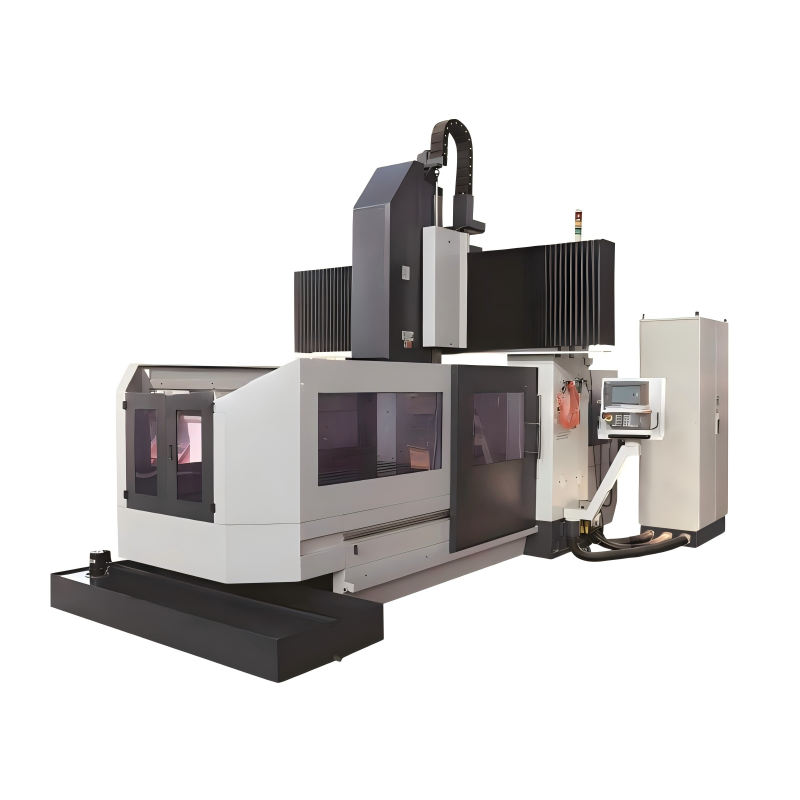
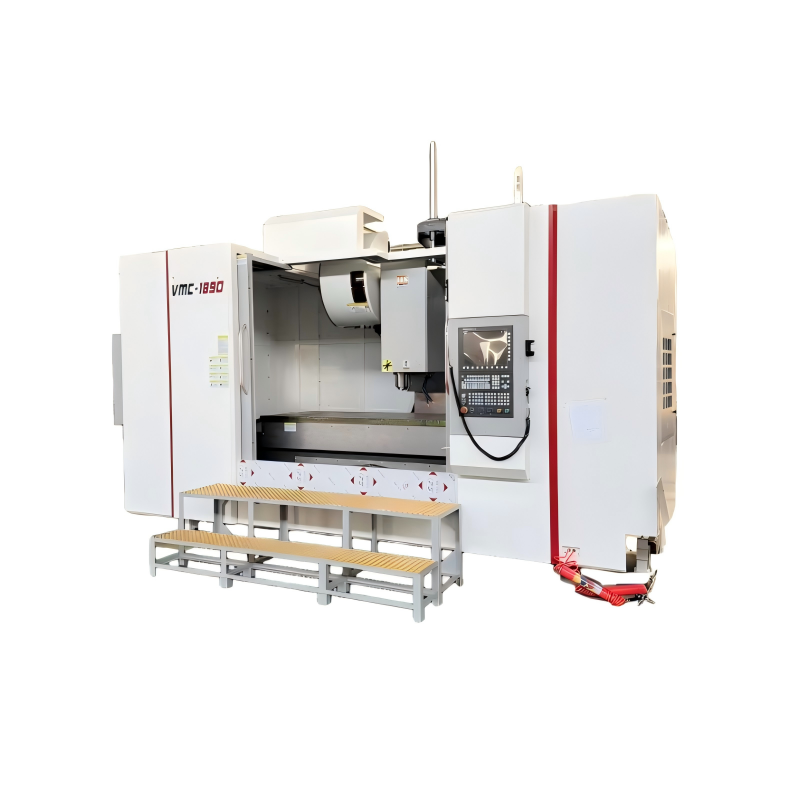
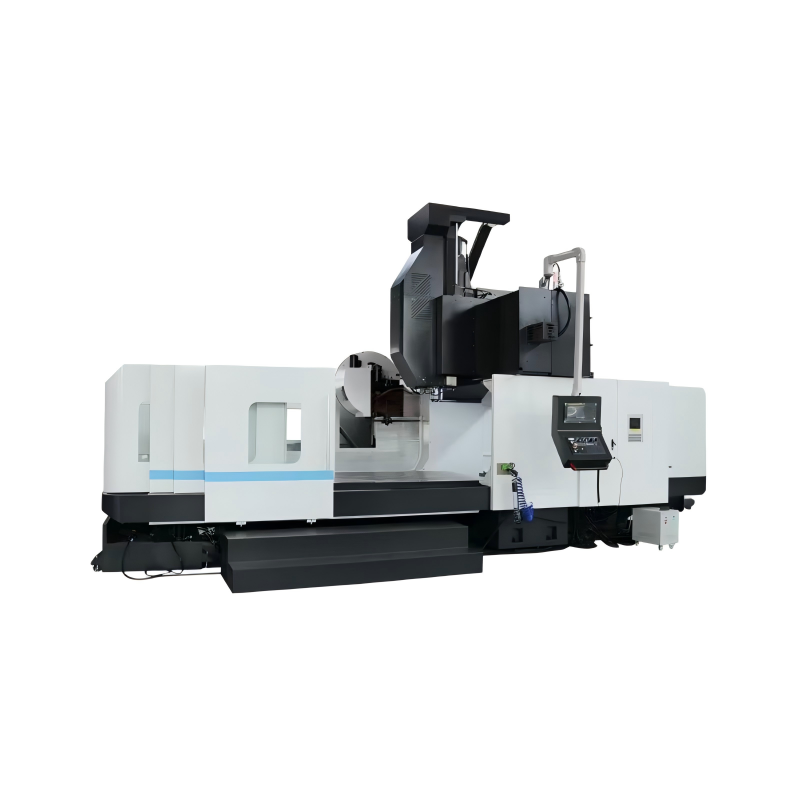
In the realm of advanced manufacturing, high-precision milling machine tools play a pivotal role in producing complex parts with unparalleled accuracy and efficiency. This report delves into how these sophisticated machines are transforming industries by enabling the creation of intricate components that were once considered too challenging or costly to produce. Through an exploration of the latest advancements in milling technology, we will uncover the key factors driving this transformation, from enhanced tooling solutions to innovative software applications. Furthermore, we'll examine the economic and environmental impacts of adopting such high-precision technologies, along with the potential they hold for future innovations in various sectors.
The development of new cutting materials has significantly contributed to the capabilities of high-precision milling machine tools. These materials, including advanced ceramics and superalloys, offer superior hardness and wear resistance, allowing for longer tool life and higher machining speeds. By reducing the frequency of tool changes, manufacturers can achieve greater productivity without compromising on part quality. Moreover, these cutting-edge materials enable the production of more complex geometries, opening up possibilities for designing lighter, stronger, and more efficient components across multiple industries.
Integrating smart tool management systems within high-precision milling setups further enhances operational efficiency. Such systems utilize sensors and data analytics to monitor tool condition in real time, predicting when maintenance is required or when a tool is nearing its end-of-life stage. This proactive approach minimizes downtime and ensures consistent performance, critical for maintaining tight tolerances in the manufacture of complex parts. Additionally, by automating the selection and replacement of tools, these systems reduce human error, contributing to a more streamlined and reliable production process.
The seamless integration between Computer-Aided Design (CAD) and Computer-Aided Manufacturing (CAM) software forms the backbone of modern high-precision milling operations. Advanced CAD/CAM packages not only facilitate the design of highly detailed 3D models but also generate optimized toolpaths that maximize material removal rates while minimizing surface finish errors. This synergy allows for the rapid prototyping and iterative refinement of complex parts, accelerating the product development cycle and enabling faster time-to-market. Furthermore, through simulation features, potential issues such as collisions or overhangs can be identified and corrected before actual machining begins, saving both time and resources.
Another significant advancement in software-driven milling is the application of adaptive control technologies. These algorithms continuously adjust cutting parameters based on real-time feedback from the machining process, ensuring optimal performance under varying conditions. For instance, if a workpiece exhibits unexpected variations in hardness or density, the system automatically modifies spindle speed, feed rate, and depth of cut to maintain consistent quality and avoid tool breakage. The result is a more resilient and flexible manufacturing environment capable of handling a wide range of materials and part complexities, thereby broadening the scope of what can be achieved with high-precision milling machine tools.
One of the most compelling arguments for investing in high-precision milling machine tools lies in their ability to drive cost efficiencies. By automating many aspects of the machining process, from loading and unloading workpieces to changing tools and monitoring quality, companies can significantly reduce labor costs. Moreover, the increased speed and accuracy afforded by these machines lead to lower scrap rates and reduced material waste, further enhancing profitability. In competitive markets where margins are often thin, the savings generated by high-precision milling can provide a substantial competitive advantage.
Beyond economic benefits, high-precision milling also supports sustainable manufacturing practices. The precision and repeatability of these machines minimize the need for rework, which not only saves energy but also reduces the overall carbon footprint associated with production. Additionally, the use of advanced materials and coatings extends tool life, decreasing the frequency of replacements and, consequently, the environmental impact of disposal. As industries increasingly prioritize sustainability, the adoption of high-precision milling technologies aligns with broader goals of reducing waste and conserving resources.
Looking ahead, several emerging trends promise to further enhance the capabilities of high-precision milling machine tools. One such trend is the integration of artificial intelligence (AI) and machine learning (ML) into machining processes. AI-driven predictive models can optimize toolpaths, predict maintenance needs, and even suggest design improvements, pushing the boundaries of what is possible in terms of part complexity and production efficiency. Another area of innovation is the development of hybrid Machining Centers, which combine traditional milling with other processes like additive manufacturing, laser cutting, or grinding, all within a single setup. This multi-functional approach enables the creation of parts with unique properties and geometries, expanding the range of applications for high-precision milling.
As high-precision milling continues to evolve, its applications are expected to expand beyond traditional manufacturing sectors. In the aerospace industry, for example, the demand for lightweight, high-strength components is driving the need for ever more precise and versatile machining solutions. Similarly, in the medical field, the ability to produce customized implants and surgical instruments with micron-level accuracy is revolutionizing patient care. Other areas, such as automotive, electronics, and consumer goods, are also benefiting from the increased flexibility and efficiency offered by high-precision milling. As these industries push the limits of what can be achieved, the role of high-precision milling machine tools will only become more crucial, solidifying their position as a cornerstone of advanced manufacturing.
 08/06/2026
The future of high-precision milling is a topic that has garnered significant attention in the manufacturing and engineering sectors. As industries continue to demand higher levels of accuracy and efficiency, the development of high-precision milling mach
Read More08/06/2026In the realm of manufacturing, high-precision milling machine tools represent a significant investment. This report delves into the cost-effectiveness of such an investment, considering both short-term and long-term perspectives. It evaluates how these ad
Read More07/06/2026High-precision milling machines have emerged as a transformative force within the automotive industry, driving innovation and efficiency in manufacturing processes. These advanced tools are not only capable of producing components with unparalleled accura
Read More07/06/2026High-precision milling machine tools are essential in modern manufacturing, providing unparalleled accuracy and efficiency. However, their performance and longevity depend significantly on proper maintenance. This technical report delves into the critical
Read More06/06/2026High-precision milling machine tools are essential in modern manufacturing, offering unparalleled accuracy and efficiency. This report delves into the capabilities of these advanced machines, exploring their impact on precision engineering, material versa
Read More05/06/2026In the realm of precision engineering, high-precision milling machine tools play a pivotal role in achieving the exacting standards required for components and products across various industries. These machines are designed to deliver unparalleled accurac
Read More05/06/2026In the realm of modern manufacturing, high-precision milling machine tools play a pivotal role in enhancing both productivity and accuracy. These advanced machines are not just tools; they are integral components that drive the efficiency and quality of p
Read More04/06/2026In the realm of aerospace engineering, where precision and reliability are paramount, high-precision milling machine tools play an indispensable role. These advanced machines offer unparalleled accuracy and consistency, which are crucial for manufacturing
Read More04/06/2026In the rapidly evolving landscape of modern manufacturing, high-precision milling machine tools have become indispensable for achieving superior quality and efficiency. These advanced machines are designed to meet the stringent requirements of industries
Read MoreOur professional sales team is always ready to assist you.