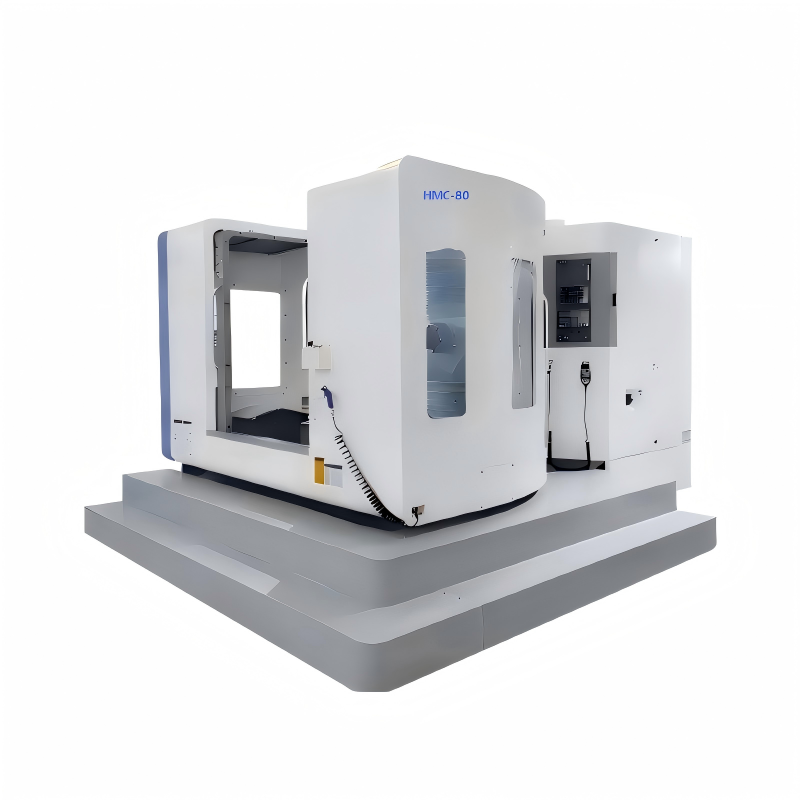
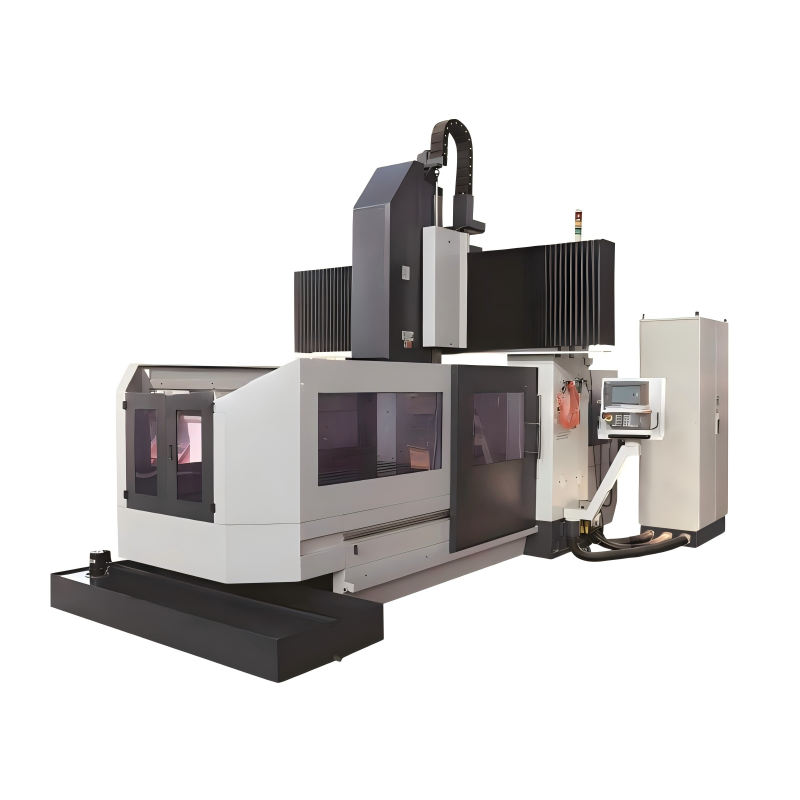
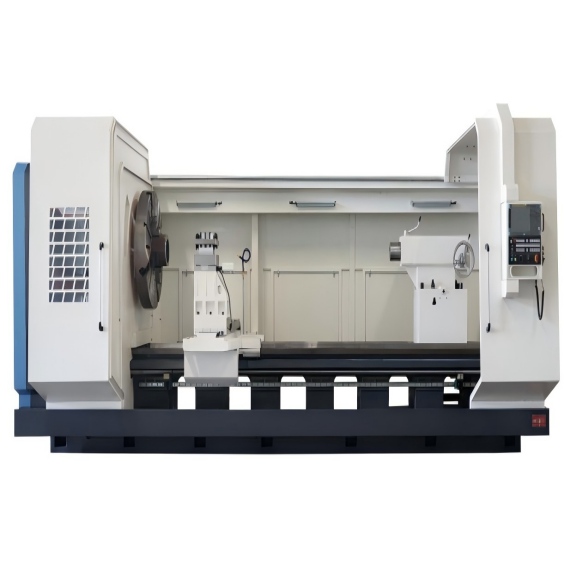
The advent of Computer Numerical Control (CNC) milling machines has marked a significant milestone in the evolution of manufacturing processes. These sophisticated tools have not only enhanced production efficiency and precision but also opened up new possibilities for design and customization. As we delve into the intricacies of how CNC Milling Machines are revolutionizing manufacturing, it becomes evident that their impact extends far beyond just improving operational metrics; they are fundamentally reshaping the industry's approach to production, from concept to delivery.
One of the most transformative aspects of CNC milling machines is their unparalleled ability to achieve high levels of precision and consistency. Unlike traditional manual machining methods, which are prone to human error and variability, CNC systems operate based on pre-programmed instructions. This ensures that every part produced adheres to the exact specifications, down to the smallest detail. The repeatability of these machines means that even complex components can be manufactured with a high degree of accuracy, time after time. This level of precision is particularly crucial in industries such as aerospace, automotive, and medical devices, where tolerances are extremely tight and the margin for error is virtually non-existent.
Moreover, the use of advanced software and digital models in CNC milling allows for real-time monitoring and adjustments, further enhancing the quality control process. Any deviations from the desired outcome can be quickly identified and corrected, ensuring that the final product meets the highest standards. This not only improves the overall quality of the products but also reduces waste and rework, leading to more efficient and cost-effective production.
CNC milling machines have significantly boosted productivity in manufacturing by automating many of the tasks that were previously performed manually. This automation leads to faster production cycles and higher output rates. For example, a single CNC machine can perform multiple operations, such as drilling, cutting, and shaping, without the need for manual intervention or tool changes. This not only saves time but also reduces the risk of errors that can occur during the setup and transition between different operations.
Additionally, CNC milling machines offer a high degree of flexibility, allowing manufacturers to quickly adapt to changing market demands. With the ability to reprogram the machine for different tasks, manufacturers can switch from one product to another with minimal downtime. This is especially valuable in today’s fast-paced and highly competitive business environment, where the ability to respond swiftly to customer needs and market trends is critical. The flexibility of CNC milling machines also enables the production of small batch sizes and customized parts, making it possible to cater to niche markets and individual customer requirements.
While the initial investment in CNC milling machines may be higher compared to traditional machinery, the long-term cost savings and benefits are substantial. The increased efficiency and reduced waste associated with CNC milling contribute to lower operational costs. By minimizing material waste and reducing the need for rework, manufacturers can achieve significant savings over time. Furthermore, the automation and precision of CNC milling machines lead to lower labor costs, as fewer operators are needed to oversee the production process.
From an environmental perspective, CNC milling machines also support sustainable manufacturing practices. The precise control over the machining process results in less material waste, which is not only cost-effective but also environmentally friendly. Additionally, the use of advanced software and digital models allows for the optimization of energy consumption, further reducing the carbon footprint of the manufacturing process. As sustainability becomes an increasingly important consideration for both consumers and businesses, the adoption of CNC milling machines aligns with the broader goals of reducing environmental impact and promoting responsible manufacturing practices.
Perhaps one of the most exciting aspects of CNC milling machines is the innovation and design freedom they provide. Traditional machining methods often impose limitations on the complexity and intricacy of the designs that can be achieved. However, CNC milling machines, with their ability to execute intricate and detailed cuts, enable designers and engineers to push the boundaries of what is possible. This has led to the creation of more innovative and aesthetically pleasing products, as well as the development of new applications and solutions that were previously unfeasible.
For instance, in the field of prototyping, CNC milling machines allow for the rapid production of functional prototypes, enabling iterative design and testing. This accelerates the product development process and helps bring new ideas to market more quickly. Moreover, the integration of 3D modeling and simulation software with CNC milling technology allows for the visualization and refinement of designs before they are physically produced, reducing the risk of errors and saving valuable time and resources.
The rise of Industry 4.0 and the concept of smart manufacturing have further amplified the potential of CNC milling machines. These machines are increasingly being integrated into larger, interconnected systems that leverage data analytics, artificial intelligence, and the Internet of Things (IoT) to optimize production processes. By connecting CNC milling machines to a network, manufacturers can collect and analyze real-time data on machine performance, production efficiency, and maintenance needs. This data-driven approach enables predictive maintenance, reducing downtime and extending the lifespan of the equipment.
Furthermore, the integration of CNC milling machines with other advanced technologies, such as robotics and additive manufacturing, is creating hybrid manufacturing systems that combine the best of both worlds. For example, a CNC milling machine can be used to finish and refine parts that are initially produced using 3D printing, resulting in a more versatile and efficient manufacturing process. This convergence of technologies is driving the next wave of innovation in manufacturing, enabling the production of more complex and high-quality products at a lower cost.
In conclusion, CNC milling machines are revolutionizing manufacturing by providing enhanced precision and consistency, increasing productivity and flexibility, offering cost-effectiveness and sustainability, and enabling innovation and design freedom. As these machines continue to evolve and integrate with emerging technologies, their impact on the manufacturing industry will only grow, paving the way for a more efficient, sustainable, and innovative future.
 30/06/2026
In the ever-evolving landscape of manufacturing, CNC (Computer Numerical Control) milling machines stand out as a cornerstone technology. These sophisticated tools have transformed the way industries produce parts and components, offering unparalleled pre
Read More30/06/2026Understanding the Basics of CNC Milling Machines CNC milling machines, a cornerstone in modern manufacturing, represent an advanced form of subtractive manufacturing where raw material is removed from a workpiece to create a final product. This process is
Read More30/06/2026Understanding the Importance of Regular Maintenance for CNC Milling Machines Maintaining a CNC milling machine is crucial for ensuring its longevity, efficiency, and accuracy. Regular maintenance not only prevents unexpected breakdowns but also helps in r
Read More29/06/2026In the realm of modern manufacturing, CNC (Computer Numerical Control) milling machines have emerged as a cornerstone for precision and efficiency. These sophisticated devices rely heavily on software to perform their tasks with accuracy and speed. This r
Read More28/06/2026Understanding the Basics of CNC Milling MachinesThe journey to selecting the right CNC (Computer Numerical Control) milling machine for your workshop begins with understanding what these machines are and how they operate. A CNC milling machine is an autom
Read More27/06/2026The evolution of CNC Milling Machine technology has been a remarkable journey, marked by continuous innovation and adaptation to the ever-changing demands of manufacturing. From its early beginnings to the sophisticated systems of today, CNC milling machi
Read More26/06/2026The advent of CNC (Computer Numerical Control) milling machines has revolutionized the manufacturing industry, enabling higher precision and efficiency in engineering projects. This report delves into advanced techniques employed with CNC milling machines
Read MoreOur professional sales team is always ready to assist you.