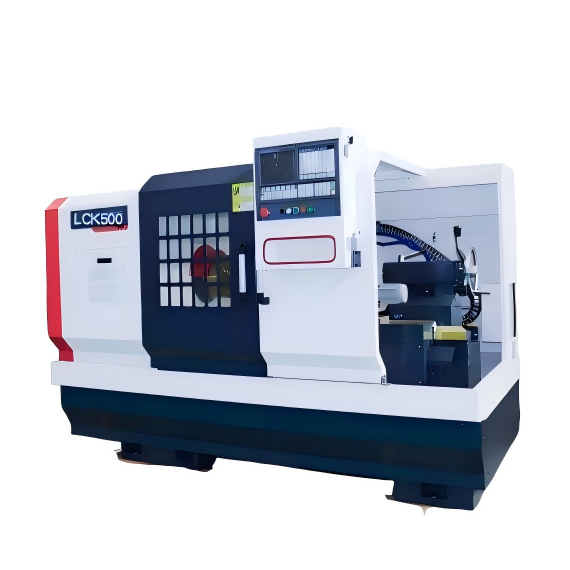
In the realm of precision manufacturing, CNC (Computer Numerical Control) lathes have become indispensable tools for producing complex and high-precision parts. The performance and longevity of these machines are heavily influenced by their design, with the box way or hard rail system playing a crucial role. This report delves into the advancements in box way technology, specifically how they enhance the functionality of CNC Lathes, making them more efficient, accurate, and durable.
The stability and rigidity of a CNC lathe are fundamental to its ability to produce precise and consistent results. Traditional box ways, also known as hard rails, have long been favored for their robust construction and capacity to handle heavy loads. However, recent innovations in box way technology have further improved these attributes. Modern box ways now incorporate advanced materials and coatings, such as hardened steel and ceramic composites, which significantly reduce wear and tear. These materials provide superior resistance to deformation under high loads, ensuring that the machine maintains its alignment and accuracy over extended periods.
Additionally, the integration of dynamic damping systems within the box way design has led to a reduction in vibrations and resonance. This is particularly important during high-speed operations, where even minor oscillations can lead to surface finish defects and dimensional inaccuracies. By minimizing these disturbances, the enhanced box way technology contributes to smoother operation and higher quality output.
One of the key challenges in maintaining the performance of box way CNC lathes is the management of friction and wear. Conventional lubrication methods, such as manual oiling or automatic drip systems, often fall short in providing consistent and adequate lubrication, especially in demanding environments. Recent innovations in lubrication technology have addressed this issue, leading to significant improvements in machine longevity and operational efficiency.
Modern box way systems now feature integrated automatic lubrication systems that use advanced oils and greases with superior thermal and chemical stability. These lubricants not only reduce friction but also form a protective film on the surfaces, preventing corrosion and pitting. Furthermore, some designs incorporate self-lubricating components, such as bronze or polymer-based inserts, which eliminate the need for external lubrication altogether. This not only simplifies maintenance but also ensures that the box ways remain well-lubricated, even in the most challenging conditions.
Another notable advancement is the use of centralized lubrication systems, which distribute lubricant evenly across all moving parts. These systems can be programmed to deliver the exact amount of lubricant at specific intervals, reducing waste and ensuring optimal performance. By minimizing friction and wear, these improved lubrication systems contribute to the overall reliability and longevity of the CNC lathe.
Maintaining the optimal performance of a CNC lathe requires regular monitoring and timely maintenance. Traditional methods of inspection, such as visual checks and periodic servicing, are often reactive and can lead to unexpected downtime. To address this, modern box way CNC lathes are equipped with advanced monitoring and diagnostic tools that enable predictive maintenance, thereby enhancing the machine's uptime and productivity.
These tools include sensors and data analytics software that continuously monitor various parameters, such as temperature, vibration, and lubrication levels. Real-time data is collected and analyzed to detect any anomalies or signs of impending failure. For example, an increase in vibration levels might indicate misalignment or bearing wear, while a rise in temperature could signal excessive friction or inadequate lubrication. By identifying these issues early, maintenance can be scheduled proactively, preventing costly breakdowns and extending the life of the machine.
Furthermore, some advanced systems utilize machine learning algorithms to predict the remaining useful life of critical components. This allows for better planning of maintenance activities and inventory management, ensuring that replacement parts are available when needed. The integration of these monitoring and diagnostic tools not only enhances the reliability of the CNC lathe but also reduces maintenance costs and improves overall operational efficiency.
The advancements in box way technology for CNC lathes have significantly enhanced their functionality, making them more stable, efficient, and reliable. Enhanced stability and rigidity through advanced materials and damping systems, improved lubrication systems for longevity and efficiency, and advanced monitoring and diagnostic tools for predictive maintenance are key areas where these innovations have made a substantial impact. As the demands of precision manufacturing continue to evolve, these technological advancements will play a crucial role in ensuring that CNC lathes remain at the forefront of the industry.
 19/06/2026
Understanding the Box Way CNC Lathe TechnologyThe Box way / Hard rail CNC lathe is a specialized machine designed for precision machining, particularly in industrial settings where high accuracy and durability are paramount. This type of lathe uses a box-
Read More19/06/2026Introduction to Box Way / Hard Rail CNC LathesIn the realm of precision machining, the choice of machine components plays a crucial role in determining the overall performance and longevity of the equipment. One such critical component is the rail system,
Read More19/06/2026Box way or hard rail CNC lathes are a staple in the manufacturing industry, known for their precision, durability, and ability to handle heavy loads. These machines are designed to provide consistent performance over long periods, but like any piece of ma
Read More18/06/2026In the realm of precision manufacturing, the evolution of CNC (Computer Numerical Control) lathes has been a pivotal driver of industrial progress. Among the various types of CNC lathes, the Box way / Hard rail CNC lathe stands out for its robustness and
Read More18/06/2026In the world of precision machining, selecting the right machinery is crucial for achieving high-quality results and maintaining a competitive edge. Among the various types of CNC lathes available, the hard rail CNC lathe stands out due to its robust cons
Read More17/06/2026In the world of CNC (Computer Numerical Control) lathes, the choice between a box way and a linear guide system can significantly impact the machine's performance, durability, and overall cost-effectiveness. This technical report aims to provide an in-dep
Read More17/06/2026In the realm of precision manufacturing, CNC lathes play a pivotal role in producing high-quality components with tight tolerances. The design and construction of these machines are crucial for their performance, and one key aspect that significantly impa
Read More17/06/2026Box way CNC lathes, also known as hard rail CNC lathes, have become a staple in modern manufacturing environments due to their robustness and precision. These machines are designed to handle heavy-duty operations with high accuracy, making them ideal for
Read More16/06/2026In the realm of heavy-duty CNC lathe applications, the choice between box way and hard rail systems is a critical decision that can significantly impact the performance, durability, and overall efficiency of the machine. This technical report delves into
Read More16/06/2026In the realm of precision manufacturing, CNC lathes are indispensable tools that demand meticulous maintenance to ensure optimal performance and longevity. Among the various components of a CNC lathe, the box way, also known as the hard rail, plays a crit
Read More16/06/2026In the realm of precision machining, CNC lathes are indispensable tools that enable manufacturers to produce parts with high accuracy and efficiency. Among the different types of CNC lathes, those equipped with hard rail systems, also known as box way lat
Read More15/06/2026Understanding the Basics of Box Way Technology in CNC LathesIn the realm of precision machining, the choice between box way and linear guide systems for CNC lathe applications significantly impacts overall performance. Box ways, also known as box slides,
Read More15/06/2026In the world of precision manufacturing, the role of CNC lathes cannot be overstated. These machines are pivotal for producing parts with high accuracy and repeatability. Among the various components that contribute to a CNC lathe's performance, the guidi
Read More15/06/2026In the realm of modern manufacturing, precision is not just a preference but a necessity. One of the key components that ensure this precision in CNC lathes is the box way or hard rail system. This technical report aims to provide an in-depth understandin
Read MoreOur professional sales team is always ready to assist you.