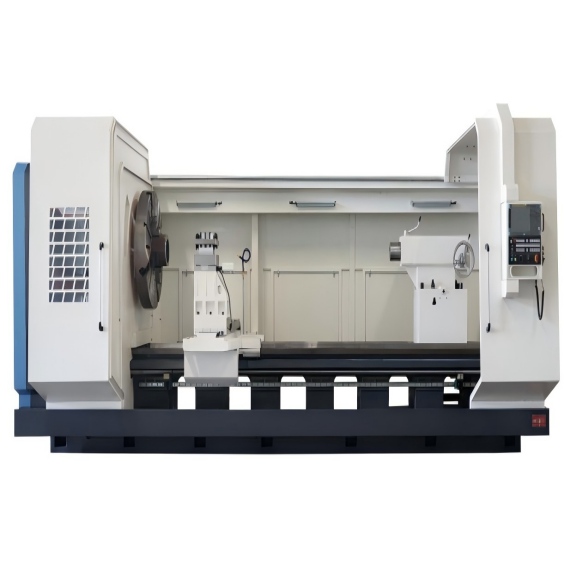
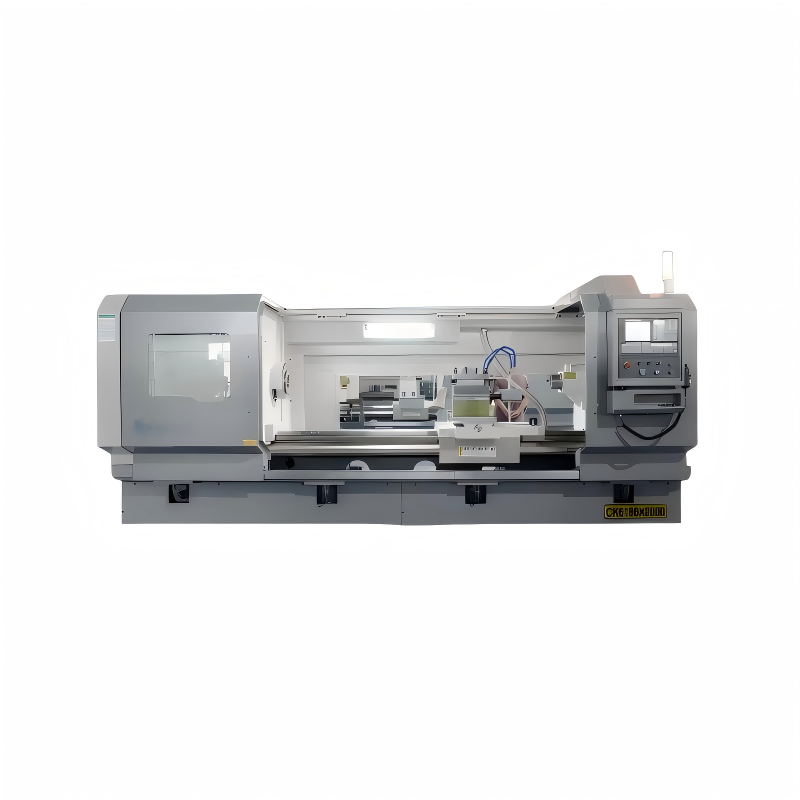
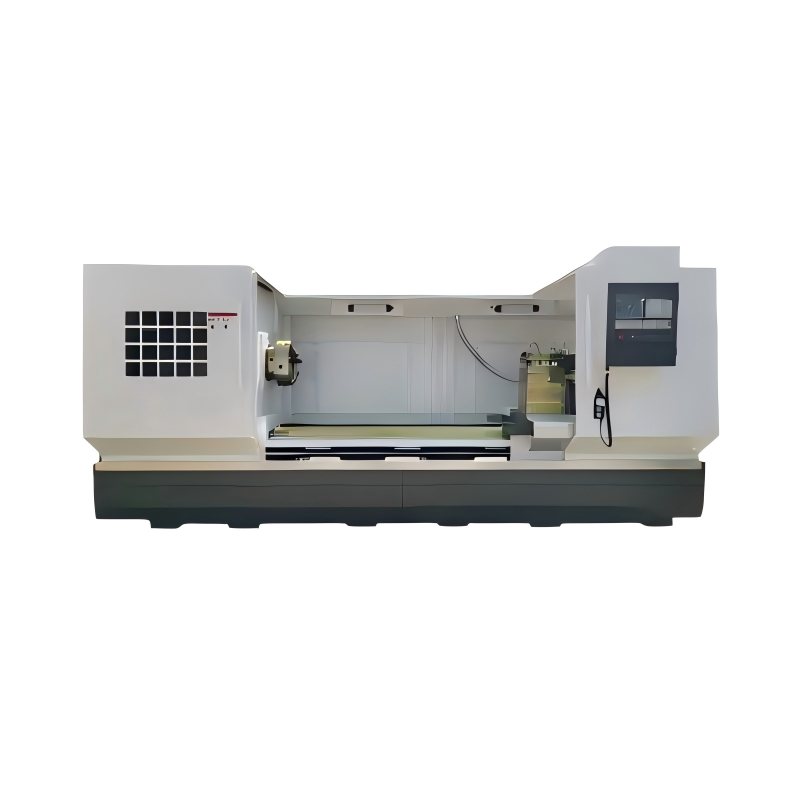
In the rapidly evolving field of manufacturing, multi-axis CNC workcell technology stands out as a pivotal innovation. This report delves into the advancements in multi-axis CNC workcell technology, exploring how these systems have transformed production processes. We will examine the key features, benefits, and future prospects of this technology, providing a comprehensive overview for industry professionals and enthusiasts alike. The report will cover the integration of automation, precision, and flexibility, highlighting the impact on productivity, cost efficiency, and quality control.
One of the most significant advancements in multi-axis CNC workcell technology is the improvement in tool path generation. Modern software tools can now create highly optimized tool paths that minimize material removal time and reduce wear on cutting tools. These advanced algorithms take into account factors such as part geometry, material properties, and machine capabilities to generate the most efficient paths possible. This not only enhances the precision of the final product but also extends the lifespan of the cutting tools, reducing maintenance costs.
Another key feature that contributes to enhanced precision is the real-time monitoring and adjustment capabilities of modern multi-axis CNC workcells. Advanced sensors and feedback systems continuously monitor the machining process, detecting any deviations from the intended path or surface finish. If a deviation is detected, the system can automatically adjust the tool path in real-time, ensuring that the final product meets the required specifications. This level of precision is particularly crucial in industries where tolerances are extremely tight, such as aerospace and medical device manufacturing.
Modern multi-axis CNC workcells are designed to handle a wide range of tasks, making them highly versatile. These systems can perform multiple operations in a single setup, including milling, turning, drilling, and grinding. This capability significantly reduces the need for multiple machines and setups, streamlining the production process and improving overall efficiency. Additionally, the ability to switch between different operations quickly and easily allows manufacturers to adapt to changing production requirements, making the workcell a valuable asset in flexible manufacturing environments.
Another aspect that enhances the flexibility of multi-axis CNC workcells is their modular design. These systems can be customized with various modules and accessories to meet specific production needs. For example, additional axes can be added to increase the range of motion, or specialized tooling can be integrated to handle unique materials or geometries. This modularity allows manufacturers to tailor the workcell to their specific requirements, ensuring optimal performance and versatility. Furthermore, the modular design facilitates easy upgrades and maintenance, extending the life and utility of the workcell.
The integration of robotics into multi-axis CNC workcells has revolutionized the manufacturing process. Robotic arms can be used to load and unload parts, change tools, and even perform inspection tasks, all without human intervention. This level of automation not only increases productivity by reducing downtime but also improves safety by minimizing the need for manual handling. Additionally, robotic integration allows for the creation of fully automated production lines, where the workcell is seamlessly connected to other manufacturing processes, creating a highly efficient and streamlined workflow.
Modern multi-axis CNC workcells are equipped with advanced control systems and software that enable seamless integration with other manufacturing systems. These control systems can communicate with enterprise resource planning (ERP) and manufacturing execution systems (MES), allowing for real-time data exchange and analysis. This integration provides valuable insights into the production process, enabling better decision-making and continuous improvement. Furthermore, the use of cloud-based software solutions allows for remote monitoring and management, making it easier to maintain and optimize the workcell's performance.
One of the primary advantages of multi-axis CNC workcells is their ability to reduce setup time and increase throughput. With the ability to perform multiple operations in a single setup, these systems eliminate the need for frequent tool changes and repositioning, significantly reducing non-productive time. This leads to higher overall equipment effectiveness (OEE) and increased productivity. Additionally, the use of advanced tooling and high-speed machining techniques further enhances throughput, allowing manufacturers to produce more parts in less time.
Multi-axis CNC workcells also offer significant cost savings through lower operational and maintenance costs. The advanced automation and real-time monitoring capabilities reduce the need for manual intervention, lowering labor costs. Moreover, the optimized tool paths and reduced wear on cutting tools result in lower consumable costs. Regular maintenance and upgrades are also made easier and more cost-effective due to the modular design and advanced diagnostic systems. Overall, these cost savings contribute to a more competitive and sustainable manufacturing operation.
Artificial intelligence (AI) and machine learning (ML) are poised to play a significant role in the future of multi-axis CNC workcell technology. AI and ML algorithms can analyze vast amounts of data generated during the machining process, identifying patterns and trends that can be used to optimize performance. For example, predictive maintenance models can detect potential issues before they become critical, reducing downtime and maintenance costs. Additionally, AI-driven adaptive control systems can dynamically adjust machining parameters based on real-time data, further enhancing precision and efficiency.
The integration of additive manufacturing (AM) technologies with multi-axis CNC workcells is another exciting trend. Hybrid systems that combine subtractive and additive processes can offer new possibilities for part design and production. For instance, AM can be used to create complex internal structures or add material to existing parts, while the CNC workcell can perform finishing and precision operations. This combination allows for the creation of parts with unique geometries and properties, expanding the range of applications and opening up new opportunities in fields such as aerospace and biomedical engineering.
This content is structured to provide a comprehensive and detailed technical report on the innovations in multi-axis CNC workcell technology, covering key areas such as precision, flexibility, automation, cost efficiency, and future trends. 08/06/2026
In the realm of advanced manufacturing, a multi-axis CNC workcell stands out as an essential tool for producing complex and precise components. This technical report aims to provide best practices for operating such a system, ensuring optimal performance,
Read More08/06/2026In the realm of modern manufacturing, multi-axis CNC workcells have emerged as a game-changing solution for producing complex and precise components. These advanced systems offer unparalleled flexibility and accuracy, making them indispensable in industri
Read More08/06/2026In the realm of advanced manufacturing, multi-axis CNC workcells have become indispensable tools for achieving high precision and flexibility in production processes. These sophisticated machines are designed to handle complex tasks that require multiple
Read More08/06/2026In the realm of custom fabrication, multi-axis CNC workcells have emerged as a transformative technology, offering unparalleled precision, flexibility, and efficiency. This report delves into the benefits of integrating multi-axis CNC workcells into custo
Read More08/06/2026In the realm of modern manufacturing, multi-axis CNC workcells stand out as a pinnacle of precision and efficiency. These sophisticated systems, capable of moving along multiple axes, are crucial for producing complex parts with high accuracy. However, th
Read More07/06/2026Exploring the Benefits of Multi-Axis CNC Workcells delves into the transformative impact of multi-axis CNC (Computer Numerical Control) workcells on modern manufacturing. This report highlights how these advanced systems not only enhance productivity and
Read More07/06/2026In the realm of modern manufacturing, the integration of advanced multi-axis CNC workcells has become a pivotal factor in boosting productivity. These sophisticated systems are designed to handle complex machining tasks with precision and efficiency, allo
Read More07/06/2026In today's competitive manufacturing landscape, the efficiency and flexibility of production processes are paramount. This technical report delves into the optimization of multi-axis CNC workcell configurations to maximize output, focusing on how strategi
Read More07/06/2026Implementing a multi-axis CNC workcell is an endeavor that requires careful planning, technical expertise, and a thorough understanding of the manufacturing process. This report delves into the intricacies of setting up such a system, highlighting the key
Read More06/06/2026In the modern manufacturing landscape, multi-axis CNC workcells have emerged as a pivotal technology, revolutionizing the way products are designed, prototyped, and mass-produced. These advanced systems, capable of manipulating tools along multiple axes s
Read More06/06/2026Multi-axis CNC workcells are essential in modern manufacturing for their ability to perform complex operations with high precision and efficiency. However, maintaining these sophisticated machines is crucial to ensure they operate at optimal performance l
Read More06/06/2026Integrating a multi-axis CNC workcell into an existing production line can significantly enhance the efficiency, precision, and flexibility of manufacturing processes. This technical report delves into the various aspects of incorporating such advanced ma
Read More06/06/2026In the aerospace industry, where precision and efficiency are paramount, integrating multi-axis CNC workcells has become a key strategy for enhancing productivity. This report explores how these advanced manufacturing systems can be seamlessly integrated
Read More06/06/2026In today's fast-paced manufacturing environment, the adoption of advanced multi-axis CNC workcells is pivotal for enhancing both efficiency and accuracy. These sophisticated systems not only streamline production processes but also significantly reduce er
Read More05/06/2026In the realm of advanced manufacturing, the multi-axis CNC workcell stands out as a pinnacle of precision and versatility. This report delves into the capabilities of such a system, exploring its potential to transform production processes through enhance
Read More05/06/2026In the realm of modern manufacturing, precision and efficiency are paramount. The integration of multi-axis CNC workcells has revolutionized how complex parts are machined, offering unparalleled accuracy and versatility. This report delves into the transf
Read More05/06/2026In this comprehensive guide, we will delve into the intricate world of multi-axis CNC workcells, providing an in-depth look at their design, functionality, and applications. The multi-axis CNC workcell is a sophisticated manufacturing system that enables
Read More05/06/2026A Comprehensive Guide to Choosing the Right Multi-Axis CNC Workcell offers an in-depth analysis of the key factors that influence the selection process for multi-axis CNC workcells. This guide is designed to help manufacturers and engineers make informed
Read More05/06/2026In the rapidly evolving landscape of automotive manufacturing, multi-axis CNC workcells have emerged as a transformative force, significantly enhancing production efficiency, precision, and flexibility. These advanced systems are not only revolutionizing
Read More04/06/2026With the rapid advancements in manufacturing technology, multi-axis CNC workcells have emerged as a game-changer, transforming industries by enhancing productivity, precision, and flexibility. These advanced systems are capable of performing complex opera
Read More04/06/2026In the realm of modern manufacturing, multi-axis CNC workcells have emerged as a transformative force, reshaping how products are designed and produced. These advanced systems, which combine multiple axes of motion with computer numerical control (CNC), o
Read More04/06/2026In the realm of advanced manufacturing, the multi-axis CNC workcell stands out as a beacon of precision and flexibility. This technology integrates multiple axes of movement, allowing for complex geometries to be machined with unparalleled accuracy. The m
Read More04/06/2026In the rapidly evolving landscape of manufacturing, the integration of advanced technologies such as multi-axis CNC workcells is reshaping the industry. These sophisticated systems are not only enhancing productivity and precision but also enabling manufa
Read More04/06/2026In today's competitive manufacturing landscape, maximizing efficiency is crucial for staying ahead. A multi-axis CNC workcell offers a powerful solution to enhance productivity and precision. This report explores the benefits of integrating a multi-axis C
Read More04/06/2026In the rapidly evolving landscape of manufacturing, multi-axis CNC (Computer Numerical Control) workcells are emerging as a transformative force. These advanced systems offer unparalleled precision, flexibility, and efficiency, making them indispensable i
Read More04/06/2026In today's manufacturing landscape, the selection of an appropriate multi-axis CNC workcell is critical for enhancing productivity, precision, and flexibility. This technical report aims to guide manufacturers through the process of choosing the right mul
Read More04/06/2026In today's fast-paced manufacturing environment, the integration of a multi-axis CNC workcell can significantly enhance productivity and efficiency. This report delves into how adopting such advanced machinery not only optimizes production processes but a
Read More04/06/2026In the rapidly evolving landscape of precision machining, the multi-axis CNC workcell stands out as a transformative technology. This advanced manufacturing solution not only enhances the efficiency and accuracy of production processes but also opens up n
Read More04/06/2026In the rapidly evolving landscape of modern manufacturing, the integration of multi-axis CNC workcells has become a game-changer. These advanced systems offer unparalleled precision, flexibility, and efficiency, enabling manufacturers to produce complex p
Read MoreOur professional sales team is always ready to assist you.