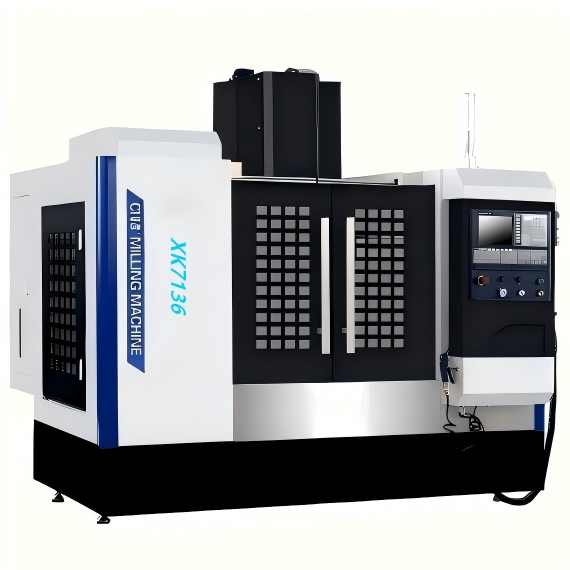
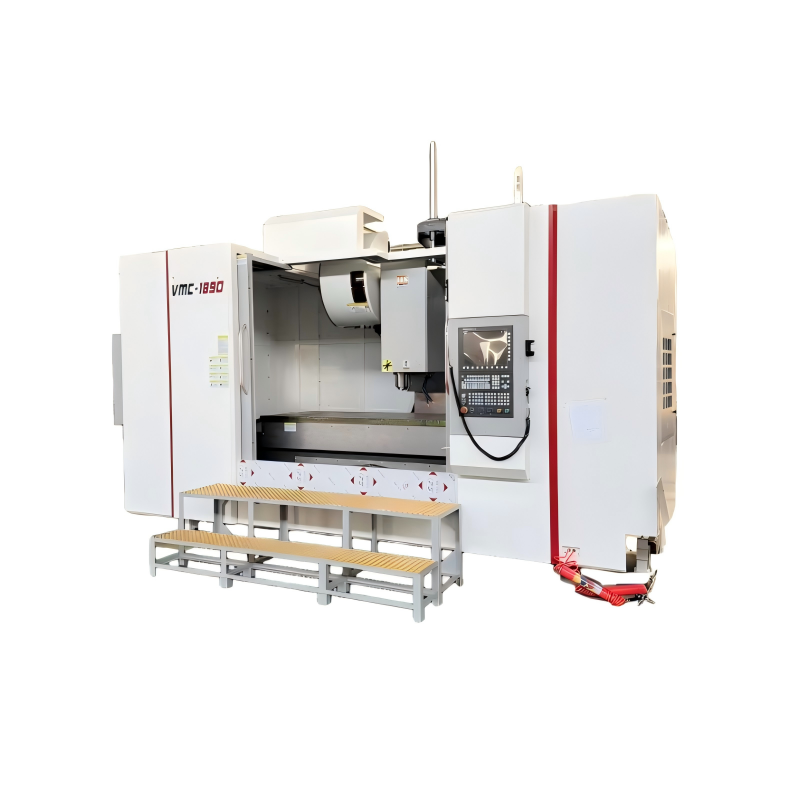
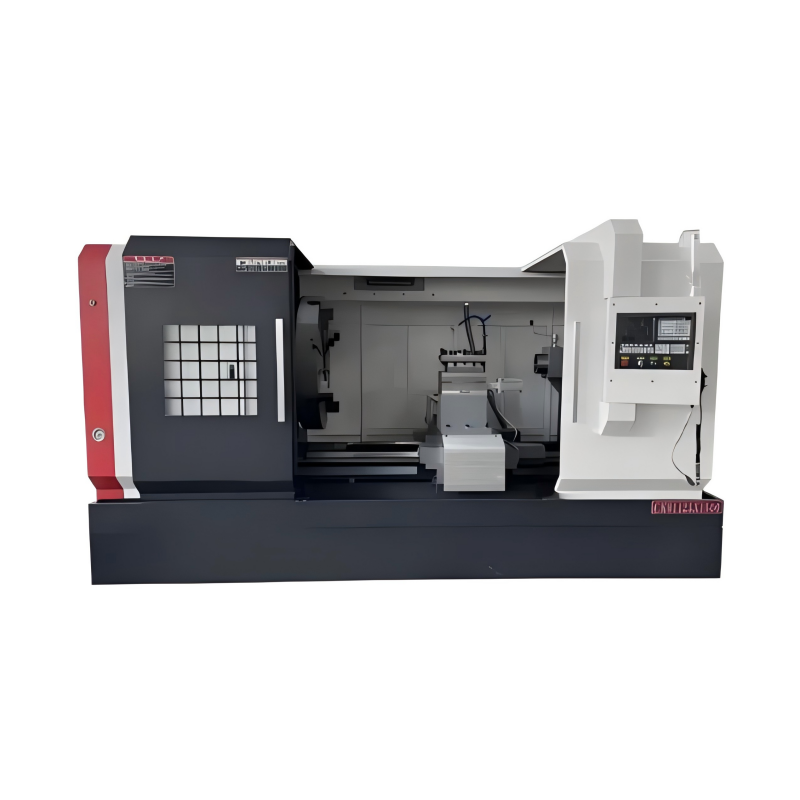
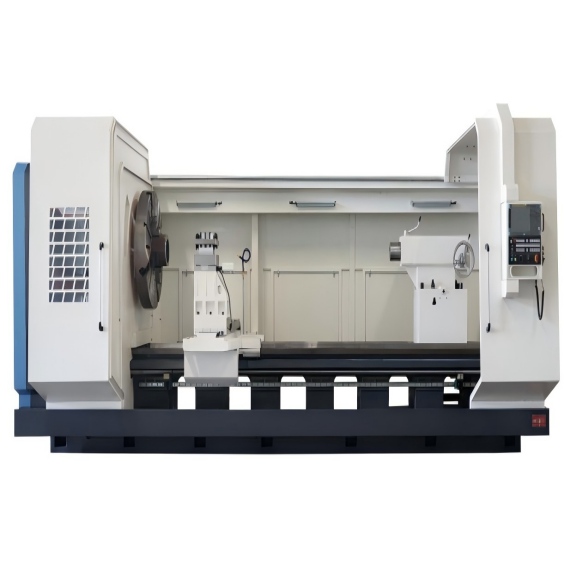
The Box Way Vertical Machining Center (VMC) is a cornerstone in modern manufacturing, known for its robust construction and precision. At the heart of these machines lies the box way design, which plays an essential role in ensuring stability and accuracy during operation. The box ways, characterized by their rectangular cross-section, provide a larger contact area compared to other types of guideways, such as linear or roller ways. This increased contact area translates into better load distribution, reducing wear and tear over time. Additionally, the box way system is less susceptible to contamination from chips and coolant, making it ideal for high-volume production environments where maintenance downtime needs to be minimized.
One of the most significant advantages of a Box Way VMC Machine is its high rigidity. This feature is crucial for machining operations that require heavy cutting forces or those involving hard materials. The rigid structure not only ensures minimal deflection under load but also enhances the overall accuracy and repeatability of the machine. In applications where tight tolerances are critical, such as aerospace or medical device manufacturing, this level of rigidity can make a substantial difference in the quality of the final product. Furthermore, the enhanced rigidity allows for faster feed rates without compromising on part quality, thereby increasing productivity and efficiency in the shop floor.
Thermal stability is another critical aspect of a high-performance Box Way VMC Machine. During machining, heat generation is inevitable due to friction and cutting processes. However, excessive thermal expansion can lead to dimensional inaccuracies and reduced tool life. To counteract this, many Box Way VMCs are equipped with advanced cooling systems and thermal compensation technologies. These features help maintain consistent temperatures throughout the machine, minimizing thermal drift and ensuring that parts are machined within specified tolerances even during prolonged operations. Moreover, some models incorporate materials with low thermal expansion coefficients in their construction, further enhancing the machine's ability to maintain dimensional stability under varying thermal conditions.
In addition to mechanical and thermal characteristics, the control system of a Box Way VMC Machine significantly impacts its performance. Modern VMCs often come with sophisticated CNC (Computer Numerical Control) systems that offer advanced programming capabilities, real-time monitoring, and adaptive control features. These controls enable operators to fine-tune parameters such as spindle speed, feed rate, and tool path, optimizing the machining process for specific workpieces and materials. Advanced control systems also support predictive maintenance, allowing for proactive servicing and reducing unexpected downtime. By integrating these intelligent control solutions, manufacturers can achieve higher levels of automation, improve part quality, and enhance overall operational efficiency.
A key strength of the Box Way VMC Machine is its adaptability to various manufacturing requirements. Whether it's high-precision milling, drilling, or tapping, these machines can handle a wide range of tasks with ease. The versatility of Box Way VMCs is further enhanced by their modular design, which allows for easy integration of additional tools and accessories. This flexibility makes them suitable for both small-batch and large-scale production runs, catering to the needs of different industries. Additionally, the robust construction and high rigidity of these machines ensure that they can operate efficiently in harsh industrial environments, providing reliable performance and longevity. As manufacturing demands continue to evolve, the adaptability of Box Way VMCs positions them as a valuable asset in any modern machine shop.
 19/06/2026
The evolution of manufacturing technology has been marked by significant advancements in precision, efficiency, and durability. One such advancement is the Box Way VMC (Vertical Machining Center) machine, which has become a cornerstone in modern machining
Read More19/06/2026In the realm of precision machining, the integration of advanced box way technology into VMC (Vertical Machining Center) machines has marked a significant leap in performance and reliability. This report delves into the core benefits and technical advance
Read More19/06/2026The Fundamental Principles of Box Way Design in VMCBox way systems, integral to the construction of Vertical Machining Centers (VMC), play a crucial role in enhancing both the reliability and efficiency of these machines. The design principles behind box
Read More19/06/2026In the realm of precision manufacturing, the Box Way VMC (Vertical Machining Center) stands out as a pinnacle of engineering excellence. This article delves into how the Box Way design significantly enhances the accuracy and efficiency of VMC machines, ma
Read More18/06/2026The advent of advanced manufacturing technologies has significantly transformed the landscape of industrial production, with the Box Way VMC (Vertical Machining Center) Machine standing out as a prime example. This piece of machinery represents more than
Read More18/06/2026In the realm of modern manufacturing, the Vertical Machining Center (VMC) stands out as a cornerstone for precision and efficiency. Among the various components that make up these sophisticated machines, the box way system has been a subject of continuous
Read More18/06/2026Box Way VMC Machine, a term that has been gaining significant attention in the machining industry, represents an innovative approach to improving the performance and longevity of Vertical Machining Centers (VMCs). This technology focuses on the use of box
Read MoreOur professional sales team is always ready to assist you.