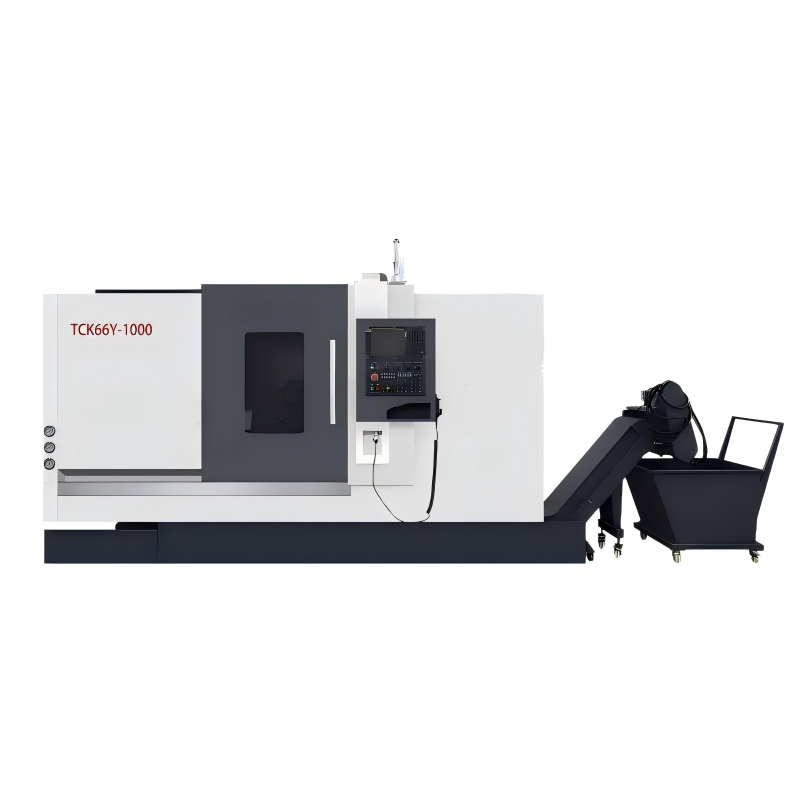
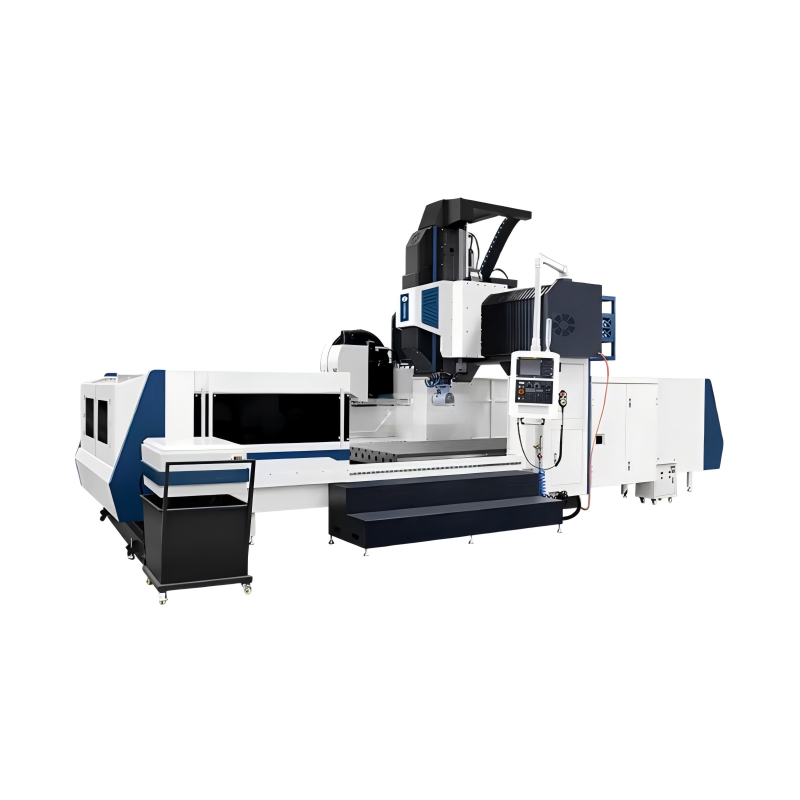
In the ever-evolving world of manufacturing, precision and efficiency are paramount. The Gantry Machining Center has emerged as a game-changer, offering unparalleled accuracy and versatility. These machines are designed to handle large and complex parts, making them ideal for industries such as aerospace, automotive, and heavy machinery. Recent advancements in gantry machining center technology have further enhanced their capabilities, allowing for more precise and faster production processes.
One of the key advancements is the integration of advanced control systems. Modern gantry machining centers are equipped with sophisticated CNC (Computer Numerical Control) systems that provide real-time monitoring and adjustment. This ensures that the machine operates at optimal performance, reducing errors and increasing productivity. Additionally, the use of high-precision linear guides and ball screws has significantly improved the accuracy and repeatability of these machines.
The future of precision machining lies in the seamless integration of automation and robotics. Gantry Machining Centers are increasingly being paired with robotic arms and automated material handling systems to create fully automated production lines. This not only enhances the speed and efficiency of the machining process but also reduces the need for human intervention, leading to lower labor costs and higher safety standards.
Robotic arms can be programmed to perform a wide range of tasks, from loading and unloading workpieces to performing intricate machining operations. This level of automation allows for 24/7 operation, maximizing the utilization of the gantry machining center. Furthermore, the integration of artificial intelligence (AI) and machine learning (ML) algorithms enables the system to learn and adapt, optimizing the machining process over time.
Another significant development in the field of gantry machining centers is the ability to work with a broader range of materials. Traditional machining centers were often limited to working with metals, but modern gantry machining centers can now handle a variety of materials, including composites, plastics, and even some types of ceramics. This versatility opens up new possibilities for manufacturers, allowing them to produce a wider range of products with a single machine.
For example, in the aerospace industry, the use of composite materials has become increasingly common due to their lightweight and high-strength properties. Gantry Machining Centers equipped with specialized cutting tools and cooling systems can effectively machine these materials, ensuring that the final product meets the stringent requirements of the industry. Similarly, in the medical device sector, the ability to machine biocompatible materials with high precision is crucial for producing implants and other medical components.
As the global focus on sustainability continues to grow, the manufacturing industry is under pressure to reduce its environmental impact. Gantry Machining Centers are no exception, and manufacturers are increasingly looking for ways to make these machines more energy-efficient. One approach is to optimize the design of the machine itself, using lightweight materials and more efficient motors to reduce power consumption.
Additionally, the implementation of energy recovery systems, such as regenerative braking, can help to capture and reuse energy that would otherwise be lost. This not only reduces the overall energy consumption of the machine but also lowers operating costs. Furthermore, the use of eco-friendly coolants and lubricants can minimize the environmental impact of the machining process, ensuring that the production of precision parts is both efficient and sustainable.
The rise of Industry 4.0 has brought about a paradigm shift in the way manufacturing processes are managed. Gantry Machining Centers are now equipped with sensors and data collection systems that provide real-time information about the machine's performance. This data can be analyzed to identify trends, predict potential issues, and optimize the machining process. For example, by monitoring the temperature and vibration levels of the machine, operators can detect signs of wear and tear before they lead to costly breakdowns.
Predictive maintenance, enabled by the analysis of this data, allows for proactive servicing and repair, reducing downtime and extending the lifespan of the machine. Moreover, the integration of cloud-based platforms and the Internet of Things (IoT) enables remote monitoring and control, providing manufacturers with greater flexibility and visibility into their operations. This data-driven approach not only improves the reliability and efficiency of the gantry machining center but also enhances the overall quality of the machined parts.
The future of precision machining with Gantry Machining Centers is bright, driven by advancements in technology, automation, and sustainability. As these machines continue to evolve, they will play an increasingly important role in the manufacturing landscape, enabling the production of high-precision parts with greater efficiency and environmental responsibility. By embracing these innovations, manufacturers can stay ahead of the curve and meet the demands of a rapidly changing industry.
 26/06/2026
In the realm of industrial manufacturing, precision and efficiency are paramount. The introduction of Gantry Machining Centers (GMCs) has significantly transformed how large-scale components and parts are produced, offering unparalleled accuracy, speed, a
Read More25/06/2026Introduction to Gantry Machining CentersA gantry machining center, also known as a bridge-type machining center, represents one of the most advanced and versatile types of CNC (Computer Numerical Control) machines available today. These machines are chara
Read MoreOur professional sales team is always ready to assist you.