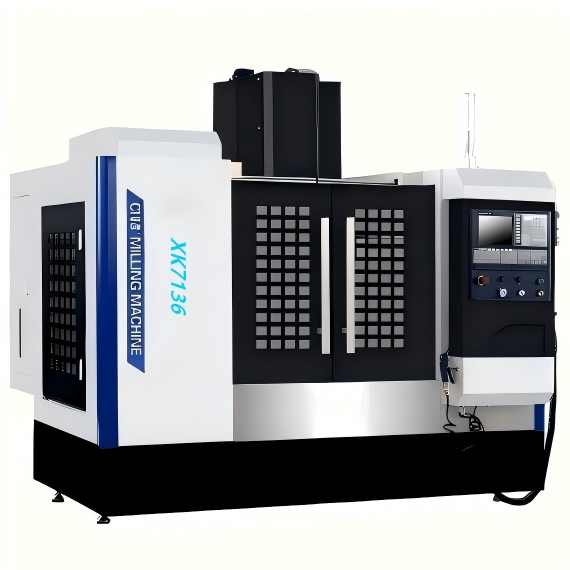
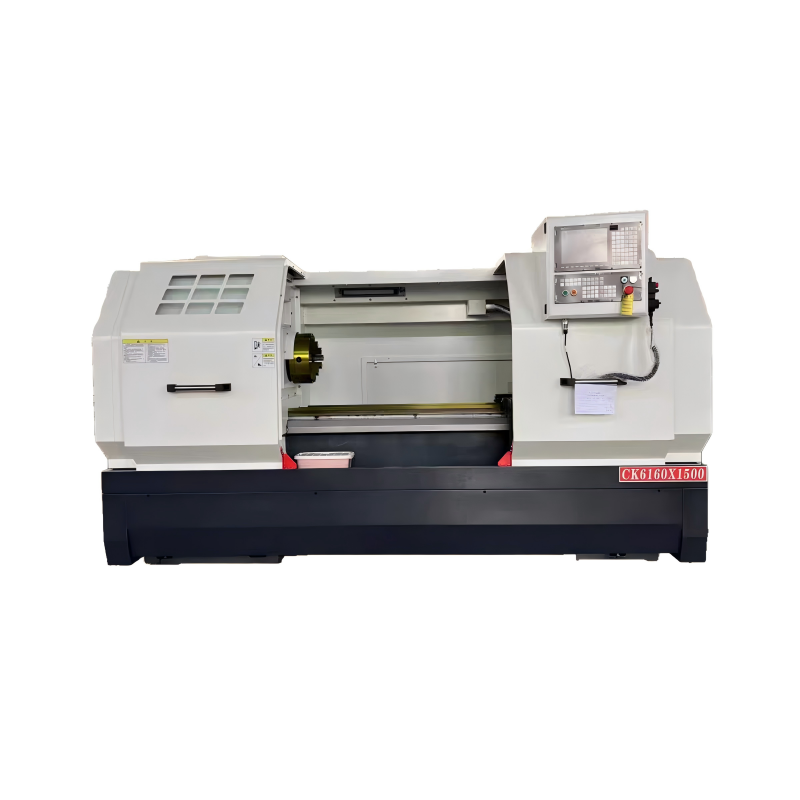
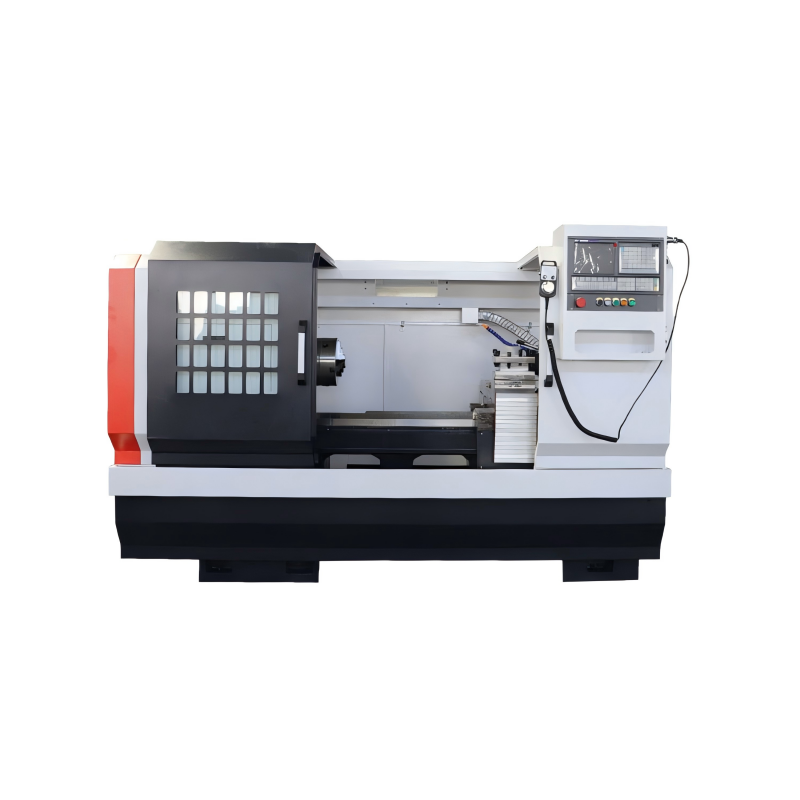
The evolution of manufacturing technologies has seen significant advancements, with Vertical Machining Centers (VMCs) playing a crucial role in the precision and efficiency of modern machining processes. Among the many components that contribute to the performance of a VMC, the box way design is particularly noteworthy for its impact on machine stability, durability, and overall efficiency. This technical report explores the critical role of box ways in VMC machines, focusing on how this component enhances the machine's capabilities.
One of the primary advantages of incorporating box ways into VMC designs is the significant improvement in machine stability. Box ways, which are essentially large, rigid castings with dovetail-shaped guides, provide a robust foundation for the machine's moving parts. The design allows for a larger contact area between the moving and stationary components, thereby distributing the load more evenly and reducing deflection. This increased rigidity translates into higher precision during machining operations, as the tool path remains consistent and accurate, even under heavy cutting loads. Moreover, the box way's ability to maintain tight tolerances over extended periods makes it an ideal choice for high-precision applications, such as aerospace and medical device manufacturing.
Another key benefit of using box ways in VMCs is their exceptional durability. Unlike linear guides, which can wear out relatively quickly due to point or line contact, box ways have a much larger surface area in contact, leading to less wear per unit area. This design feature ensures that the machine can withstand prolonged use without significant degradation in performance. Additionally, the box way system often includes features like hardened and ground surfaces, which further enhance its resistance to wear and tear. As a result, VMCs equipped with box ways typically have a longer service life, reducing maintenance costs and downtime. This longevity is particularly valuable in high-volume production environments where machine reliability is paramount.
Box ways also offer superior damping characteristics, which are essential for maintaining smooth and vibration-free operation. The large contact area and the inherent mass of the box way design help to absorb and dissipate vibrations generated during the machining process. This is especially important when working with materials that require high-speed cutting, as excessive vibrations can lead to chatter, tool breakage, and poor surface finish. By minimizing these issues, box ways contribute to better part quality and reduced scrap rates. Furthermore, the enhanced damping properties of box ways allow for more aggressive cutting parameters, enabling faster cycle times and increased productivity.
Thermal stability is another critical aspect of VMC performance, and box ways play a significant role in maintaining consistent thermal behavior. The massive construction of box ways provides excellent thermal conductivity, allowing heat to be distributed more evenly throughout the machine. This uniform heat distribution helps to minimize thermal expansion and contraction, which can otherwise lead to dimensional inaccuracies in the machined parts. In addition, the box way design often includes provisions for cooling, such as oil or air circulation, which further aids in temperature control. As a result, VMCs with box ways can achieve higher levels of thermal stability, ensuring that the machine remains within tight tolerances even during extended periods of operation.
While the initial cost of a VMC with box ways may be higher compared to machines with other types of guideways, the long-term benefits often justify the investment. The durability and longevity of box ways mean that they require less frequent replacement and maintenance, leading to lower operational costs over the machine's lifetime. Additionally, the improved precision, stability, and productivity offered by box ways can result in higher-quality parts and increased throughput, which can translate into significant cost savings and higher profitability. For manufacturers who prioritize long-term value and reliability, the initial investment in a box way VMC is well worth the expense.
In conclusion, the role of box ways in VMC machine efficiency is multifaceted and profound. By enhancing stability, durability, damping, thermal stability, and cost-effectiveness, box ways significantly improve the overall performance and reliability of VMCs. These benefits make them an indispensable component in the design of high-precision and high-performance machining centers, contributing to the continued advancement of manufacturing technology.
 20/06/2026
In the realm of precision machining, Vertical Machining Centers (VMCs) play a crucial role in achieving high accuracy and efficiency. One of the key components that significantly influence the performance of VMCs is the type of way system used. This repor
Read More20/06/2026Understanding the Box Way VMC Machine: A Foundation for PrecisionThe Box Way VMC Machine represents a significant advancement in vertical machining center (VMC) technology, offering unparalleled precision and durability. This section explores the fundamen
Read More20/06/2026The evolution of manufacturing technologies has been significantly influenced by advancements in machine tool design. One such innovation is the development and optimization of Box Way VMC (Vertical Machining Center) machines, which have become increasing
Read More19/06/2026The evolution of manufacturing technology has been marked by significant advancements in precision, efficiency, and durability. One such advancement is the Box Way VMC (Vertical Machining Center) machine, which has become a cornerstone in modern machining
Read More19/06/2026In the realm of precision machining, the integration of advanced box way technology into VMC (Vertical Machining Center) machines has marked a significant leap in performance and reliability. This report delves into the core benefits and technical advance
Read More19/06/2026The Fundamental Principles of Box Way Design in VMCBox way systems, integral to the construction of Vertical Machining Centers (VMC), play a crucial role in enhancing both the reliability and efficiency of these machines. The design principles behind box
Read More19/06/2026In the realm of precision manufacturing, the Box Way VMC (Vertical Machining Center) stands out as a pinnacle of engineering excellence. This article delves into how the Box Way design significantly enhances the accuracy and efficiency of VMC machines, ma
Read More18/06/2026The advent of advanced manufacturing technologies has significantly transformed the landscape of industrial production, with the Box Way VMC (Vertical Machining Center) Machine standing out as a prime example. This piece of machinery represents more than
Read More18/06/2026Understanding the Core Components of a Box Way VMC MachineThe Box Way Vertical Machining Center (VMC) is a cornerstone in modern manufacturing, known for its robust construction and precision. At the heart of these machines lies the box way design, which
Read More18/06/2026In the realm of modern manufacturing, the Vertical Machining Center (VMC) stands out as a cornerstone for precision and efficiency. Among the various components that make up these sophisticated machines, the box way system has been a subject of continuous
Read More18/06/2026Box Way VMC Machine, a term that has been gaining significant attention in the machining industry, represents an innovative approach to improving the performance and longevity of Vertical Machining Centers (VMCs). This technology focuses on the use of box
Read MoreOur professional sales team is always ready to assist you.