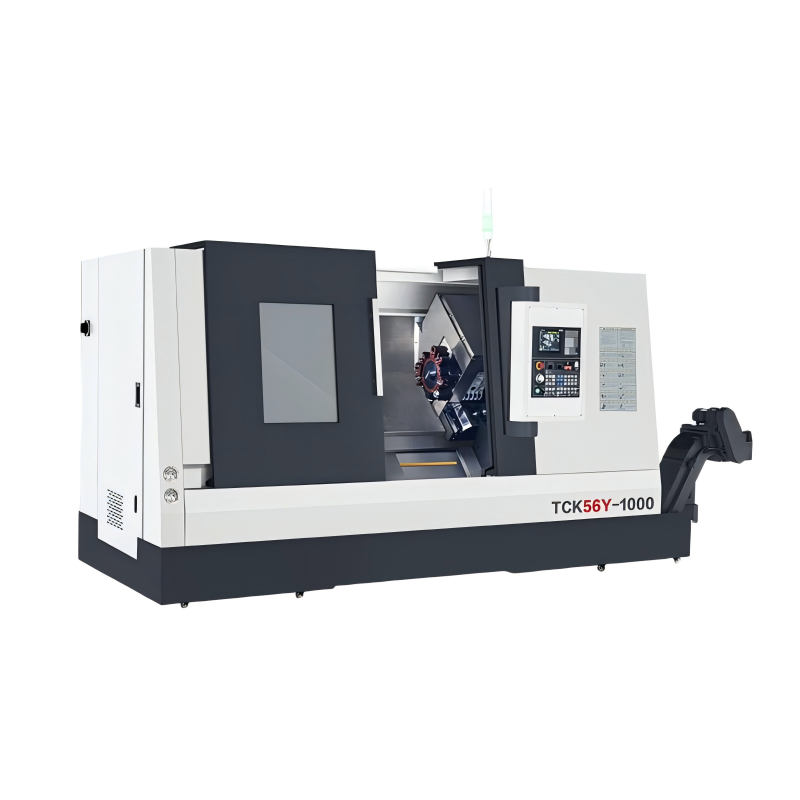
In the ever-evolving landscape of automotive manufacturing, precision and efficiency are paramount. One technology that has significantly contributed to these aspects is the CNC lathe for automotive parts machining. This article delves into the critical role of CNC Lathes in modern automotive manufacturing, exploring their impact on production processes, quality, and overall industry advancements.
Enhancing Precision and Consistency
The advent of Computer Numerical Control (CNC) lathes has revolutionized the way automotive parts are machined. Unlike traditional manual lathes, which rely heavily on the skill and experience of the operator, CNC lathes use computer-aided design (CAD) and computer-aided manufacturing (CAM) software to control the cutting process. This automation ensures that each part is machined with the highest level of precision and consistency, reducing the margin for human error. The ability to program and store machining instructions also allows for the rapid production of complex parts, such as engine components and transmission gears, with minimal setup time. This not only enhances the quality of the final product but also increases the overall efficiency of the manufacturing process.
Improving Production Efficiency and Cost-Effectiveness
One of the most significant advantages of using a CNC lathe for automotive parts machining is its ability to improve production efficiency. CNC lathes can operate 24/7 with minimal supervision, allowing for continuous production runs. This capability is particularly beneficial in the high-volume, fast-paced environment of automotive manufacturing, where downtime can be costly. Additionally, the use of CNC lathes reduces the need for skilled labor, as the machines can perform complex operations with little human intervention. This not only lowers labor costs but also minimizes the risk of workplace injuries, making the manufacturing process safer and more cost-effective. Furthermore, the ability to quickly switch between different part designs and specifications without extensive retooling or setup time further enhances the flexibility and efficiency of the production line.
Enabling Advanced Material Processing
The automotive industry is constantly pushing the boundaries of material science, with new materials being developed to meet the demands of lighter, stronger, and more durable vehicles. CNC lathes play a crucial role in processing these advanced materials, such as aluminum, titanium, and high-strength steels. These materials often require specialized cutting tools and techniques to achieve the desired surface finish and dimensional accuracy. CNC lathes, equipped with advanced tooling and cutting parameters, can handle these materials with ease, ensuring that the final parts meet the stringent quality standards of the automotive industry. Moreover, the ability to precisely control the cutting parameters, such as speed, feed rate, and depth of cut, allows for optimal material removal and surface finish, even with the most challenging materials.
Facilitating Customization and Innovation
Customization and innovation are key drivers in the automotive industry, as manufacturers strive to differentiate their products and meet the diverse needs of consumers. CNC lathes for automotive parts machining provide the flexibility and precision needed to produce customized parts and prototypes. The ability to easily modify and update the machining programs allows for rapid prototyping and testing of new designs, enabling manufacturers to bring innovative products to market faster. This is particularly important in the development of electric and autonomous vehicles, where new technologies and components are constantly being introduced. CNC lathes also support the production of small batch sizes, making it feasible to offer a wider range of customization options to customers, from unique wheel designs to specialized engine components.
Conclusion
The role of CNC lathes in modern automotive manufacturing cannot be overstated. These machines have transformed the way automotive parts are produced, enhancing precision, efficiency, and cost-effectiveness. By enabling the processing of advanced materials and facilitating customization and innovation, CNC lathes continue to drive the industry forward. As the automotive sector continues to evolve, the importance of CNC lathes in maintaining and improving the quality and competitiveness of automotive manufacturing will only grow.

 30/06/2026



