In today’s manufacturing landscape, the integration of advanced technologies has revolutionized production processes, with multi-axis CNC (Computer Numerical Control) workcells standing out as a testament to innovation and efficiency. This report delves into the versatility and power of such systems, particularly focusing on how they can enhance operations involving a Turning Lathe Machine. By exploring key features, benefits, and applications, we aim to provide a comprehensive understanding of why multi-axis CNC workcells are indispensable in modern industrial settings.
Enhanced Precision and Efficiency through Multi-Axis Capabilities
The advent of multi-axis CNC workcells has significantly elevated the standards of precision and efficiency in machining. Unlike traditional single-axis machines, which are limited in their ability to perform complex operations, multi-axis CNC workcells offer unparalleled flexibility. These systems can manipulate tools and workpieces along multiple axes simultaneously, allowing for intricate and precise cuts, drills, and finishes. For instance, when integrated with a turning lathe machine, a multi-axis CNC workcell can execute both turning and milling operations without the need for manual repositioning or tool changes, thereby reducing setup times and increasing throughput.
Moreover, the enhanced precision of multi-axis CNC workcells ensures that parts are manufactured to exact specifications, minimizing errors and waste. This is particularly crucial in industries where tolerances are extremely tight, such as aerospace, medical devices, and automotive. The ability to achieve high-precision results consistently not only improves product quality but also enhances the overall reputation of the manufacturer.
Increased Productivity and Cost-Effectiveness
One of the most compelling advantages of multi-axis CNC workcells is their potential to boost productivity while reducing costs. By automating the entire machining process, these systems eliminate the need for frequent human intervention, which is often a bottleneck in traditional setups. This automation leads to faster cycle times and higher output rates, making it possible to meet demanding production schedules more efficiently.
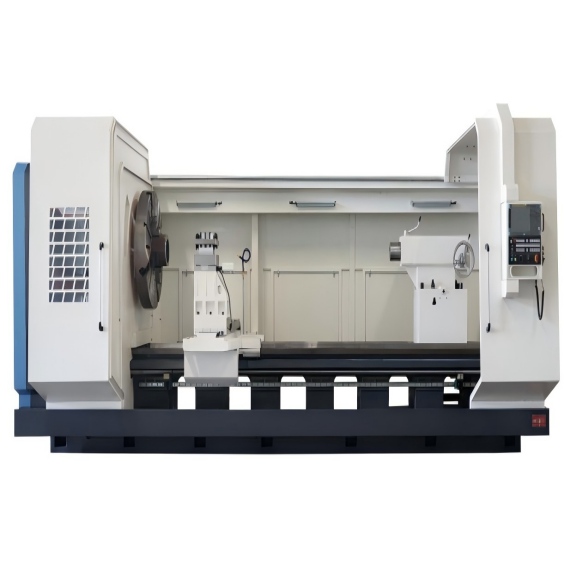
Additionally, the integration of a turning lathe machine within a multi-axis CNC workcell further enhances productivity. The seamless transition between different machining operations, such as turning, milling, and drilling, allows for the continuous processing of workpieces. This not only saves time but also reduces the likelihood of errors that can occur during manual setup and repositioning. Furthermore, the reduced need for manual labor translates into lower labor costs, contributing to the overall cost-effectiveness of the operation.
Flexibility and Adaptability in Manufacturing
Multi-axis CNC workcells are highly adaptable and can be easily reconfigured to handle a wide range of tasks and materials. This flexibility is a significant advantage in an industry where product designs and customer demands are constantly evolving. For example, a turning lathe machine within a multi-axis CNC workcell can be programmed to produce a variety of parts with different geometries and complexities, from simple cylindrical components to intricate, multi-faceted pieces.
Furthermore, the ability to switch between different machining operations and tools quickly and efficiently makes multi-axis CNC workcells ideal for small-batch and custom production. This adaptability allows manufacturers to respond rapidly to market changes and customer requests, ensuring that they remain competitive and agile. The versatility of these systems also extends to the types of materials they can process, including metals, plastics, and composites, making them suitable for a broad spectrum of applications across various industries.
Integration of Advanced Technologies
The power of multi-axis CNC workcells is further amplified by the integration of advanced technologies such as CAD/CAM software, real-time monitoring, and predictive maintenance. CAD/CAM software enables the creation of detailed 3D models and the generation of precise toolpaths, which are then executed by the CNC system. This integration ensures that the design intent is accurately translated into the final product, reducing the need for prototypes and iterations.
Real-time monitoring systems provide valuable insights into the performance of the multi-axis CNC workcell, allowing operators to detect and address issues before they become critical. This proactive approach to maintenance helps to minimize downtime and extend the lifespan of the equipment. Predictive maintenance, powered by data analytics and machine learning, takes this a step further by forecasting potential failures and recommending preventive actions. The combination of these advanced technologies not only enhances the reliability and longevity of the multi-axis CNC workcell but also contributes to the overall efficiency and productivity of the manufacturing process.
In conclusion, the versatility and power of multi-axis CNC workcells, especially when integrated with a turning lathe machine, offer a multitude of benefits that are essential for modern manufacturing. From enhanced precision and efficiency to increased productivity and cost-effectiveness, these systems are designed to meet the demands of a rapidly evolving industrial landscape. The flexibility and adaptability of multi-axis CNC workcells, coupled with the integration of advanced technologies, make them an indispensable tool for manufacturers looking to stay ahead of the curve.


 29/06/2026



