In the realm of precision machining, the Turning Hard Rail CNC Lathe stands out as a remarkable tool, capable of producing intricate and accurate parts with unparalleled efficiency. This article delves into the intricacies of using a Turning Hard Rail CNC Lathe, exploring its capabilities, applications, and the art behind its operation.
Understanding the Mechanics of a Turning Hard Rail CNC Lathe
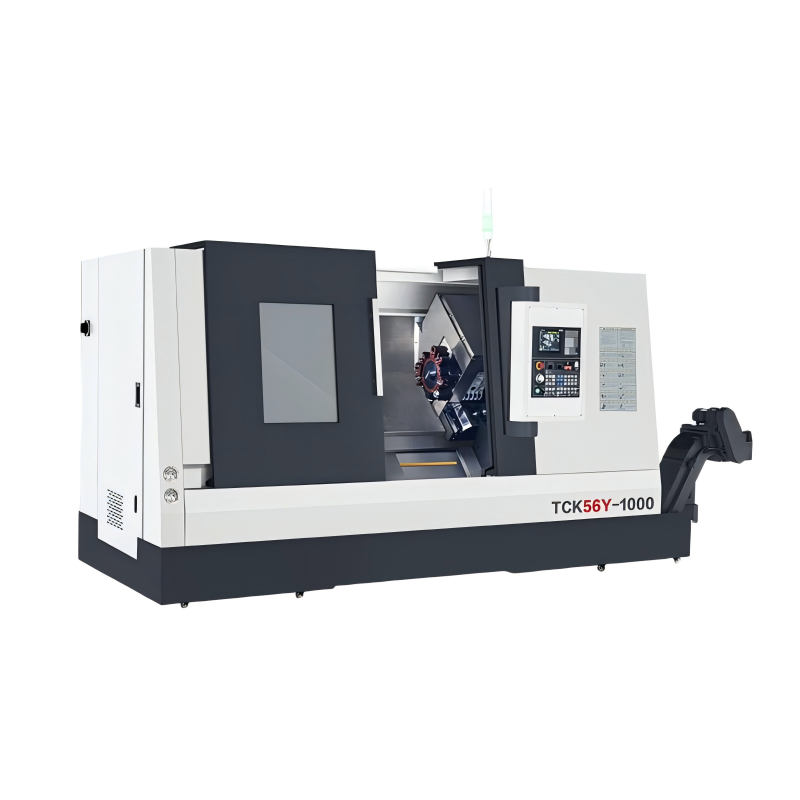
A Turning Hard Rail CNC Lathe is an advanced machine designed for high-precision turning operations. The "hard rail" in this context refers to the rigid, stable structure that supports the cutting tools and workpiece, ensuring minimal vibration and maximum accuracy. This robust design is essential for achieving the tight tolerances required in many industries, such as aerospace, automotive, and medical devices.
The CNC (Computer Numerical Control) aspect of the lathe allows for precise control over the cutting process. Operators can program the machine to perform complex sequences of operations, from simple turning to more intricate tasks like threading, facing, and taper turning. The combination of a hard rail and CNC technology results in a machine that can produce parts with exceptional surface finish and dimensional accuracy.
Advantages of Using a Turning Hard Rail CNC Lathe
One of the primary advantages of a Turning Hard Rail CNC Lathe is its ability to handle a wide range of materials. From soft metals like aluminum to harder materials like stainless steel and titanium, these lathes can cut through them all with ease. The rigid structure and precise control provided by the CNC system ensure that the cutting process is consistent and reliable, even when working with challenging materials.
Another significant advantage is the repeatability of the machining process. Once a part is programmed, the Turning Hard Rail CNC Lathe can produce it consistently, time after time. This is particularly valuable in mass production settings where uniformity and quality are critical. The ability to save and recall programs also means that setup times are minimized, leading to increased productivity and reduced costs.
Additionally, the Turning Hard Rail CNC Lathe offers flexibility in terms of the types of parts it can produce. From small, intricate components to large, heavy-duty parts, the machine can be adapted to meet a variety of needs. This versatility makes it a valuable asset in any manufacturing environment.
Optimizing Performance and Efficiency
To get the most out of a Turning Hard Rail CNC Lathe, it is essential to optimize both the machine setup and the machining process. Proper tool selection is a critical factor in achieving optimal performance. High-quality cutting tools, designed specifically for the material being machined, will not only improve the surface finish but also extend the life of the tools themselves.
Cutting parameters, such as speed, feed rate, and depth of cut, must also be carefully selected. These parameters can significantly impact the quality of the finished part and the overall efficiency of the machining process. Modern CNC software often includes features to help operators determine the best settings for a given job, but experience and knowledge of the material properties are still invaluable.
Maintenance is another key aspect of optimizing the performance of a Turning Hard Rail CNC Lathe. Regular cleaning, lubrication, and inspection of the machine's components will help ensure that it operates at peak efficiency. Additionally, keeping the software and firmware up to date can provide access to new features and improvements that can further enhance the machine's capabilities.
Applications in Various Industries
The Turning Hard Rail CNC Lathe finds applications in a wide range of industries, each with its own unique requirements. In the aerospace industry, for example, the precision and reliability of the machine are crucial for producing parts that meet stringent safety and performance standards. Components such as engine parts, landing gear, and structural elements are often machined on these lathes.
In the automotive sector, the Turning Hard Rail CNC Lathe is used to manufacture a variety of parts, including engine components, transmission parts, and suspension components. The ability to produce high-precision parts quickly and efficiently is essential for meeting the demands of the automotive market.
The medical device industry also benefits greatly from the capabilities of the Turning Hard Rail CNC Lathe. Medical implants, surgical instruments, and other precision components require the highest levels of accuracy and consistency, which the machine can deliver. The ability to work with biocompatible materials and maintain strict quality control is a key advantage in this field.
Future Trends and Innovations
As technology continues to advance, the Turning Hard Rail CNC Lathe is likely to see further improvements and innovations. One area of focus is the integration of artificial intelligence (AI) and machine learning (ML) into the machining process. AI and ML can help optimize cutting parameters, predict tool wear, and even detect potential issues before they become problems. This can lead to even greater efficiency and reduced downtime.
Another trend is the development of more advanced materials and coatings for cutting tools. New materials, such as ceramic and polycrystalline diamond (PCD), offer improved wear resistance and higher cutting speeds, allowing for even more efficient machining. Coatings, such as diamond-like carbon (DLC) and titanium nitride (TiN), can further enhance the performance and longevity of the tools.
Finally, the integration of Industry 4.0 technologies, such as the Internet of Things (IoT) and cloud computing, is transforming the way manufacturing processes are managed. These technologies enable real-time monitoring and data analysis, allowing for better decision-making and more efficient production. The Turning Hard Rail CNC Lathe, with its advanced capabilities, is well-positioned to take advantage of these emerging trends.
In conclusion, the Turning Hard Rail CNC Lathe is a powerful and versatile tool that plays a vital role in modern manufacturing. Its ability to produce high-precision parts with consistency and efficiency makes it an indispensable asset in a wide range of industries. By understanding its mechanics, optimizing its performance, and embracing future innovations, manufacturers can continue to push the boundaries of what is possible in the world of precision machining.
 04/06/2026



