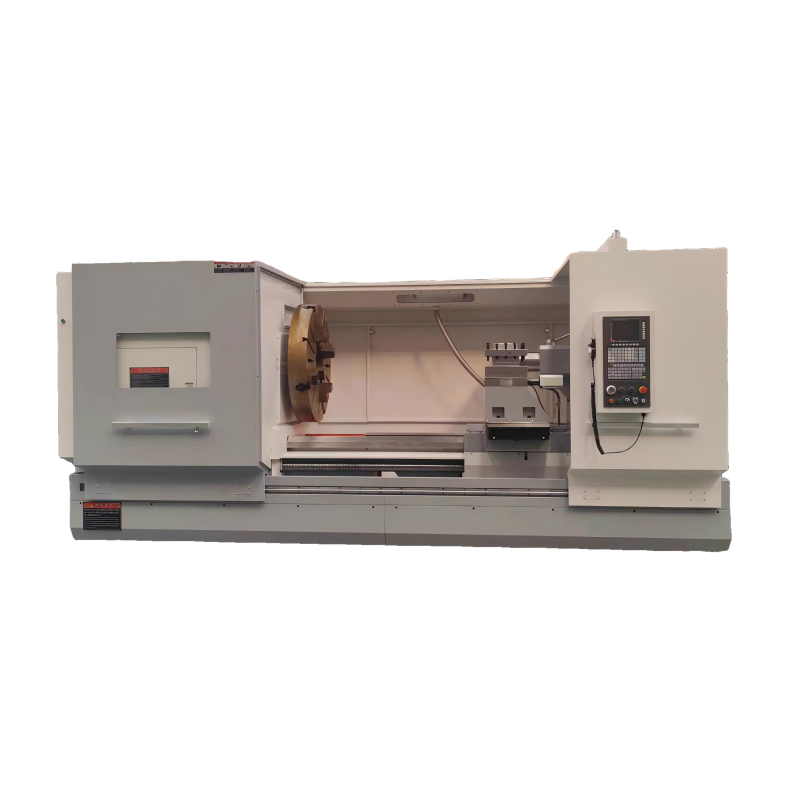
In the realm of precision machining, Large diameter pipe thread CNC lathe operations play a crucial role, especially when it comes to producing high-quality threads on pipes. These machines are equipped with advanced features that allow for precise and efficient cutting, but their effectiveness is largely dependent on the movement along the X-axis and Z-axis. This technical report will explore the importance of these movements in CNC Lathes, focusing on how they contribute to the overall performance and accuracy of large diameter pipe threading operations.
The X-axis movement in a CNC lathe refers to the cross-slide motion, which is perpendicular to the workpiece's rotational axis. In the context of a Large diameter pipe thread CNC lathe, this axis is critical for several reasons. Firstly, it allows for the precise positioning of the cutting tool relative to the workpiece. This is essential for ensuring that the thread is cut at the correct depth and width, maintaining the required tolerances. Secondly, the X-axis movement enables the tool to be retracted from the workpiece, preventing damage to both the tool and the part being machined. Additionally, this axis is often used in conjunction with the Z-axis to create complex profiles and shapes, which is particularly important in pipe threading where the thread profile must be consistent and accurate.
One of the key benefits of the X-axis in a CNC lathe is its ability to provide fine control over the cutting process. This is achieved through the use of high-precision linear guides and ball screws, which ensure smooth and accurate movement. The X-axis also plays a crucial role in the setup and adjustment of the machine, as it allows for easy alignment of the tool with the workpiece. By providing a stable and repeatable platform for the cutting tool, the X-axis ensures that each thread is machined to the same specifications, leading to higher quality and more consistent results.
The Z-axis movement in a CNC lathe is responsible for the longitudinal motion of the tool along the length of the workpiece. In the case of a Large diameter pipe thread CNC lathe, this axis is fundamental for the threading process. The Z-axis movement allows the tool to travel along the entire length of the pipe, creating the continuous thread pattern. This movement is typically controlled by a servo motor, which provides precise and reliable control over the tool's position and speed.
One of the primary advantages of the Z-axis is its ability to maintain a constant feed rate, which is crucial for achieving a uniform thread pitch. A consistent feed rate ensures that the thread is cut evenly, without any variations in depth or spacing. This is particularly important in large diameter pipe threading, where even small deviations can lead to significant issues in the final product. The Z-axis also plays a vital role in the efficiency of the machining process, as it allows for rapid and accurate positioning of the tool, reducing the overall cycle time and increasing productivity.
Another important aspect of the Z-axis is its contribution to the overall rigidity of the machine. In a CNC lathe, the Z-axis is often supported by heavy-duty linear guides and bearings, which provide a stable and robust platform for the cutting tool. This rigidity is essential for maintaining the accuracy of the machining process, especially when dealing with large and heavy workpieces. By ensuring that the tool remains in the correct position throughout the cutting operation, the Z-axis helps to prevent deflection and chatter, resulting in smoother and more precise cuts.
The effective coordination of the X-axis and Z-axis Movements is critical for achieving optimal performance in a Large diameter pipe thread CNC lathe. When these axes work in harmony, they enable the machine to produce high-quality threads with excellent precision and consistency. The synchronization of these movements is typically managed by the CNC controller, which uses advanced algorithms to coordinate the actions of the servomotors and linear actuators.
One of the key benefits of synchronized X-axis and Z-axis movement is the ability to create complex thread profiles. In many cases, the thread design may require multiple passes with different depths and widths. By precisely controlling the X-axis and Z-axis, the CNC lathe can execute these multi-pass operations seamlessly, ensuring that each pass contributes to the final thread profile. This level of control is particularly important in applications where the thread must meet strict dimensional and functional requirements, such as in the oil and gas industry.
Another advantage of synchronized X-axis and Z-axis movement is the ability to optimize the machining process for specific materials and applications. Different materials, such as stainless steel, carbon steel, and aluminum, have varying properties that affect the cutting process. By adjusting the feed rates, cutting speeds, and tool paths, the CNC lathe can be tailored to achieve the best results for each material. This flexibility is essential for meeting the diverse needs of different industries and applications, making the CNC lathe a versatile and valuable tool in modern manufacturing.
In conclusion, the X-axis and Z-axis movements are fundamental to the performance and accuracy of a Large diameter pipe thread CNC lathe. The X-axis provides precise control over the tool's position, while the Z-axis ensures a consistent and efficient cutting process. When these axes are synchronized, they enable the machine to produce high-quality threads with exceptional precision and consistency. Understanding the importance of these movements is crucial for anyone involved in the operation and maintenance of CNC lathes, as it directly impacts the quality and efficiency of the machining process.
 30/06/2026
In the realm of industrial manufacturing, turning lathe machines have become an indispensable tool, especially when dealing with complex projects. These machines are designed to handle a wide range of tasks, from simple to highly intricate, ensuring preci
Read More29/06/2026With the increasing demand for high-precision machining in various industries, the role of advanced machinery like the Large diameter pipe thread CNC lathe has become indispensable. This technical report aims to explore the superior quality and capabiliti
Read More25/06/2026Introduction to High-Speed Linear Motion Control in Modern ManufacturingIn the rapidly evolving landscape of modern manufacturing, achieving high-speed linear motion control has become a critical factor for enhancing productivity and precision. This is pa
Read More16/06/2026With the increasing demand for high-precision machining in various industries, the need for advanced CNC (Computer Numerical Control) lathes that can handle large diameter pipe threading has become more pronounced. This report delves into how state-of-the
Read More16/06/2026The manufacturing of large diameter pipe threads is a complex and demanding process that requires precision, reliability, and efficiency. With the advent of advanced technologies such as Computer Numerical Control (CNC) lathes, the industry has seen signi
Read More16/06/2026In today’s industrial landscape, the demand for efficient and precise machining processes has never been higher. One of the critical areas where this demand is particularly evident is in the production of large diameter pipe threads. The advent of Large d
Read More16/06/2026The advancement in manufacturing technology has significantly transformed the way large diameter pipe threads are produced, with Computer Numerical Control (CNC) lathes playing a pivotal role. This report delves into the critical aspect of precision in th
Read More16/06/2026The advent of large diameter pipe thread CNC lathe technology has revolutionized the way industries approach pipe machining. This report delves into how advanced CNC lathes have become indispensable for large diameter pipe machining, offering unparalleled
Read MoreOur professional sales team is always ready to assist you.