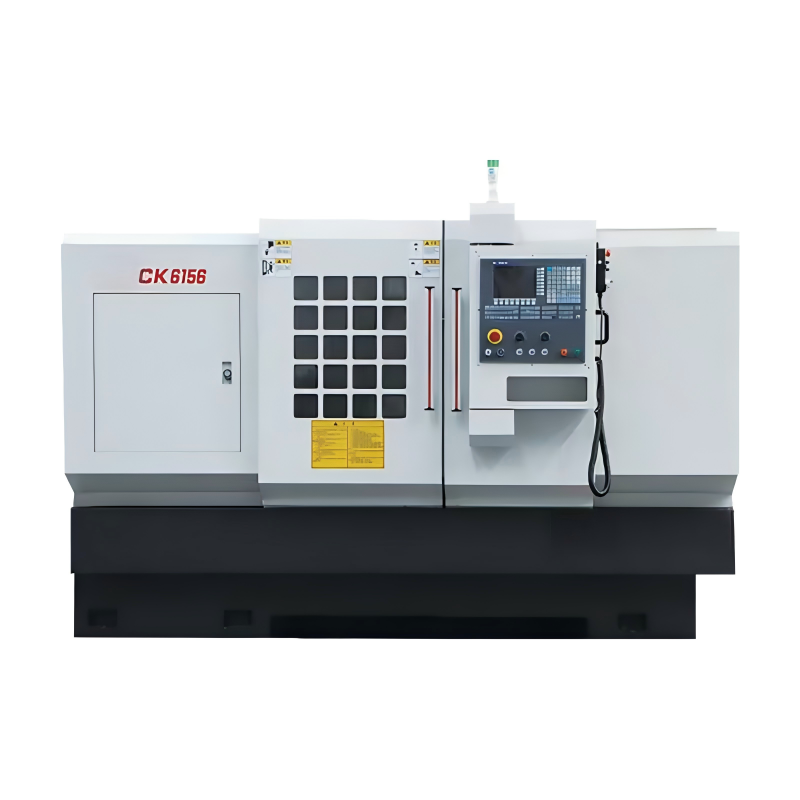
The evolution of manufacturing technology has seen a significant shift towards precision and efficiency, with CNC (Computer Numerical Control) lathes playing an increasingly pivotal role. Among the various components that contribute to the effectiveness of these machines, the Z-axis is particularly noteworthy for its impact on overall performance. This report delves into the specifics of how the Z-axis enhances the capabilities of X-Z Axis CNC Lathes, exploring its fundamental role, the technical aspects involved, and the practical benefits it brings to modern machining processes.
In the context of CNC lathes, the Z-axis is one of the primary axes responsible for moving the cutting tool along the length of the workpiece. While the X-axis controls the lateral movement, allowing for the creation of complex shapes and profiles, the Z-axis is crucial for defining the depth and position of cuts. The Z-axis typically runs parallel to the spindle, enabling precise control over the distance the tool travels from the front or back face of the part being machined. This axis's ability to move accurately and consistently is essential for achieving high-quality finishes and tight tolerances, which are critical in many industries, including automotive, aerospace, and medical device manufacturing.
Advancements in technology have significantly improved the precision and reliability of the Z-axis in X-Z Axis CNC Lathes. Modern systems often incorporate high-resolution encoders and advanced servo motors, which work together to provide incredibly accurate positioning. Encoders, by measuring the exact position of the axis, ensure that the machine can maintain consistent accuracy over long periods. Servo motors, on the other hand, offer dynamic response and high torque, allowing for rapid and smooth movements. These technological enhancements not only improve the quality of the final product but also increase the speed at which parts can be manufactured, thereby boosting productivity. Additionally, the integration of real-time monitoring and feedback systems allows for immediate adjustments, ensuring that any deviations from the desired path are corrected instantly, further enhancing the overall performance of the CNC lathe.
The enhanced performance of the Z-axis in X-Z Axis CNC Lathes translates into several practical benefits across various applications. In the automotive industry, for example, the ability to achieve precise and consistent cuts is crucial for the production of engine components, where even the slightest deviation can affect the performance and longevity of the part. Similarly, in the aerospace sector, the Z-axis's precision is vital for manufacturing parts that must meet stringent safety and quality standards. The medical device industry also benefits greatly from the Z-axis's accuracy, as it enables the production of intricate and delicate components, such as surgical instruments and implants, with the required level of precision and finish.
Moreover, the enhanced Z-axis performance leads to reduced scrap rates and material waste, as the machine can more accurately follow the programmed path, minimizing errors. This not only improves the economic efficiency of the manufacturing process but also contributes to sustainability efforts by reducing the environmental impact of production. Additionally, the increased speed and efficiency of the Z-axis allow for shorter cycle times, enabling manufacturers to produce more parts in less time, which is particularly advantageous in high-volume production environments.
The Z-axis does not operate in isolation; it is part of a larger, interconnected system within the CNC lathe. The integration of the Z-axis with other components, such as the X-axis, spindle, and tool changer, is crucial for achieving optimal performance. For instance, the coordination between the Z-axis and the X-axis is essential for creating complex geometries and profiles. Advanced CNC controllers use sophisticated algorithms to synchronize the movements of both axes, ensuring that the tool follows the intended path with high precision. Additionally, the interaction between the Z-axis and the spindle is vital for maintaining the correct feed rate and depth of cut, which are critical for achieving the desired surface finish and dimensional accuracy.
Modern CNC lathes often feature integrated tool changers, which allow for the automatic swapping of tools during the machining process. The Z-axis plays a key role in this operation by positioning the tool holder at the correct location for the tool change. This seamless integration ensures that the machine can handle a wide range of operations without manual intervention, further enhancing its versatility and efficiency. By optimizing the interaction between the Z-axis and other components, manufacturers can achieve a more streamlined and effective machining process, leading to higher productivity and better quality products.
As technology continues to advance, the future of Z-axis performance in X-Z Axis CNC Lathes looks promising. One area of ongoing innovation is the development of more advanced sensors and feedback systems. These technologies will enable even greater precision and real-time monitoring, allowing for more accurate and responsive control of the Z-axis. Additionally, the integration of artificial intelligence (AI) and machine learning (ML) algorithms is expected to play a significant role in optimizing the performance of the Z-axis. AI and ML can analyze data from the machining process, identify patterns, and make predictive adjustments to improve accuracy and reduce errors.
Another trend is the increasing use of hybrid materials and composites in manufacturing, which require specialized machining techniques. The Z-axis will need to adapt to these new materials, providing the necessary precision and flexibility to handle their unique properties. This may involve the development of new cutting tools and techniques, as well as the implementation of advanced cooling and lubrication systems to manage heat and wear.
Furthermore, the push towards Industry 4.0 and smart manufacturing is driving the integration of CNC lathes into larger, interconnected systems. The Z-axis will play a crucial role in this transition, as it will need to communicate and coordinate with other machines and systems in real-time. This will require the development of more robust and secure communication protocols, as well as the implementation of edge computing and cloud-based solutions to process and analyze data efficiently.
In conclusion, the Z-axis is a critical component of X-Z Axis CNC Lathes, and its performance has a significant impact on the overall efficiency and quality of the machining process. Advances in technology, such as high-resolution encoders, advanced servo motors, and real-time monitoring systems, have greatly enhanced the precision and reliability of the Z-axis. The integration of the Z-axis with other components, such as the X-axis and spindle, is essential for achieving optimal performance, and future trends in Z-axis technology, including AI and ML, will continue to drive improvements in precision and efficiency. As the manufacturing industry evolves, the Z-axis will remain a key factor in the success of CNC lathes, enabling the production of high-quality, precision-machined parts for a wide range of applications.
 24/06/2026
The X-Z Axis CNC Lathe is a vital piece of equipment in many manufacturing and machining environments, offering precision and versatility that traditional lathes cannot match. However, like all machinery, it requires regular maintenance to ensure optimal
Read More24/06/2026In the world of precision manufacturing, advancements in technology have continually pushed the boundaries of what is possible. One such innovation that stands out is the X-Z Axis CNC Lathe, a machine that has been making waves in the industry due to its
Read More23/06/2026The advent of Computer Numerical Control (CNC) lathes has revolutionized the manufacturing industry, allowing for unprecedented precision and efficiency in part production. Among the various components that contribute to the performance of a CNC lathe, th
Read More23/06/2026The development and application of X-Z Axis CNC Lathes have significantly influenced modern manufacturing processes, particularly in terms of efficiency, precision, and versatility. This report aims to explore the impact of X-Z Axis CNC Lathes on industri
Read More23/06/2026The field of manufacturing is continually evolving, with new technologies and techniques being developed to enhance efficiency, precision, and productivity. Among these, the X-Z Axis CNC Lathe stands out as a critical piece of machinery, capable of produc
Read More22/06/2026In the realm of precision manufacturing, the X-Z Axis CNC Lathe stands out as a versatile tool for creating intricate and accurate parts. This technical report delves into the critical role of the Z axis in CNC lathe operations, providing an in-depth unde
Read More22/06/2026In the ever-evolving landscape of modern manufacturing, the integration of advanced technologies has become a cornerstone for achieving unparalleled precision and efficiency. One such technological marvel is the X-Z Axis CNC Lathe, which stands out as a p
Read MoreOur professional sales team is always ready to assist you.