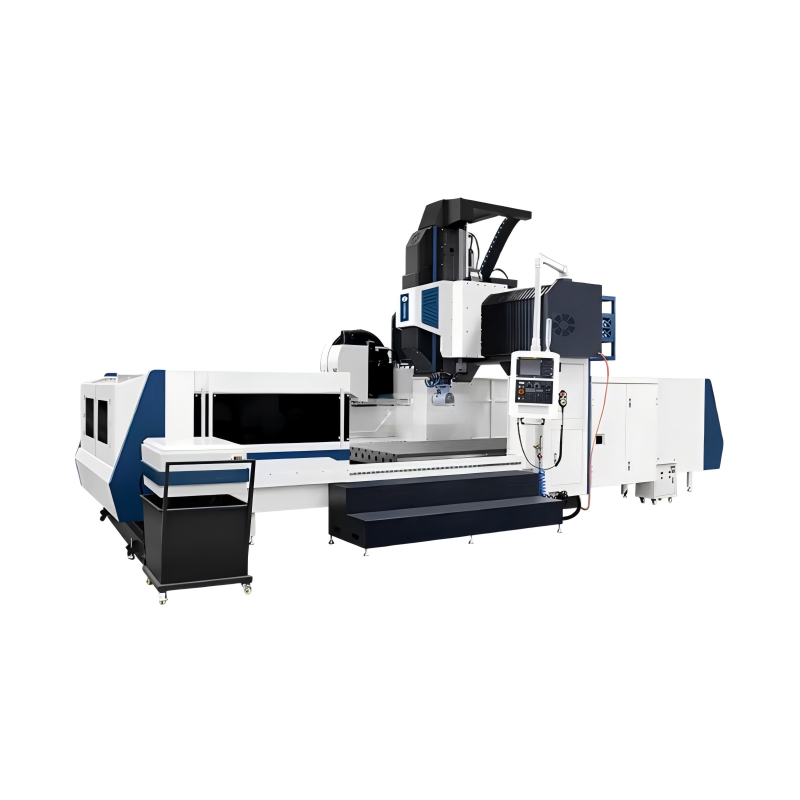
Five-axis Machining Centers represent the pinnacle of modern manufacturing technology, enabling complex and precise machining operations that were previously impossible. These machines are capable of moving along five different axes simultaneously, allowing for intricate cuts and shapes to be created with high accuracy and efficiency. Selecting the right 5 axis machining center is a critical decision for any manufacturing operation, as it can significantly impact productivity, quality, and overall operational costs. This comprehensive guide will walk you through the key considerations and factors to help you make an informed choice.
Before diving into the selection process, it’s essential to understand what makes 5 axis machining centers unique. Unlike traditional 3-axis machines, which move in three linear directions (X, Y, and Z), 5 axis machines add two rotational axes (A and B or C). This additional flexibility allows for more complex geometries and angles, making them ideal for aerospace, automotive, and medical industries where precision and complexity are paramount.
One of the primary advantages of 5 axis machining centers is their ability to reduce setup times. With fewer setups required, these machines can complete parts in a single operation, leading to increased throughput and reduced lead times. Additionally, 5 axis machining centers can access hard-to-reach areas, enabling the production of parts with intricate features and undercuts.
To select the right 5 axis machining center, you must first evaluate your specific manufacturing needs. Start by identifying the types of parts you will be producing, including their size, material, and complexity. Consider the following questions:
By answering these questions, you can narrow down the range of 5 axis machining centers that will meet your specific needs. For example, if you primarily work with large, heavy parts, you may need a machine with a larger table and higher load capacity. Conversely, if you produce small, intricate components, a machine with high-speed spindles and precise positioning may be more suitable.
Once you have a clear understanding of your manufacturing needs, the next step is to assess the specifications and features of potential 5 axis machining centers. Key factors to consider include:
It’s also important to consider the machine’s reliability and maintenance requirements. A reliable machine with low downtime and easy maintenance can save you significant costs in the long run. Additionally, look for manufacturers that offer robust customer support and training programs to ensure that your operators can effectively utilize the machine’s capabilities.
Investing in a 5 axis machining center is a significant financial decision, and it’s essential to perform a thorough cost-benefit analysis to justify the investment. Consider the following factors when evaluating the return on investment (ROI):
Perform a detailed financial analysis to determine the payback period and ROI. Consider both tangible and intangible benefits, such as improved reputation and market competitiveness. It may also be helpful to consult with industry experts or conduct a pilot project to validate the expected benefits before making a final decision.
Selecting the right 5 axis machining center is a multifaceted process that requires careful consideration of your manufacturing needs, machine specifications, and financial implications. By understanding the capabilities of 5 axis machining centers, evaluating your specific requirements, and conducting a thorough cost-benefit analysis, you can make an informed decision that will enhance your manufacturing capabilities and drive business success.
 01/07/2026
In the realm of precision manufacturing, 5 axis machining centers have emerged as a transformative technology, capable of producing complex parts with unparalleled accuracy and efficiency. This report delves into strategies for maximizing productivity whe
Read More29/06/2026In the dynamic and ever-evolving landscape of aerospace manufacturing, the introduction of 5 axis machining centers has marked a significant leap forward. These advanced machines have not only enhanced the precision and efficiency of manufacturing process
Read More28/06/2026In the realm of precision manufacturing, 5 axis machining centers have emerged as indispensable tools for producing complex parts with high accuracy and efficiency. This report delves into the capabilities of these advanced machines, exploring their uniqu
Read More27/06/2026The advent of 5 axis machining centers has revolutionized the manufacturing industry, offering unparalleled precision and versatility. As we look to the future, these advanced machines are set to play an even more critical role in shaping the landscape of
Read More26/06/2026Understanding the Core of 5 Axis Machining CentersThe advent of 5 axis machining centers has revolutionized the manufacturing industry, offering unparalleled precision and efficiency. These advanced machines are capable of moving a tool or a part in five
Read More25/06/2026In the rapidly evolving landscape of modern manufacturing, the advent and adoption of 5 axis machining centers have revolutionized the way complex parts are produced. These advanced machines offer a level of precision, flexibility, and efficiency that tra
Read MoreOur professional sales team is always ready to assist you.