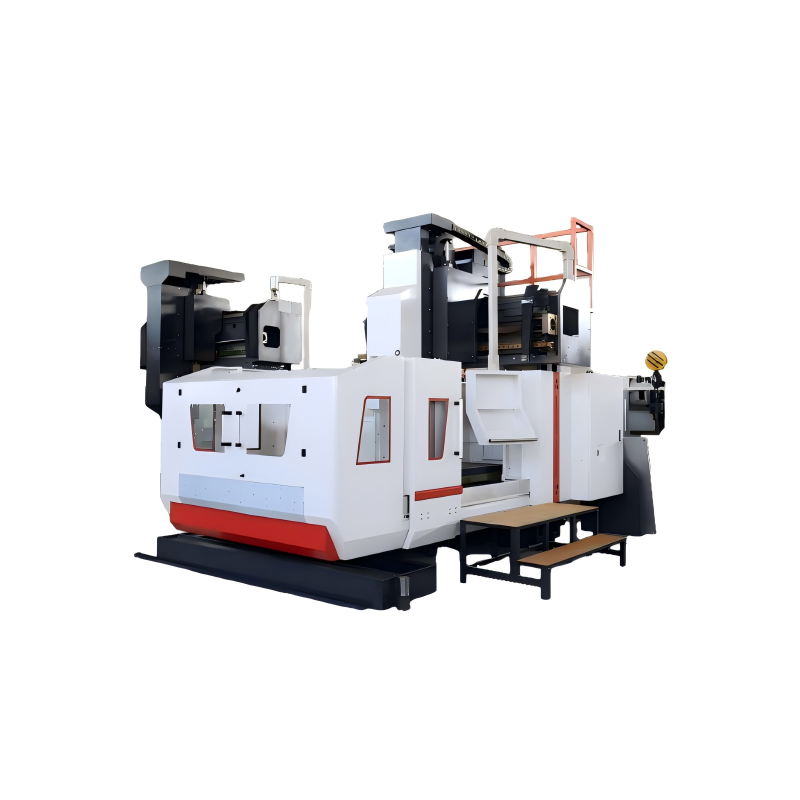
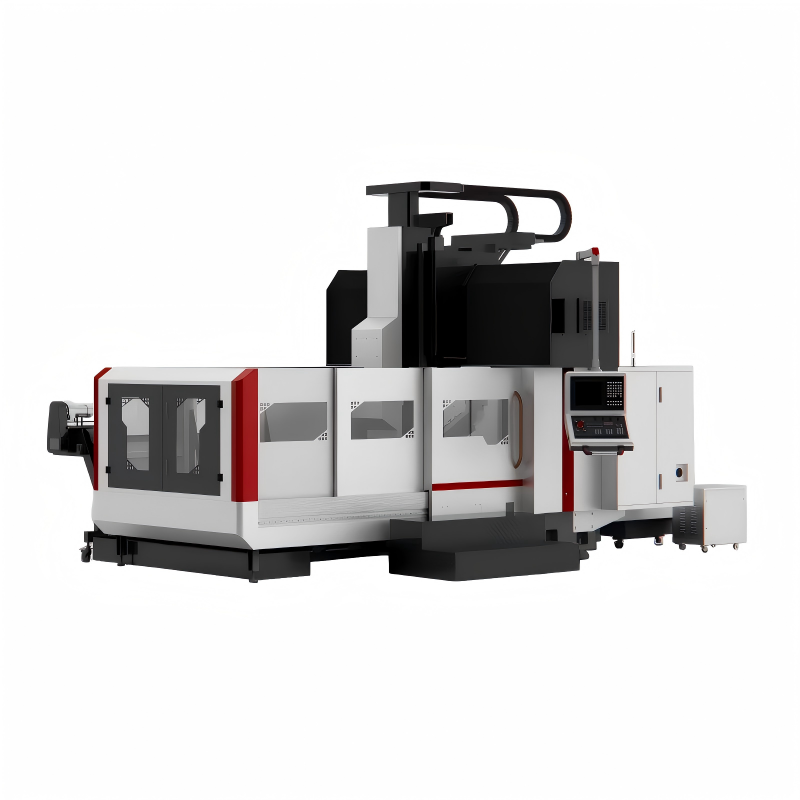
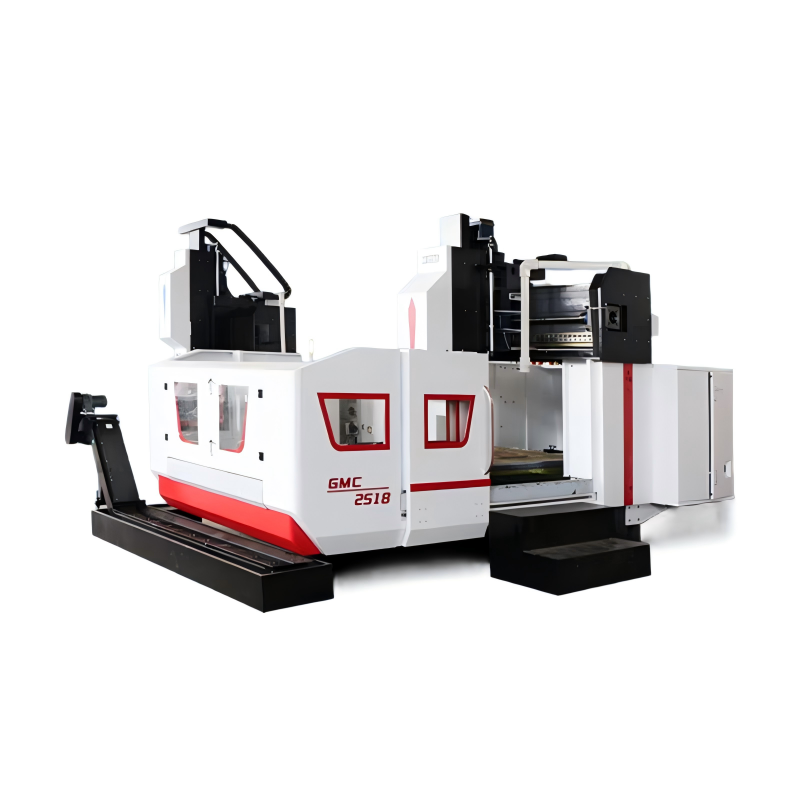
The evolution of Gantry Machining Center technology has been marked by continuous advancements, with 2023 proving to be a pivotal year for innovation. This report delves into the latest developments, focusing on how these innovations are transforming the manufacturing landscape, enhancing efficiency, and expanding capabilities.
In 2023, one of the most significant advancements in Gantry Machining Center technology is the integration of advanced control systems. These systems utilize state-of-the-art algorithms and real-time feedback mechanisms to achieve unprecedented levels of precision. The incorporation of AI and machine learning allows the machining center to adapt to minor variations in material properties and environmental conditions, ensuring consistent quality across all operations. For example, predictive maintenance features can detect potential issues before they become critical, reducing downtime and increasing overall productivity. Furthermore, the use of high-resolution encoders and servo motors contributes to smoother motion and finer control, making it possible to perform complex tasks with ease. This level of precision is particularly valuable in industries such as aerospace, where tolerances are extremely tight, and accuracy is paramount.
Another key trend in Gantry Machining Center technology for 2023 is the adoption of modular design principles. By allowing for the easy addition or removal of components, manufacturers can tailor their machines to specific project requirements, thereby maximizing efficiency and minimizing waste. This modularity extends to tooling, workholding, and even software, enabling rapid reconfiguration for different materials and processes. For instance, a Gantry Machining Center designed with interchangeable heads can switch between milling, drilling, and grinding operations without the need for extensive setup times. Additionally, the ability to integrate third-party tools and accessories enhances the machine's versatility, making it suitable for a wide range of applications. This flexibility not only improves operational efficiency but also reduces the need for multiple specialized machines, leading to cost savings and a more streamlined production process.
The integration of Industry 4.0 technologies is revolutionizing the way Gantry Machining Centers operate. In 2023, we see a growing trend towards smart factories, where Gantry Machining Centers are connected to a network of sensors, data analytics, and cloud computing platforms. This connectivity enables real-time monitoring and analysis of machine performance, allowing operators to make data-driven decisions that optimize production. For example, IoT (Internet of Things) sensors can track temperature, vibration, and other parameters, providing insights into the health of the machine and predicting when maintenance is required. Cloud-based software solutions facilitate remote access and collaboration, enabling teams to monitor and control the machining center from anywhere in the world. This not only enhances operational efficiency but also supports predictive maintenance, reducing unplanned downtime and extending the lifespan of the equipment. Moreover, the use of augmented reality (AR) and virtual reality (VR) in training and maintenance further enhances the user experience, making it easier for operators to understand and interact with the machine.
Sustainability is becoming an increasingly important consideration in the manufacturing industry, and Gantry Machining Center technology is no exception. In 2023, there is a strong focus on developing energy-efficient solutions that reduce the environmental impact of machining operations. This includes the use of regenerative braking systems, which capture and reuse energy generated during deceleration, and the implementation of energy management systems that optimize power consumption. Additionally, manufacturers are exploring the use of eco-friendly materials and lubricants that minimize waste and pollution. For example, some Gantry Machining Centers now feature coolant recycling systems that filter and reuse cutting fluids, reducing both costs and environmental impact. Furthermore, the design of the machines themselves is being optimized to reduce material usage and improve recyclability at the end of their lifecycle. By prioritizing sustainability, Gantry Machining Center technology is not only meeting the demands of environmentally conscious customers but also contributing to a more sustainable future for the manufacturing industry as a whole.
The development of new materials and cutting techniques is another area of significant innovation in Gantry Machining Center technology for 2023. As industries such as automotive and aerospace push the boundaries of what is possible, there is a growing need for machines that can handle advanced materials like composites, ceramics, and high-strength alloys. To meet this demand, Gantry Machining Centers are being equipped with specialized cutting tools and techniques that can effectively process these challenging materials. For example, laser cutting and waterjet cutting are becoming more prevalent, offering precise and efficient ways to cut through tough materials with minimal heat-affected zones. Additionally, the use of multi-axis machining and simultaneous 5-axis milling allows for the creation of complex geometries and intricate parts, which are essential for modern engineering designs. These advanced capabilities not only expand the range of materials that can be processed but also enable the production of lighter, stronger, and more durable components, driving innovation in various industries.
In conclusion, the innovations in Gantry Machining Center technology for 2023 are poised to transform the manufacturing landscape. Enhanced precision, increased flexibility, integration of Industry 4.0 technologies, a focus on sustainability, and the ability to handle advanced materials and cutting techniques are all contributing to a more efficient, versatile, and environmentally friendly machining environment. As these advancements continue to evolve, they will play a crucial role in shaping the future of manufacturing, enabling businesses to stay competitive and meet the ever-increasing demands of the global market.
 29/06/2026
The selection of a Gantry Machining Center is a critical decision for any manufacturing facility, as it directly impacts productivity, precision, and overall operational efficiency. This comprehensive guide aims to provide a detailed overview of the key f
Read More28/06/2026In the realm of precision engineering, gantry machining centers have emerged as indispensable tools for enhancing efficiency in metalworking. These advanced machines, designed to handle large and heavy workpieces with high precision, offer a range of bene
Read More27/06/2026Advancements in Gantry Machining Center TechnologyIn the ever-evolving world of manufacturing, precision and efficiency are paramount. The Gantry Machining Center has emerged as a game-changer, offering unparalleled accuracy and versatility. These machine
Read More26/06/2026In the realm of industrial manufacturing, precision and efficiency are paramount. The introduction of Gantry Machining Centers (GMCs) has significantly transformed how large-scale components and parts are produced, offering unparalleled accuracy, speed, a
Read More25/06/2026Introduction to Gantry Machining CentersA gantry machining center, also known as a bridge-type machining center, represents one of the most advanced and versatile types of CNC (Computer Numerical Control) machines available today. These machines are chara
Read MoreOur professional sales team is always ready to assist you.