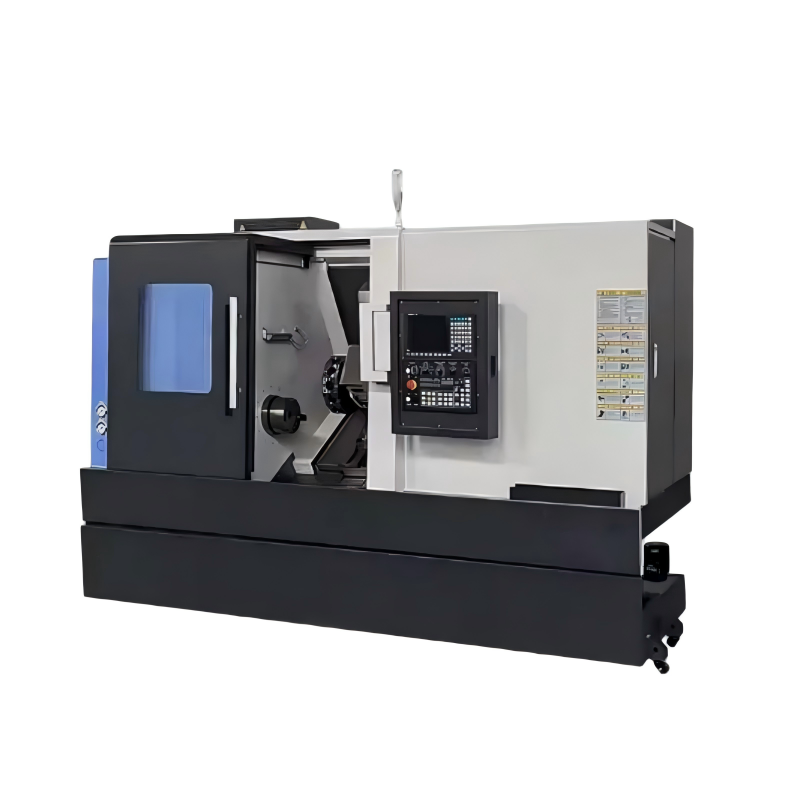
In today’s rapidly evolving manufacturing landscape, the Turn-mill Machining Center has emerged as a pivotal solution for enhancing productivity and efficiency. This advanced piece of machinery combines the capabilities of turning and milling operations into a single, highly versatile unit, enabling manufacturers to produce complex parts with greater precision and at a faster rate. This report delves into the key technologies and strategies that can be employed to maximize output using these sophisticated Turn-mill Machining Centers.
One of the most significant advancements in turn-mill machining center technology is the integration of advanced control systems. These systems, often powered by state-of-the-art software, provide real-time monitoring and control over the machining process. By leveraging these systems, operators can optimize tool paths, reduce cycle times, and minimize errors, leading to higher overall productivity. Advanced control systems also enable predictive maintenance, which helps in reducing downtime and extending the lifespan of the machine.
For instance, CNC (Computer Numerical Control) systems equipped with high-speed processors and advanced algorithms can handle complex calculations and coordinate multiple axes simultaneously. This not only ensures precise and consistent machining but also allows for the execution of intricate operations that would be challenging or impossible with traditional machines.
The multi-tasking capabilities of modern turn-mill machining centers are another critical factor in maximizing output. These machines are designed to perform a wide range of operations, including turning, milling, drilling, and even grinding, all within a single setup. This eliminates the need for multiple setups and reduces the time and labor required to move parts between different machines. The ability to complete a part in one setup significantly decreases production time and minimizes the risk of errors associated with repositioning and re-fixturing.
Moreover, the use of live tooling and rotary tables further enhances the multi-tasking capabilities of these machines. Live tooling allows for the use of rotating tools such as drills and end mills, while the rotary table enables the workpiece to be rotated and positioned accurately. This combination facilitates the machining of complex geometries and features, making it possible to produce high-precision parts in a single operation.
High-speed machining (HSM) is a technique that involves operating the machine at very high spindle speeds and feed rates. This approach offers several benefits, including reduced cutting forces, improved surface finish, and increased material removal rates. In turn-mill machining centers, HSM can be particularly effective in reducing cycle times and increasing throughput. By optimizing the cutting parameters and using high-performance cutting tools, manufacturers can achieve significant improvements in productivity without compromising on quality.
Additionally, HSM techniques can help in reducing tool wear and extending tool life. The lower cutting forces and reduced heat generation contribute to a more stable and controlled machining process, which is especially beneficial when working with difficult-to-machine materials. Implementing HSM requires careful planning and the use of specialized tools and cutting strategies, but the results in terms of increased output and efficiency are well worth the effort.
Automation and robotics play a crucial role in maximizing the output of turn-mill machining centers. Automated systems, such as robotic arms and automated part loaders, can handle tasks such as loading and unloading workpieces, changing tools, and performing inspections. This not only reduces the need for manual intervention but also allows for continuous, 24/7 operation, significantly increasing the overall production capacity.
Robotic automation can also enhance the flexibility of the machining process. For example, robots can be programmed to switch between different types of parts and operations, making it easier to adapt to changing production requirements. This flexibility is particularly valuable in industries where product variety and customization are key, such as automotive and aerospace manufacturing.
Furthermore, the integration of sensors and vision systems in automated systems can provide real-time feedback and data, enabling better process control and quality assurance. This data can be used to make informed decisions, optimize processes, and identify areas for improvement, ultimately leading to higher output and better product quality.
The Turn-mill Machining Center represents a significant advancement in manufacturing technology, offering a versatile and efficient solution for producing complex parts. By integrating advanced control systems, utilizing multi-tasking capabilities, implementing high-speed machining techniques, and adopting automation and robotics, manufacturers can maximize the output and efficiency of these machines. As the industry continues to evolve, the adoption of these technologies will be crucial for staying competitive and meeting the demands of modern manufacturing.
 01/07/2026
Turn-mill machining centers have become increasingly important in the aerospace industry, offering a unique combination of precision, versatility, and efficiency. These machines are capable of performing both turning and milling operations on a single pla
Read More29/06/2026Turn-mill machining centers have emerged as a transformative solution for the production of complex components, offering unparalleled precision and efficiency. This report explores the latest advancements in turn-mill machining centers, highlighting their
Read More28/06/2026Understanding the Basics of Turn-mill Machining CentersIn the world of advanced manufacturing, the integration of turning and milling operations into a single machine has revolutionized production processes. A turn-mill machining center is designed to per
Read More27/06/2026In the realm of advanced manufacturing, turn-mill machining centers have emerged as a transformative technology, offering unparalleled efficiency and productivity. This report delves into the key aspects of how these machines are revolutionizing the manuf
Read More26/06/2026Introduction to Turn-mill Machining CentersTurn-mill machining centers represent a significant advancement in the field of precision engineering. These machines combine the capabilities of turning and milling operations, allowing for the production of com
Read More25/06/2026In the realm of modern manufacturing, the turn-mill machining center has emerged as a pivotal technology, offering a range of advantages that significantly enhance production capabilities. This report delves into the multifaceted benefits of integrating a
Read More12/06/2026On June 11, a delegation of clients from Iraq specializing in flange manufacturing visited our CNC machine tool factory. The visit focused on understanding the comprehensive equipment solutions for specialized flange production workshops.
Read MoreOur professional sales team is always ready to assist you.