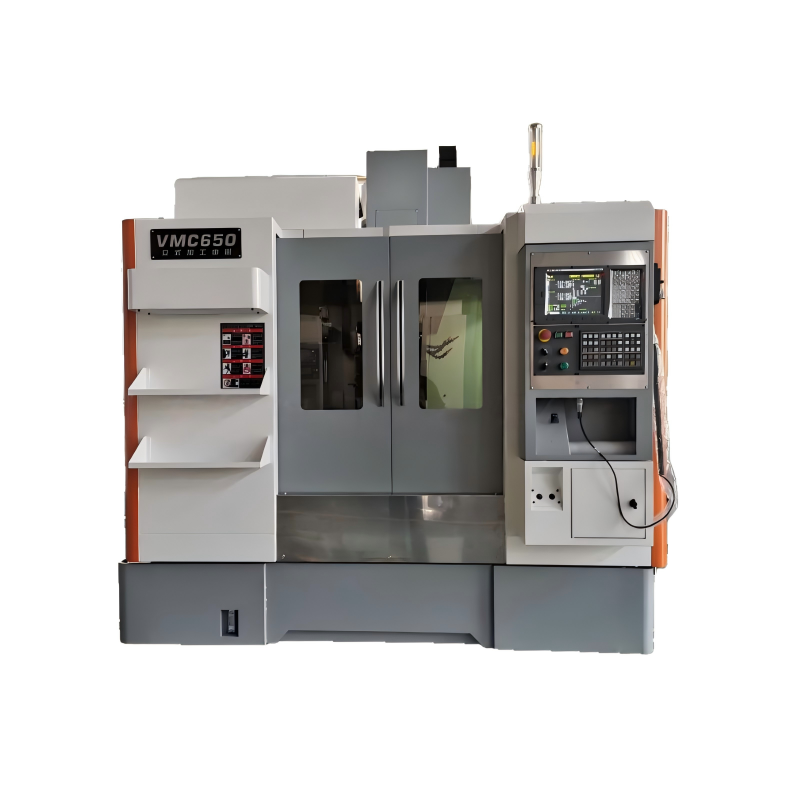
Vertical Machining Centers (VMCs) are a cornerstone of modern manufacturing, offering unparalleled precision and versatility in the production of complex parts. This report provides an in-depth look at the key suppliers of VMCs, with a particular focus on their capabilities, innovations, and market positioning. The analysis will also touch upon the integration of advanced features such as the Double pallet heavy HMC configuration, which is increasingly becoming a standard in high-volume, high-precision manufacturing environments.
Over the years, vertical machining centers have evolved significantly, driven by advancements in technology and the increasing demands of various industries. Early VMCs were relatively simple, with limited automation and fewer axes. However, today's VMCs are highly sophisticated, featuring multiple axes, advanced control systems, and integrated automation solutions. This evolution has been driven by the need for higher productivity, better accuracy, and the ability to handle more complex geometries.
One of the key developments in this evolution is the integration of double pallet systems. These systems allow for the simultaneous loading and unloading of workpieces, significantly reducing downtime and increasing overall efficiency. The double pallet heavy HMC configuration, in particular, is designed for heavy-duty applications, providing robust support and stability for large and heavy workpieces. This feature is particularly valuable in industries such as aerospace, automotive, and heavy machinery, where the precision and reliability of the machining process are paramount.
The global VMC market is dominated by a few key players, each with its own strengths and specialties. Companies like Haas Automation, DMG MORI, and Okuma are among the leading suppliers, known for their high-quality machines and innovative technologies. Each of these companies offers a wide range of VMCs, from entry-level models to high-end, multi-axis machines.
Haas Automation, for example, is renowned for its user-friendly controls and cost-effective solutions. Their VF series of VMCs is particularly popular, offering a balance of performance and affordability. DMG MORI, on the other hand, is known for its advanced, high-precision machines. Their DMC series includes a variety of VMCs with options for additional axes and automation, making them suitable for a wide range of applications. Okuma stands out for its proprietary OSP control system, which provides exceptional accuracy and ease of use. Their MB-46V VMC is a prime example, featuring a rigid design and high-speed spindle for efficient machining.
These suppliers also offer customization options, allowing customers to tailor their VMCs to specific needs. For instance, the double pallet heavy HMC configuration can be integrated into many of these machines, enhancing their capabilities for high-volume production. This flexibility is crucial in today's competitive manufacturing landscape, where adaptability and efficiency are key to success.
The future of VMCs is likely to be shaped by ongoing technological advancements and the evolving needs of the manufacturing industry. One of the most significant trends is the integration of Industry 4.0 technologies, such as the Internet of Things (IoT), artificial intelligence (AI), and machine learning (ML). These technologies enable real-time monitoring, predictive maintenance, and data-driven decision-making, leading to increased productivity and reduced downtime.
Another important trend is the development of more sustainable and energy-efficient VMCs. As environmental concerns become more pressing, manufacturers are looking for ways to reduce their carbon footprint. This includes the use of more efficient motors, regenerative braking systems, and energy management software. Some suppliers are also exploring the use of renewable energy sources, such as solar power, to further reduce the environmental impact of their machines.
The double pallet heavy HMC configuration is also expected to play a significant role in the future of VMCs. As the demand for high-precision, high-volume production continues to grow, the ability to efficiently handle large and heavy workpieces will become increasingly important. This configuration not only enhances the capacity and flexibility of VMCs but also improves the overall workflow, making it a key feature in the next generation of VMCs.
The vertical machining center market is a dynamic and rapidly evolving sector, driven by continuous innovation and the need for higher productivity and precision. Key suppliers like Haas Automation, DMG MORI, and Okuma are at the forefront of this evolution, offering a wide range of VMCs with advanced features and customization options. The integration of the double pallet heavy HMC configuration is a notable development, providing enhanced capabilities for high-volume, high-precision manufacturing. As the industry continues to embrace new technologies and sustainable practices, the future of VMCs looks promising, with even more advanced and efficient machines on the horizon.
 29/06/2026
When considering the acquisition of a manual lathe machine, it is crucial to evaluate several key factors that will influence not only the efficiency and quality of work but also the overall cost-effectiveness of your operation. This technical report aims
Read More29/06/2026Understanding the Importance of a Vertical Machining CenterIn today's competitive manufacturing landscape, selecting the right vertical machining center (VMC) is crucial for businesses aiming to enhance productivity, precision, and overall efficiency. A V
Read More29/06/2026While the focus of this document is on providing Essential Tips for Operating a Manual Lathe Machine, it's important to recognize that in today's manufacturing environment, there are numerous tools and machines designed to handle a variety of tasks, from
Read More18/06/2026With the rapid advancement in manufacturing technologies, Chinese lathe manufacturers have increasingly become a focal point of global attention. This shift is not only due to their competitive pricing but also because of the significant improvements in q
Read More18/06/2026In the ever-evolving landscape of manufacturing, the quest for precision, efficiency, and innovation is paramount. One area that has seen significant advancements is the production of lathes, particularly in China, where leading manufacturers are setting
Read More17/06/2026In the ever-evolving landscape of manufacturing, the integration of advanced machinery has become a cornerstone for achieving higher productivity, precision, and efficiency. One such machine that stands out is the Double Pallet Heavy HMC (Horizontal Machi
Read More17/06/2026In the realm of industrial manufacturing, efficiency and productivity are paramount. The integration of advanced machinery and systems plays a critical role in achieving these goals. One such innovation that has significantly enhanced operational capabili
Read More17/06/2026In the realm of manufacturing, where precision and efficiency are paramount, the adoption of advanced machinery has become a necessity rather than a luxury. One such piece of equipment that stands out in this context is the Double Pallet Heavy HMC (Horizo
Read More17/06/2026Introduction to Heavy HMC for Palletized WorkpiecesIn the manufacturing and machining industry, the use of a heavy horizontal machining center (HMC) for processing palletized workpieces has become increasingly popular. This technology offers significant a
Read More17/06/2026Understanding the Double Pallet Heavy HMCThe Double Pallet Heavy HMC (Horizontal Machining Center) represents a significant leap in manufacturing technology, designed specifically to increase production efficiency and flexibility. This system is character
Read MoreOur professional sales team is always ready to assist you.