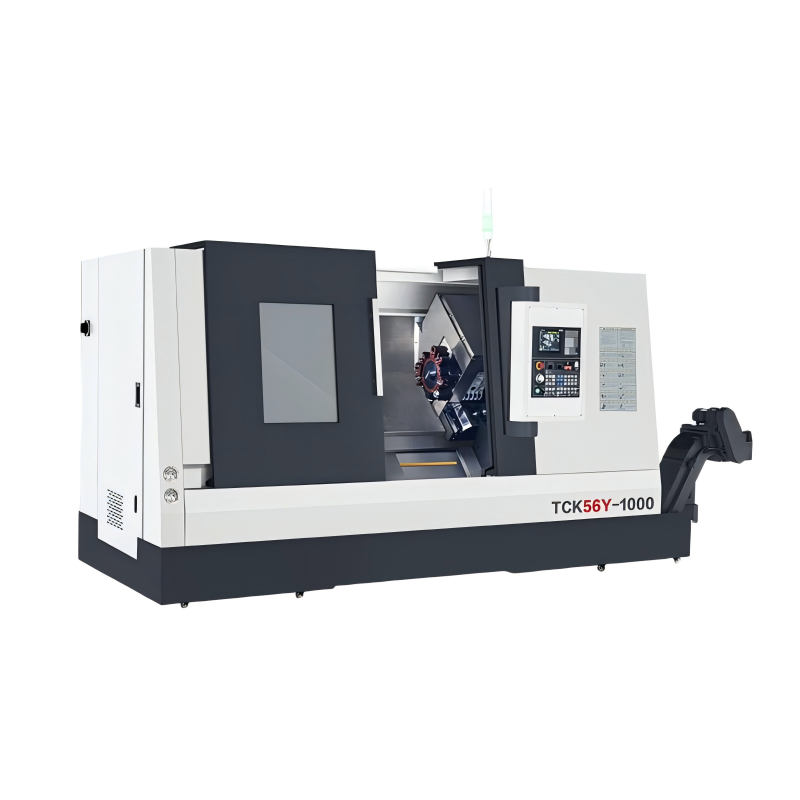
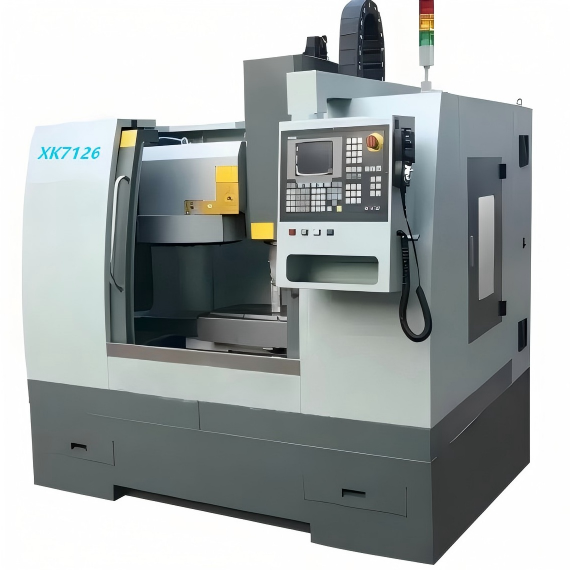
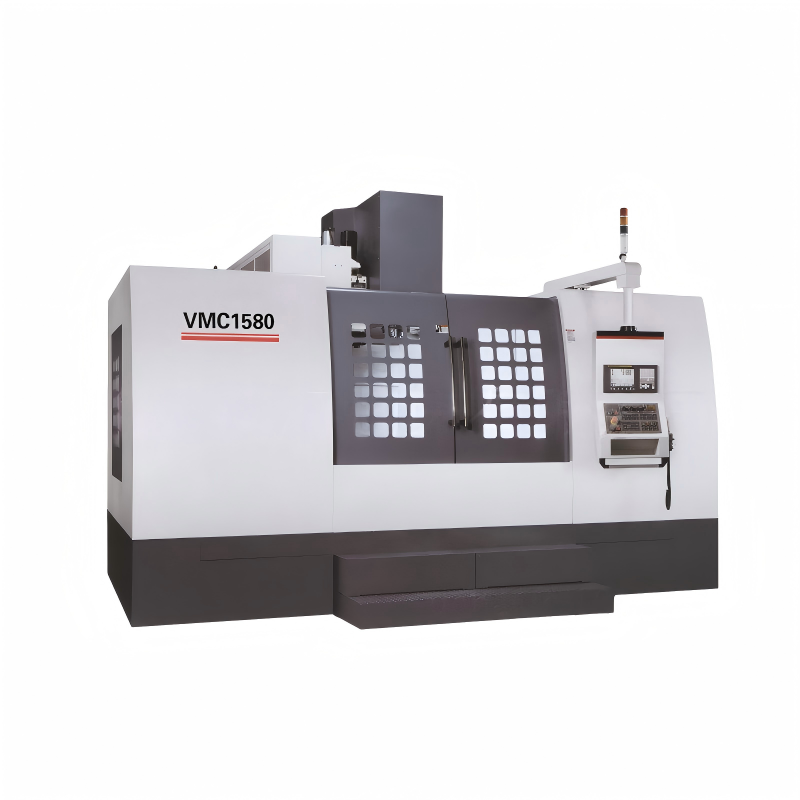
When it comes to achieving unmatched precision in manufacturing, the choice of machining equipment is critical. While the title suggests a focus on a high rigidity Horizontal Machining Center, this article will also explore how a Vertical Machining Center Lathe Machine can complement and enhance the overall precision and efficiency of a manufacturing process.
Rigidity is a fundamental aspect of any machining center, as it directly impacts the accuracy and repeatability of the machined parts. A high rigidity Horizontal Machining Center is designed to minimize deflection and vibration during the cutting process, ensuring that the tool path remains consistent and precise. The robust construction of these machines, often featuring heavy-duty castings and reinforced structures, allows for the handling of large and complex workpieces with ease.
Similarly, a Vertical Machining Center Lathe Machine also benefits from high rigidity. The vertical orientation of the spindle provides excellent stability, especially when dealing with tall and slender workpieces. This setup reduces the risk of tool chatter and improves surface finish, making it an ideal choice for applications requiring high-precision milling and turning operations.
Horizontal machining centers offer several advantages that make them a preferred choice in many manufacturing environments. One of the key benefits is their ability to handle multiple sides of a workpiece in a single setup. This feature not only reduces the need for repositioning but also minimizes the potential for errors associated with multiple setups. Additionally, the horizontal configuration allows for better chip evacuation, which is crucial for maintaining tool life and part quality.
Another significant advantage is the versatility of these machines. They can be equipped with various tools and accessories, such as pallet changers and rotary tables, to accommodate a wide range of machining operations. This flexibility makes them suitable for both small-batch and high-volume production runs, providing manufacturers with the agility needed to meet diverse customer demands.
While horizontal machining centers excel in multi-sided machining and chip management, a Vertical Machining Center Lathe Machine offers unique capabilities that can complement and enhance the overall manufacturing process. The vertical orientation of the spindle is particularly advantageous for applications requiring high-precision milling and turning operations. The vertical setup allows for better access to the workpiece, making it easier to perform intricate and detailed machining tasks.
Moreover, the integration of lathe functionality into a vertical machining center provides a versatile solution for shops looking to maximize their investment. This combination machine can perform both milling and turning operations, reducing the need for separate machines and minimizing the time and effort required for part transfer. The result is a more streamlined and efficient production process, with improved part quality and reduced lead times.
Both horizontal and vertical machining centers benefit from advanced control systems that enable precise and reliable operation. Modern CNC (Computer Numerical Control) systems are equipped with sophisticated software and hardware that allow for real-time monitoring and adjustment of the machining process. These systems can compensate for thermal expansion, tool wear, and other factors that may affect the accuracy of the machined parts.
For example, adaptive control technology can automatically adjust the feed rate and spindle speed based on the material being cut and the condition of the tool. This not only improves the precision of the machining process but also extends the life of the cutting tools. Additionally, high-resolution encoders and linear scales provide accurate feedback, ensuring that the machine maintains the desired position and velocity throughout the operation.
In the context of a Vertical Machining Center Lathe Machine, these advanced control systems are particularly beneficial for maintaining the high precision required for both milling and turning operations. The ability to seamlessly switch between different machining modes and maintain consistent performance is a key factor in achieving unmatched precision in the final product.
Achieving unmatched precision in manufacturing requires a synergistic approach that leverages the strengths of both horizontal and vertical machining centers. While a High rigidity horizontal machining center excels in multi-sided machining and chip management, a Vertical Machining Center Lathe Machine offers unique advantages in terms of accessibility and versatility. By integrating these complementary technologies, manufacturers can create a robust and flexible production environment that meets the highest standards of precision and quality.
Advanced control systems further enhance the capabilities of these machines, enabling real-time adjustments and compensations that ensure consistent and reliable performance. As the manufacturing industry continues to evolve, the combination of high-rigidity machining centers and advanced control technologies will play a crucial role in driving innovation and excellence in precision machining.
 25/06/2026
In the ever-evolving landscape of manufacturing, the integration of advanced technology has become a cornerstone for achieving precision, efficiency, and productivity. The future of machining is increasingly being shaped by heavy-duty CNC work centers, wh
Read More23/06/2026Introduction to CW6163B Universal LatheThe CW6163B universal lathe is a versatile machine that has been making waves in the modern manufacturing industry. This machine, with its robust design and advanced features, offers unparalleled precision and effici
Read More04/06/2026In the world of manufacturing, a high-performance lathe machine, particularly when integrated into a vertical machining center (VMC), can significantly enhance productivity. This article will explore how to maximize productivity with such a setup, focusin
Read More03/06/2026IntroductionThe evolution of manufacturing technologies has significantly transformed the production landscape, with Vertical Machining Center Lathe Machine playing a crucial role in this transformation. These advanced machines have become indispensable t
Read More02/06/2026In the realm of manufacturing, the ability to customize machinery for specific tasks is a critical factor in achieving optimal performance and efficiency. This report delves into the customization process of a Vertical Machining Center Lathe Machine, focu
Read More01/06/2026The field of manufacturing technology has witnessed significant advancements, particularly in the domain of vertical machining center lathe machines. These innovations not only enhance productivity and precision but also contribute to more sustainable and
Read More31/05/2026In the world of manufacturing, precision and efficiency are paramount. Among the tools that have revolutionized this field, the Vertical Machining Center Lathe Machine stands out as a versatile and indispensable piece of equipment. This article aims to gu
Read More30/05/2026Introduction to Vertical Machining Center Lathe Machine The vertical machining center lathe machine, often abbreviated as VMC, represents a significant advancement in the field of precision manufacturing. Unlike traditional lathes, which are primarily use
Read More29/05/2026In the domain of manufacturing, the Vertical Machining Center Lathe Machine stands out as a critical piece of equipment for producing precision parts. Its efficiency and accuracy make it indispensable in numerous industries, from automotive to aerospace.
Read More28/05/2026IntroductionThe vertical machining center (VMC) is a pivotal tool in the realm of precision manufacturing, offering unparalleled accuracy and versatility. This report delves into advanced techniques that can be employed to maximize the potential of a Vert
Read More27/05/2026IntroductionWhen it comes to outfitting a workshop, selecting the right lathe machine is a critical decision. A lathe is an essential tool for turning, facing, drilling, and threading operations. This guide aims to provide a comprehensive overview of how
Read More26/05/2026Understanding the Core Capabilities of a Vertical Machining Center A vertical machining center (VMC) is an essential tool in modern manufacturing, offering unparalleled precision and versatility. By leveraging the full potential of your VMC, you can signi
Read MoreOur professional sales team is always ready to assist you.