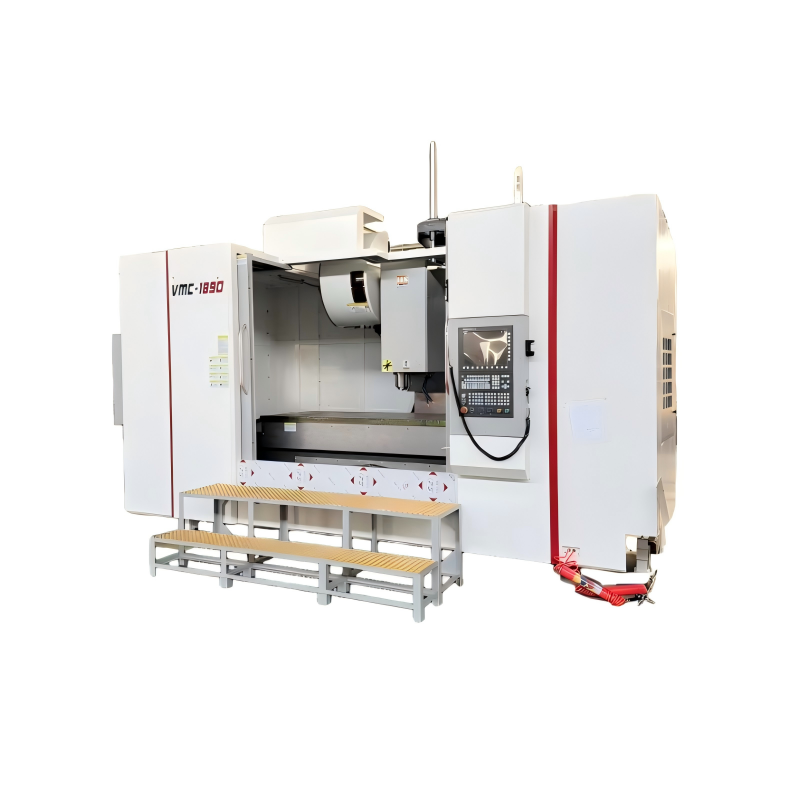
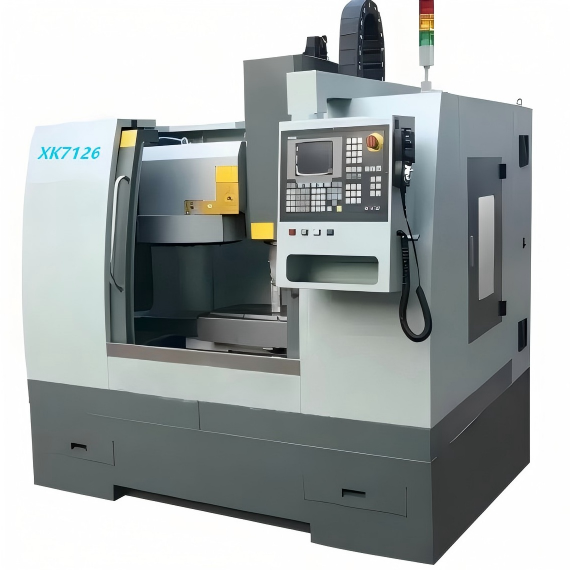
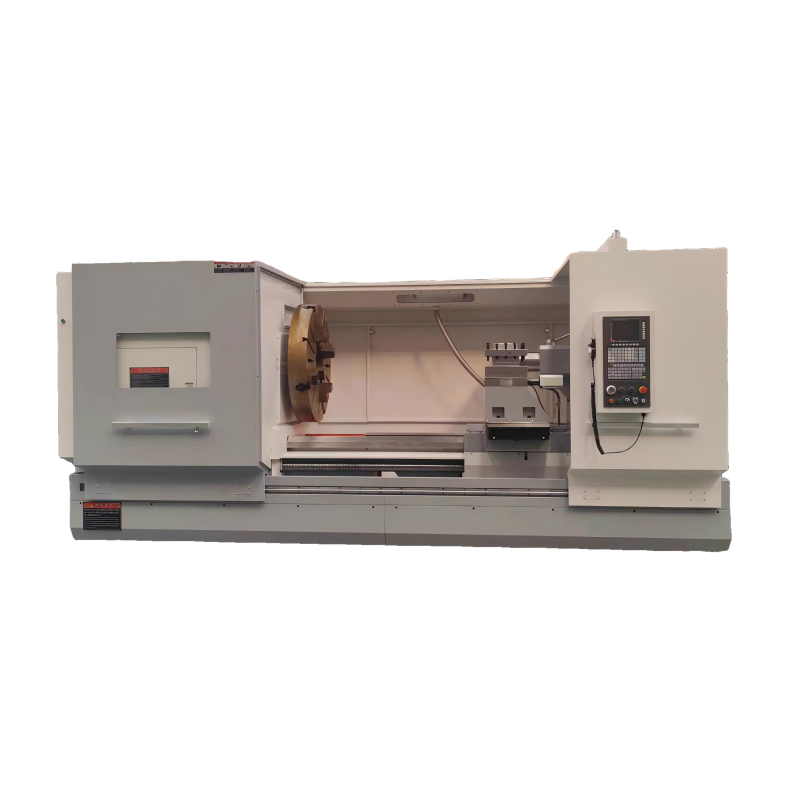
In the realm of advanced manufacturing, 5 Axis Vertical Machining Centers (VMCs) have emerged as a game-changer, offering unparalleled precision and flexibility. These machines are not just an upgrade from their 3-axis counterparts; they represent a significant leap in what is possible within the confines of a single machine tool. This report delves into the transformative impact of 5 Axis VMCs on productivity, exploring how these machines can be leveraged to enhance efficiency, reduce production times, and improve product quality.
The fundamental difference between a 3-axis and a 5 Axis VMC lies in the additional two rotational axes. While a 3-axis machine can move along the X, Y, and Z axes, a 5 Axis VMC adds A and B or C axes, allowing for complex, multi-angle machining in a single setup. This capability is particularly valuable in industries such as aerospace, automotive, and medical, where intricate parts with tight tolerances are the norm.
One of the key advantages of 5 Axis VMCs is their ability to access multiple sides of a part without the need for repositioning. This not only reduces setup time but also minimizes the risk of errors that can occur during manual repositioning. Additionally, the ability to machine at various angles allows for more efficient chip evacuation, leading to better surface finishes and longer tool life.
One of the most significant contributions of 5 Axis VMCs to productivity is the reduction in setup times. In traditional 3-axis machining, complex parts often require multiple setups, each involving clamping, aligning, and reprogramming the machine. This process is time-consuming and can introduce cumulative errors, leading to lower overall quality.
With a 5 Axis VMC, the same part can be machined in a single setup, eliminating the need for multiple clamping and alignment operations. This not only saves time but also ensures that the part remains in a consistent position throughout the machining process, reducing the likelihood of errors. The result is a more efficient workflow, with fewer interruptions and a higher throughput.
Another critical aspect of 5 Axis VMCs is their ability to achieve superior surface finishes and extend tool life. By machining at optimal angles, these machines can ensure that the cutting tool engages the material in the most effective way, reducing the load on the tool and minimizing wear. This is particularly important in applications where high-precision and smooth surfaces are required, such as in the production of turbine blades or medical implants.
Moreover, the ability to machine at various angles allows for better chip control and evacuation. Chips are removed more efficiently, reducing the risk of re-cutting and heat buildup, which can lead to tool failure. This not only improves the quality of the finished part but also extends the life of the cutting tools, reducing the overall cost of production.
5 Axis VMCs also open up new design possibilities by enabling the creation of more complex and intricate parts. Traditional 3-axis machines are limited in their ability to machine certain geometries, especially those with undercuts or features that require access from multiple angles. With a 5 Axis VMC, these limitations are significantly reduced, allowing designers to push the boundaries of what is possible.
This expanded design capability is particularly valuable in industries where innovation and customization are key. For example, in the aerospace industry, the ability to machine complex parts with high precision and in a single setup can lead to lighter, more efficient components, ultimately improving the performance of aircraft. Similarly, in the medical industry, 5 Axis VMCs can be used to create custom implants and prosthetics, tailored to the specific needs of individual patients.
The adoption of 5 Axis VMCs represents a significant step forward in the evolution of manufacturing technology. By offering enhanced precision, reduced setup times, improved surface finishes, and expanded design possibilities, these machines are poised to play a crucial role in the future of advanced manufacturing. As the demand for high-precision, complex parts continues to grow, 5 Axis VMCs will become increasingly essential, driving productivity and innovation across a wide range of industries.
For manufacturers looking to stay ahead of the curve, investing in 5 Axis VMCs is not just a matter of keeping up with the latest technology; it is a strategic decision that can yield long-term benefits in terms of efficiency, quality, and competitiveness. As the capabilities of these machines continue to evolve, the potential for further advancements in manufacturing processes is virtually limitless.
 25/06/2026
In the rapidly evolving landscape of manufacturing, the advent of 5 Axis Vertical Machining Centers (VMCs) has marked a significant milestone. These advanced machines are not only transforming the way we approach precision engineering but also setting new
Read More25/06/2026Investing in a 5 Axis Vertical Machining Center (VMC) is a strategic decision that can significantly enhance the capabilities and efficiency of your manufacturing operations. This advanced piece of machinery offers unparalleled precision, flexibility, and
Read More25/06/20265 Axis Vertical Machining Centers represent a significant advancement in the field of precision machining, offering capabilities that traditional 3-axis machines cannot match. These advanced tools are designed to handle complex geometries and high-precisi
Read More24/06/2026In the rapidly evolving world of manufacturing, precision and efficiency are paramount. The advent of 5 Axis Vertical Machining Centers (VMCs) has significantly enhanced these aspects, making them indispensable in modern industrial settings. This report e
Read More24/06/20265 Axis Vertical Machining Centers (VMCs) have revolutionized the manufacturing industry, offering unparalleled precision and flexibility in machining complex parts. This comprehensive guide aims to provide a detailed understanding of 5 Axis VMCs, their ap
Read More24/06/2026In the ever-evolving landscape of manufacturing, technological advancements play a crucial role in shaping the future. One such innovation that has been making waves is the 5 Axis Vertical Machining Center. This cutting-edge technology is not just another
Read More24/06/2026IntroductionThe 5 axis vertical machining center has revolutionized the manufacturing industry by offering unparalleled precision, efficiency, and versatility. This advanced piece of machinery is designed to handle complex geometries and multi-sided parts
Read More23/06/2026Introduction to 5 Axis Vertical Machining CentersThe 5 axis vertical machining center represents a significant advancement in the field of precision engineering. This technology enables complex parts and components to be manufactured with an unprecedented
Read More23/06/2026The advent of 5 Axis Vertical Machining Centers (VMCs) has revolutionized the manufacturing industry, enabling complex and precise machining operations that were once either impossible or highly inefficient. These advanced machines are capable of performi
Read More23/06/2026In the ever-evolving landscape of manufacturing, the advent of 5 Axis Vertical Machining Centers (VMCs) has marked a significant shift towards more efficient and precise production processes. These advanced machines offer unparalleled flexibility and capa
Read More23/06/2026Introduction to 5 Axis Vertical Machining Centers The advent of the 5 axis vertical machining center has revolutionized the manufacturing industry, offering unparalleled precision and versatility. These advanced machines are designed to handle complex geo
Read MoreOur professional sales team is always ready to assist you.