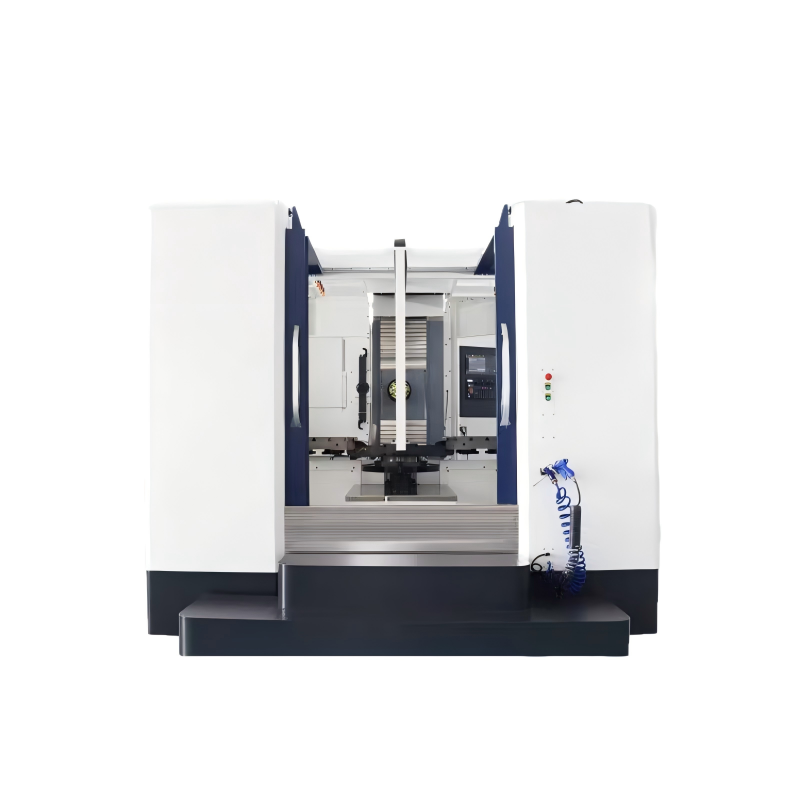
5 Axis Vertical Machining Centers represent a significant advancement in the field of precision machining, offering capabilities that traditional 3-axis machines cannot match. These advanced tools are designed to handle complex geometries and high-precision tasks, making them indispensable for industries such as aerospace, automotive, and medical device manufacturing. This report aims to provide an in-depth understanding of the capabilities of 5 Axis Vertical Machining Centers, exploring their unique features, advantages, and applications.
Enhanced Flexibility and Precision
A key advantage of 5 Axis Vertical Machining Centers is their enhanced flexibility and precision. Unlike 3-axis machines, which are limited to moving along the X, Y, and Z axes, 5-axis machines can also rotate around two additional axes, typically labeled A and B or C. This additional rotational capability allows the machine to approach the workpiece from multiple angles, enabling the machining of complex shapes and contours with greater accuracy and efficiency.
The ability to manipulate the workpiece or the cutting tool in five dimensions significantly reduces the need for repositioning, which is a common practice in 3-axis machining. This not only saves time but also minimizes the risk of errors that can occur during manual repositioning. For example, in the production of turbine blades, where intricate and precise cuts are required, 5-axis machines can complete the task in a single setup, ensuring consistent quality and reducing production time.
Increased Productivity and Reduced Setup Times
One of the most significant benefits of 5 Axis Vertical Machining Centers is their ability to increase productivity by reducing setup times and minimizing the number of operations required. In traditional 3-axis machining, complex parts often require multiple setups, each involving the repositioning of the workpiece and recalibration of the machine. This process is time-consuming and can lead to cumulative errors, affecting the overall quality of the final product.
With 5-axis machining, the need for multiple setups is greatly reduced. The machine's ability to rotate and tilt the workpiece or the cutting tool allows for continuous machining without interruption. This not only speeds up the production process but also ensures that the part is machined in a single, controlled environment, leading to higher precision and consistency. For instance, in the manufacturing of aerospace components, where tight tolerances and high precision are critical, 5-axis machines can produce parts with fewer operations, resulting in faster turnaround times and improved quality.
Advanced Tool Path Optimization
Another important aspect of 5 Axis Vertical Machining Centers is the advanced tool path optimization they offer. Modern 5-axis machines are equipped with sophisticated software that can generate highly optimized tool paths, taking into account the complex geometry of the workpiece and the specific requirements of the machining process. This optimization ensures that the cutting tool follows the most efficient and effective path, reducing machining time and improving surface finish.
The software used in 5-axis machines can also simulate the entire machining process, allowing engineers to visualize and analyze the tool path before actual machining begins. This simulation helps in identifying potential issues, such as collisions or inefficient tool paths, and allows for adjustments to be made in the planning stage. As a result, the machining process is more predictable and reliable, leading to better overall performance and reduced scrap rates.
Integration with Advanced Manufacturing Technologies
5 Axis Vertical Machining Centers are increasingly being integrated with other advanced manufacturing technologies, such as additive manufacturing (3D printing) and automation systems. This integration enhances the versatility and efficiency of the machining process, allowing for the creation of highly customized and complex parts. For example, in hybrid manufacturing, 5-axis machining can be combined with 3D printing to create parts with both additive and subtractive features, resulting in a more efficient and cost-effective production process.
Additionally, 5-axis machines can be connected to automated systems, such as robotic arms and conveyor systems, to create a fully integrated manufacturing cell. This automation not only increases productivity but also reduces the need for human intervention, leading to a safer and more controlled production environment. The integration of 5-axis machining with other advanced technologies is a key trend in modern manufacturing, and it is expected to play a crucial role in the future of precision engineering.
In conclusion, 5 Axis Vertical Machining Centers offer a range of capabilities that make them essential tools in modern manufacturing. Their enhanced flexibility and precision, increased productivity, advanced tool path optimization, and integration with other advanced technologies position them as a powerful solution for industries requiring high-precision and complex machining. As these machines continue to evolve, they will undoubtedly play an even more significant role in shaping the future of manufacturing.

 26/06/2026



