A 4 Axis Vertical Machining Center (VMC) is a sophisticated piece of machinery that has significantly advanced the capabilities of modern manufacturing. Unlike its 3-axis counterpart, which operates along the X, Y, and Z axes, the 4 axis VMC introduces an additional rotary axis, often referred to as the A-axis. This extra degree of movement allows for more complex and precise machining operations, particularly when dealing with parts that require intricate designs or multiple sides to be machined in a single setup. The inclusion of the fourth axis not only enhances the machine's versatility but also improves efficiency by reducing the need for manual repositioning of the workpiece.
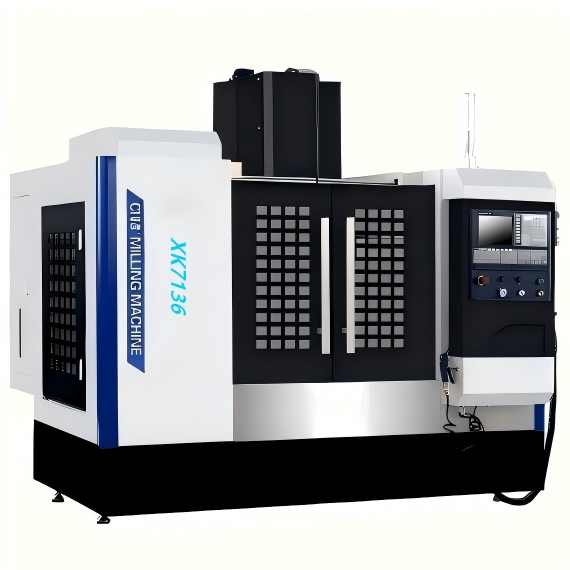
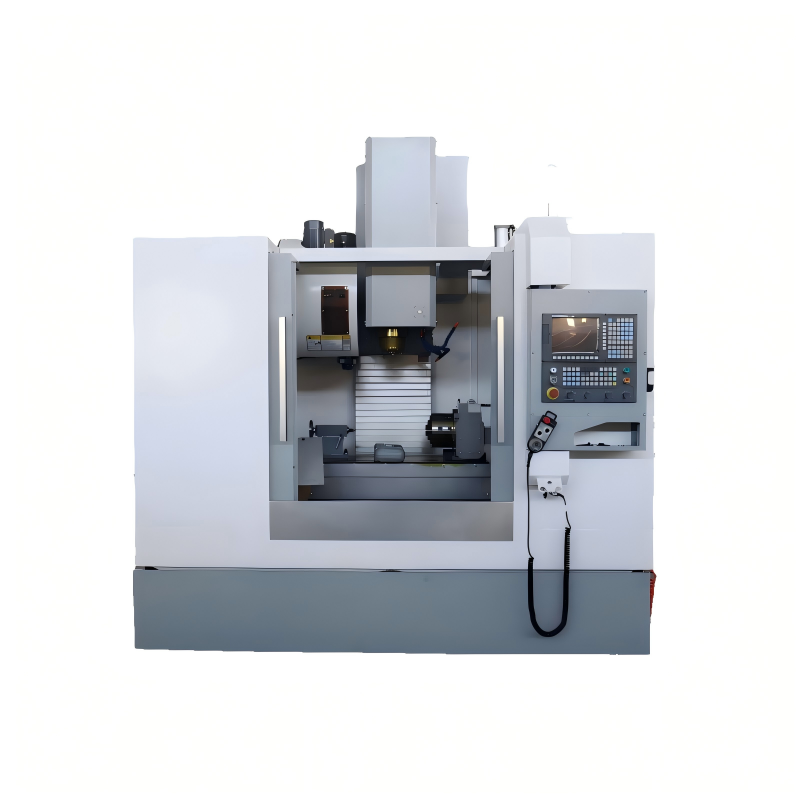
The structure of a 4 axis VMC typically consists of a sturdy base, a column, and a spindle, with the worktable capable of rotating around the A-axis. This configuration enables the machine to perform milling, drilling, tapping, and other cutting operations with high precision and repeatability. The addition of the A-axis allows for continuous rotation, making it possible to machine features on cylindrical or conical surfaces without the need for multiple setups. This capability is particularly valuable in industries such as aerospace, automotive, and medical devices, where the demand for complex and high-precision components is ever-increasing.
One of the most significant advantages of using a 4 Axis Vertical Machining Center is the enhanced precision and accuracy it offers. The ability to control four axes simultaneously allows for more intricate and detailed machining operations. For example, when machining a part with complex geometries, the 4 axis VMC can achieve tighter tolerances and smoother surface finishes, which are critical in many applications. The precision of the A-axis rotation, combined with the linear movements along the X, Y, and Z axes, ensures that even the most demanding specifications can be met with consistency.
Moreover, the use of advanced CNC (Computer Numerical Control) systems in 4 axis VMCs further enhances their precision. These systems allow for the programming of highly complex machining paths, ensuring that the tool follows the exact contours and dimensions specified in the design. The integration of real-time monitoring and feedback systems also helps to maintain accuracy throughout the machining process. By continuously checking and adjusting the position and speed of the cutting tool, these systems can compensate for any deviations, resulting in parts that meet the highest standards of quality.
The introduction of the fourth axis in a vertical machining center significantly boosts the efficiency and productivity of the manufacturing process. One of the key ways this is achieved is through the reduction of setup times. In traditional 3-axis machining, if a part requires machining on multiple sides, it must be manually repositioned and realigned after each operation. This not only takes time but also increases the risk of errors. With a 4 Axis Vertical Machining Center, the workpiece can be rotated to different positions without the need for manual intervention, allowing for continuous machining and minimizing downtime.
Additionally, the 4 axis VMC can perform multiple operations in a single setup, which further enhances productivity. For instance, a part that requires milling, drilling, and tapping can be completed in one go, rather than having to move the workpiece between different machines. This not only saves time but also reduces the potential for errors that can occur during the transfer and repositioning of the workpiece. The ability to handle a wide range of materials, from metals to composites, also makes the 4 axis VMC a versatile tool that can be used across various industries, further increasing its value in the manufacturing process.
While the initial investment in a 4 Axis Vertical Machining Center may be higher compared to a 3-axis machine, the long-term cost savings and increased profitability make it a worthwhile investment. The improved efficiency and productivity of a 4 axis VMC lead to lower production costs over time. By reducing setup times and the number of required operations, the machine can produce parts at a faster rate, which translates into higher output and lower labor costs. Additionally, the ability to achieve higher precision and quality in a single setup means fewer rejected parts and less material waste, further contributing to cost savings.
Another factor that contributes to the cost-effectiveness of a 4 axis VMC is its longevity and durability. These machines are built to withstand the rigors of high-volume manufacturing, with robust construction and high-quality components that ensure a long service life. Regular maintenance and timely updates to the CNC system can further extend the machine's lifespan, providing a strong return on investment. Moreover, the flexibility and versatility of the 4 axis VMC mean that it can adapt to changing production requirements, making it a valuable asset in a dynamic manufacturing environment.
The field of 4 axis VMC technology is continuously evolving, with ongoing research and development aimed at further enhancing the capabilities of these machines. One of the key areas of focus is the integration of advanced automation and robotics. By incorporating robotic arms and automated material handling systems, 4 axis VMCs can achieve even higher levels of efficiency and productivity. These systems can load and unload workpieces, change tools, and perform other tasks, freeing up human operators to focus on more complex and strategic activities.
Another trend is the development of more advanced software and simulation tools. These tools enable manufacturers to create detailed virtual models of the machining process, allowing for better planning and optimization. By simulating the entire machining operation, manufacturers can identify potential issues and make adjustments before the actual machining begins, reducing the risk of errors and improving overall quality. Additionally, the use of artificial intelligence (AI) and machine learning (ML) is becoming more prevalent in 4 axis VMCs. AI and ML algorithms can analyze data from the machining process, predict wear and tear on the machine, and optimize tool paths, leading to more efficient and reliable operations.
In conclusion, the 4 Axis Vertical Machining Center represents a significant advancement in manufacturing technology. Its enhanced precision, increased efficiency, and cost-effectiveness make it an indispensable tool in modern manufacturing. As the technology continues to evolve, the 4 axis VMC will play an increasingly important role in driving innovation and competitiveness in the industry.
 25/06/2026
When it comes to investing in a 4 Axis Vertical Machining Center, the decision requires careful consideration of multiple factors. This type of machining center is designed to provide precision and efficiency, making it a critical asset for many manufactu
Read More25/06/2026The evolution of machining technology has led to the development of advanced systems capable of performing complex operations with high precision. Among these, the 4 Axis Vertical Machining Center stands out as a versatile and efficient solution for vario
Read More25/06/2026Vertical machining centers, especially those with 4-axis capabilities, have become indispensable in modern manufacturing environments. These machines are designed to offer a high degree of precision and flexibility, making them suitable for a wide range o
Read More24/06/2026In the realm of modern manufacturing, precision and efficiency are paramount. The 4 Axis Vertical Machining Center (VMC) has emerged as a pivotal tool in achieving these goals. This report delves into how a 4 Axis VMC can be leveraged to maximize efficien
Read More24/06/2026Understanding the Capabilities of a 4 Axis Vertical Machining CenterA 4 axis vertical machining center represents a significant leap in the capabilities of traditional 3-axis machines, adding an additional rotational axis that allows for more complex part
Read More24/06/2026The advent of 4 Axis Vertical Machining Centers (VMCs) has revolutionized the manufacturing industry, especially in high-volume production environments. These advanced machines are capable of performing complex operations with high precision and efficienc
Read More24/06/2026In the realm of precision engineering, advancements in technology have consistently pushed the boundaries of what is possible. Among these technological marvels, the 4 Axis Vertical Machining Center stands out as a revolutionary tool that has transformed
Read More23/06/2026Vertical machining centers (VMCs) have long been a staple in the manufacturing industry, providing precision, efficiency, and versatility. Among these, the 4 Axis Vertical Machining Center stands out as a highly advanced and capable machine, designed to h
Read More23/06/2026Understanding the Basics of 4 Axis Vertical Machining CentersA 4 axis vertical machining center represents a significant leap in the capabilities of traditional CNC (Computer Numerical Control) machines. Unlike its 3-axis counterpart, which can only move
Read More23/06/2026Understanding the 4 Axis Vertical Machining Center The advent of advanced manufacturing technologies has significantly transformed the production landscape, with the 4 Axis Vertical Machining Center (VMC) standing out as a pivotal tool in modern manufactu
Read More23/06/2026IntroductionThe 4 Axis Vertical Machining Center (VMC) represents a significant advancement in the field of manufacturing, particularly when it comes to the production of complex parts. This technology has revolutionized the way intricate components are m
Read MoreOur professional sales team is always ready to assist you.