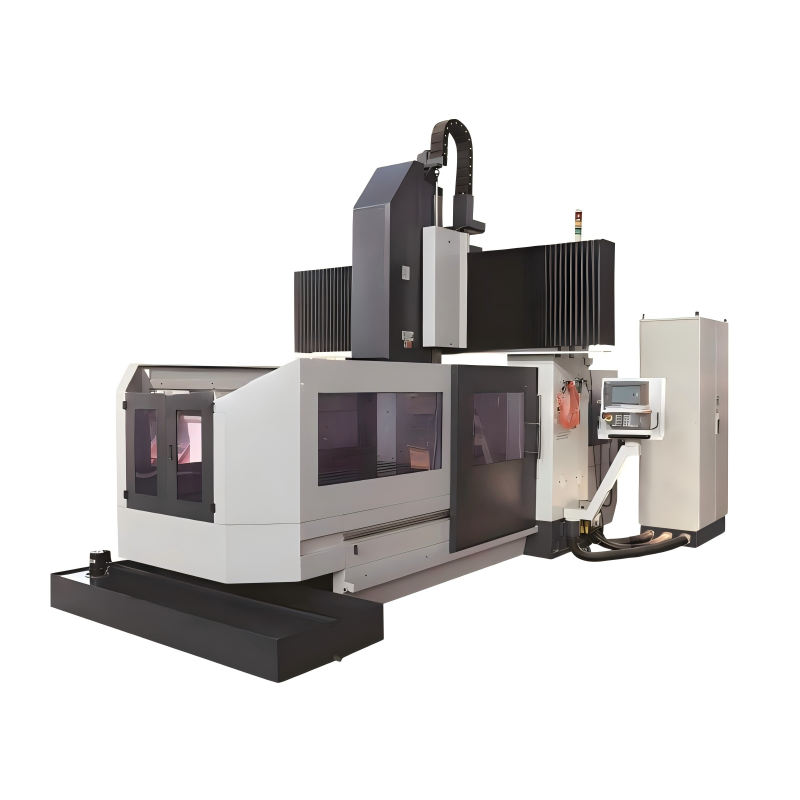
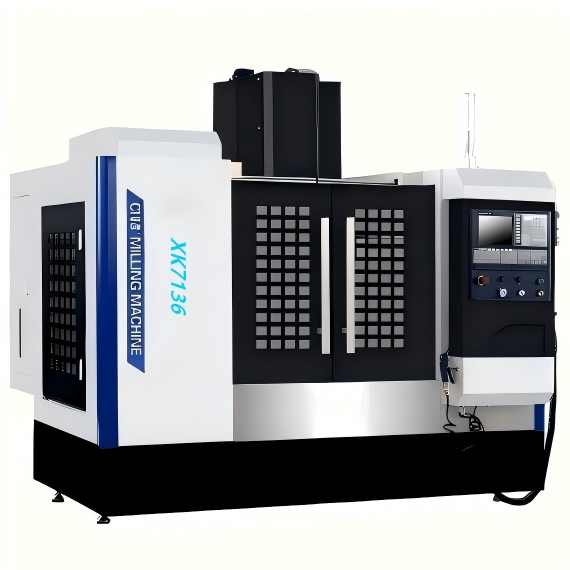
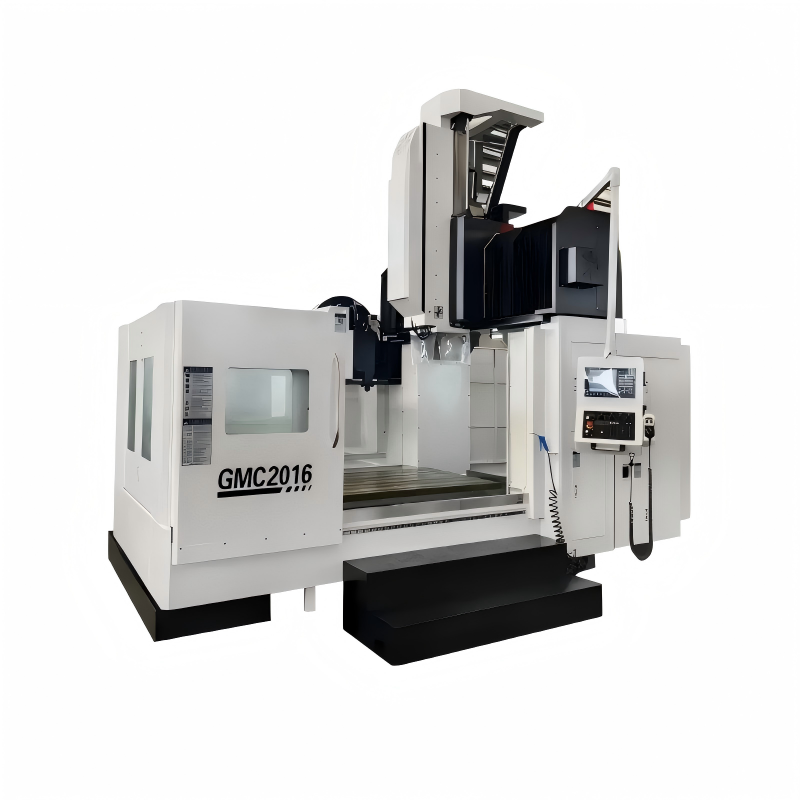
In the realm of modern manufacturing, precision and efficiency are paramount. The 4 Axis Vertical Machining Center (VMC) has emerged as a pivotal tool in achieving these goals. This report delves into how a 4 Axis VMC can be leveraged to maximize efficiency, exploring its capabilities, applications, and best practices.
A 4 Axis VMC is an advanced machine tool that adds a fourth axis of motion to the traditional three axes (X, Y, and Z). The fourth axis, often referred to as the A-axis, allows for rotation around the X-axis. This additional axis significantly enhances the machine's versatility and capability, enabling it to perform complex operations with greater precision and speed.
The 4 Axis VMC is particularly well-suited for machining parts that require intricate features, such as holes, slots, and contours on multiple sides. By rotating the workpiece, the machine can access different angles without the need for manual repositioning, thereby reducing setup time and increasing productivity.
Moreover, the 4 Axis VMC is equipped with advanced control systems and software, which allow for precise control over the cutting process. This ensures that the machine can maintain tight tolerances and produce high-quality parts consistently.
One of the key advantages of a 4 Axis VMC is its ability to automate the machining process. Automation not only reduces the need for manual intervention but also minimizes the risk of human error, leading to higher quality and more consistent output.
Automated processes in a 4 Axis VMC can include tool changes, part loading and unloading, and even in-process inspection. These automated functions can be programmed and executed with minimal supervision, allowing operators to focus on other tasks or manage multiple machines simultaneously.
Furthermore, the integration of robotic arms and conveyors can further enhance the automation capabilities of a 4 Axis VMC. Robotic arms can handle the loading and unloading of parts, while conveyors can transport finished parts to the next stage of production. This seamless integration of automation technologies can significantly boost overall productivity and reduce cycle times.
To fully leverage the capabilities of a 4 Axis VMC, it is essential to optimize the tool paths used in the machining process. Efficient tool paths can reduce cutting time, minimize wear on the tools, and improve the surface finish of the machined parts.
Advanced CAM (Computer-Aided Manufacturing) software plays a crucial role in optimizing tool paths. These software tools can generate highly efficient tool paths by considering factors such as the geometry of the part, the type of material being machined, and the available cutting tools. CAM software can also simulate the machining process, allowing engineers to identify and correct potential issues before the actual machining begins.
Additionally, the use of high-speed machining techniques, such as trochoidal milling and adaptive clearing, can further enhance the efficiency of the 4 Axis VMC. These techniques involve using specific cutting strategies to remove material more quickly and with less stress on the tool, resulting in faster and more efficient machining.
Lean manufacturing principles can be effectively applied to the operation of a 4 Axis VMC to maximize efficiency and reduce waste. By eliminating non-value-added activities and streamlining the production process, manufacturers can achieve significant improvements in productivity and cost-effectiveness.
One of the core tenets of lean manufacturing is continuous improvement, often referred to as "kaizen." This involves regularly analyzing and refining the machining process to identify and eliminate inefficiencies. For example, by implementing standardized work procedures and conducting regular maintenance, operators can ensure that the 4 Axis VMC operates at peak performance.
Another key aspect of lean manufacturing is the concept of "just-in-time" (JIT) production. In a JIT system, parts and materials are produced and delivered exactly when they are needed, reducing inventory costs and minimizing waste. By integrating a 4 Axis VMC into a JIT production system, manufacturers can ensure that parts are machined and delivered in a timely manner, meeting customer demands more efficiently.
The 4 Axis VMC is a powerful tool that can significantly enhance the efficiency and productivity of manufacturing operations. By understanding its capabilities, leveraging automation, optimizing tool paths, and implementing lean manufacturing principles, manufacturers can unlock the full potential of this advanced machine tool. As the manufacturing industry continues to evolve, the 4 Axis VMC will remain a critical asset in achieving precision, speed, and cost-effectiveness.
 24/06/2026
Understanding the Capabilities of a 4 Axis Vertical Machining CenterA 4 axis vertical machining center represents a significant leap in the capabilities of traditional 3-axis machines, adding an additional rotational axis that allows for more complex part
Read More24/06/2026The advent of 4 Axis Vertical Machining Centers (VMCs) has revolutionized the manufacturing industry, especially in high-volume production environments. These advanced machines are capable of performing complex operations with high precision and efficienc
Read More24/06/2026In the realm of precision engineering, advancements in technology have consistently pushed the boundaries of what is possible. Among these technological marvels, the 4 Axis Vertical Machining Center stands out as a revolutionary tool that has transformed
Read More23/06/2026Vertical machining centers (VMCs) have long been a staple in the manufacturing industry, providing precision, efficiency, and versatility. Among these, the 4 Axis Vertical Machining Center stands out as a highly advanced and capable machine, designed to h
Read More23/06/2026Understanding the Basics of 4 Axis Vertical Machining CentersA 4 axis vertical machining center represents a significant leap in the capabilities of traditional CNC (Computer Numerical Control) machines. Unlike its 3-axis counterpart, which can only move
Read More23/06/2026Understanding the 4 Axis Vertical Machining Center The advent of advanced manufacturing technologies has significantly transformed the production landscape, with the 4 Axis Vertical Machining Center (VMC) standing out as a pivotal tool in modern manufactu
Read More23/06/2026IntroductionThe 4 Axis Vertical Machining Center (VMC) represents a significant advancement in the field of manufacturing, particularly when it comes to the production of complex parts. This technology has revolutionized the way intricate components are m
Read MoreOur professional sales team is always ready to assist you.