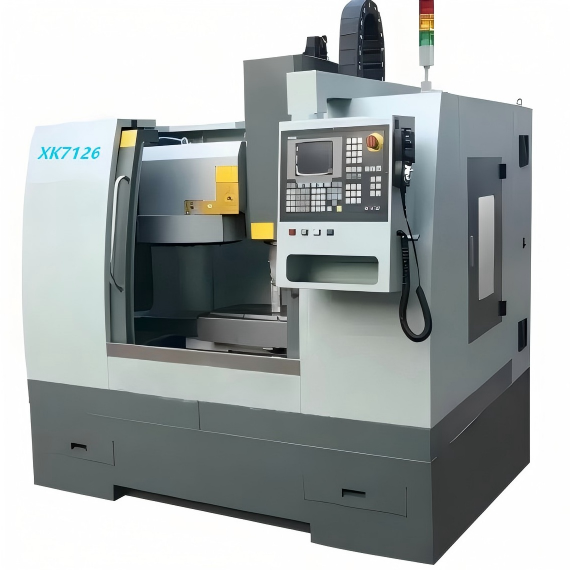
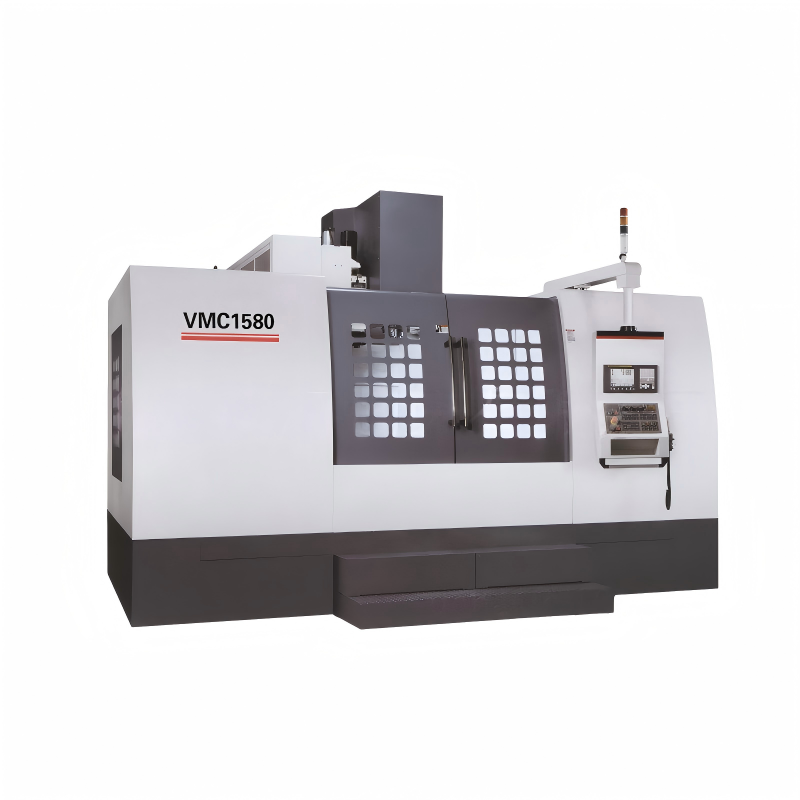
In the realm of precision engineering, advancements in technology have consistently pushed the boundaries of what is possible. Among these technological marvels, the 4 Axis Vertical Machining Center stands out as a revolutionary tool that has transformed manufacturing processes across various industries. This report explores how 4 Axis Vertical Machining Centers are revolutionizing precision engineering, focusing on their unique capabilities, applications, and the benefits they bring to modern manufacturing.
Enhanced Precision and Complexity
The introduction of 4 Axis Vertical Machining Centers into the manufacturing sector marks a significant leap forward in terms of both precision and the complexity of parts that can be produced. Unlike traditional 3-axis machines, which operate along three linear axes (X, Y, and Z), a 4 Axis machine adds an additional rotational axis (A or B), allowing for more intricate machining operations. This fourth axis enables the machine to rotate the workpiece around its vertical axis, facilitating the creation of complex geometries without the need for repositioning. Such capability is particularly advantageous in industries requiring high-precision components, such as aerospace, automotive, and medical device manufacturing, where even the slightest deviation from specifications can lead to catastrophic failures.
Moreover, the ability to perform multi-sided machining in a single setup significantly reduces the likelihood of errors associated with multiple setups, thereby enhancing overall part accuracy. The integration of advanced control systems and software further optimizes this process, enabling real-time adjustments and monitoring to ensure that every component meets stringent quality standards. Thus, 4 Axis Vertical Machining Centers not only elevate the level of precision achievable but also expand the scope of designs that engineers can conceive, fostering innovation within the industry.
Increased Efficiency and Reduced Lead Times
One of the most compelling advantages of 4 Axis Vertical Machining Centers lies in their capacity to dramatically improve production efficiency. By incorporating the additional axis, these machines can complete tasks that would otherwise require multiple setups on a 3-axis machine, thereby saving valuable time. This reduction in setup times translates directly into shorter lead times, which is crucial for manufacturers operating in fast-paced, competitive markets. Additionally, the automation capabilities of 4 Axis machines allow for continuous operation, minimizing downtime and maximizing productivity.
Furthermore, the enhanced flexibility provided by the 4th axis means that operators can produce a wider range of parts using a single machine. This versatility eliminates the need for investing in multiple specialized machines, reducing capital expenditure and freeing up floor space. As a result, manufacturers can respond more quickly to changing customer demands, adjust production schedules with greater ease, and maintain a leaner, more efficient manufacturing environment. The cumulative effect of these efficiencies contributes to lower operational costs and higher profitability, making 4 Axis Vertical Machining Centers an attractive investment for businesses looking to stay ahead in the market.
Improved Surface Finish and Material Utilization
Another key area where 4 Axis Vertical Machining Centers excel is in achieving superior surface finishes. The added rotational movement allows for more controlled and consistent cutting paths, which can result in smoother, more uniform surfaces. This is especially important for parts that require aesthetic appeal, such as those used in consumer electronics or luxury goods, as well as components that must meet specific functional requirements, such as those in high-performance engines or precision instruments.
Additionally, the 4th axis provides better access to the workpiece, enabling the use of more efficient cutting strategies. For instance, the machine can undercut or mill at angles that would be difficult or impossible to achieve with a 3-axis machine. This improved access also leads to better material utilization, as it allows for more precise and strategic removal of material, reducing waste and lowering material costs. In some cases, the savings in material alone can justify the investment in a 4 Axis Vertical Machining Center, making it a cost-effective solution for manufacturers concerned with sustainability and resource management.
Integration with Advanced Technologies
The evolution of 4 Axis Vertical Machining Centers is closely tied to the broader trend of integrating advanced technologies in manufacturing. These machines are increasingly being equipped with features such as high-speed spindles, automated tool changers, and sophisticated CNC (Computer Numerical Control) systems. High-speed spindles, for example, enable faster cutting speeds and feed rates, which can significantly reduce cycle times and increase throughput. Automated tool changers, on the other hand, minimize manual intervention, further streamlining the production process and reducing the risk of human error.
Moreover, the integration of CNC systems with 4 Axis Vertical Machining Centers allows for the implementation of advanced programming techniques, such as adaptive control and predictive maintenance. Adaptive control systems can adjust cutting parameters in real-time based on sensor feedback, ensuring optimal performance and extending tool life. Predictive maintenance, meanwhile, uses data analytics to anticipate potential issues before they occur, reducing downtime and maintenance costs. These advanced technologies, when combined with the capabilities of 4 Axis Vertical Machining Centers, create a powerful platform for achieving unparalleled levels of precision, efficiency, and reliability in manufacturing.
Conclusion
The 4 Axis Vertical Machining Center represents a significant advancement in the field of precision engineering, offering a combination of enhanced precision, increased efficiency, improved surface finish, and better material utilization. By leveraging these capabilities, manufacturers can produce more complex and accurate parts, reduce lead times, and lower operational costs. As the technology continues to evolve, 4 Axis Vertical Machining Centers will play an increasingly vital role in shaping the future of manufacturing, driving innovation and competitiveness across a wide range of industries.
 24/06/2026



