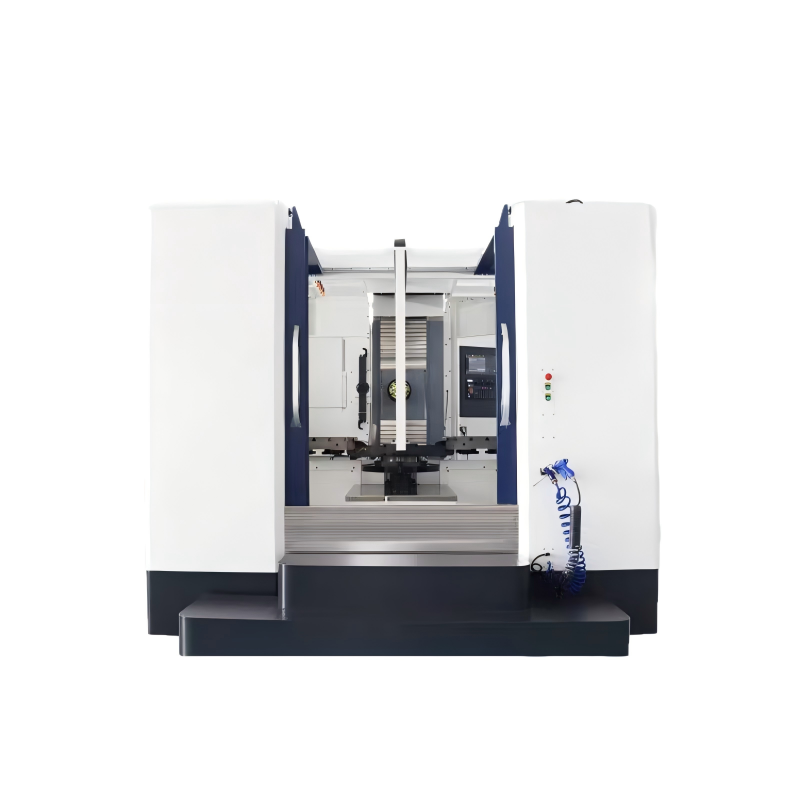
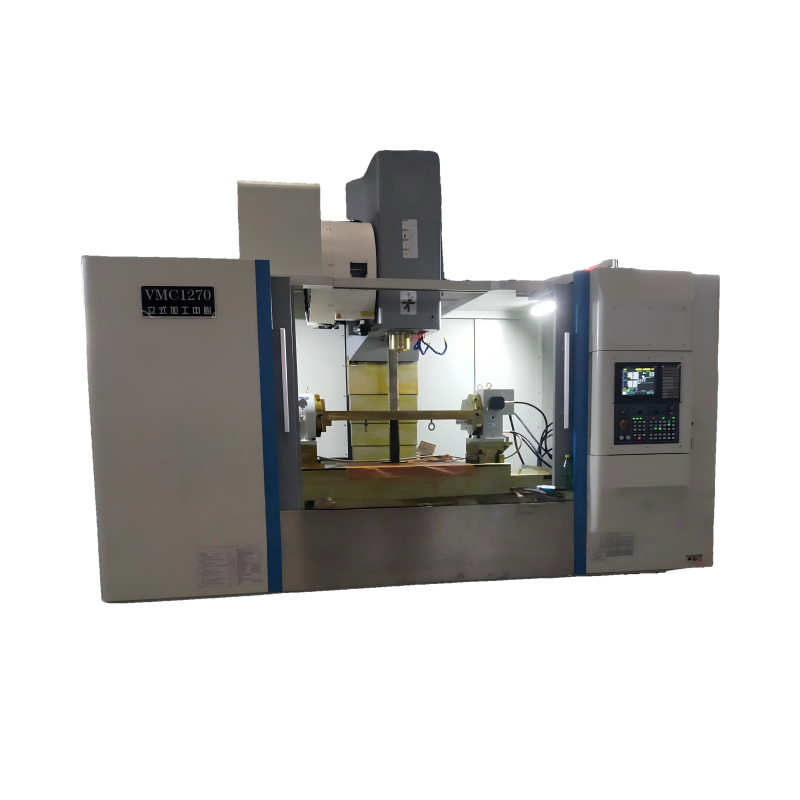
The advent of 4 Axis Vertical Machining Centers (VMCs) has revolutionized the manufacturing industry, especially in high-volume production environments. These advanced machines are capable of performing complex operations with high precision and efficiency, making them indispensable for modern manufacturing processes. This report delves into the critical roles that 4 Axis VMCs play in enhancing productivity, flexibility, and overall quality in high-volume production settings.
Enhancing Operational Efficiency through Automation
In a competitive manufacturing landscape, operational efficiency is paramount. 4 Axis Vertical Machining Centers excel in this area by integrating advanced automation features. These machines can perform multiple operations in a single setup, reducing the need for manual intervention and minimizing cycle times. The fourth axis, typically a rotary table, allows for the machining of parts from different angles without repositioning, which significantly cuts down on setup time. Additionally, automated tool changers and part loading systems further streamline the process, enabling continuous operation and maximizing machine uptime. By automating these steps, 4 Axis VMCs ensure that production lines remain highly efficient, even when handling large volumes of work.
Improving Part Quality and Consistency
One of the key advantages of 4 Axis VMCs is their ability to maintain high levels of part quality and consistency. These machines are equipped with precise positioning systems and advanced control software, which allow for accurate and repeatable machining. The additional axis provides greater flexibility in part orientation, enabling the machine to access more complex geometries and achieve better surface finishes. Furthermore, the use of high-speed spindles and rigid machine structures ensures that vibrations and thermal distortions are minimized, leading to higher accuracy and lower scrap rates. In high-volume production, where consistency is crucial, 4 Axis VMCs deliver reliable and uniform results, meeting stringent quality standards.
Flexibility in Handling Diverse Workpieces
The versatility of 4 Axis VMCs is another significant factor in their widespread adoption in high-volume production. These machines can handle a wide range of materials, from metals like aluminum and steel to plastics and composites. The ability to switch between different materials and part types quickly and efficiently makes 4 Axis VMCs ideal for diverse manufacturing applications. The rotary table can be used to position parts at various angles, allowing for the machining of complex shapes and features that would be difficult or impossible to achieve with a 3-axis machine. This flexibility not only enhances the capabilities of the machine but also reduces the need for multiple setups, saving time and resources.
Integration with Advanced Manufacturing Technologies
4 Axis VMCs are well-suited for integration with other advanced manufacturing technologies, such as Computer-Aided Design (CAD) and Computer-Aided Manufacturing (CAM) systems. These systems enable the creation of detailed 3D models and the generation of optimized toolpaths, which can be directly transferred to the machine. This seamless integration ensures that the machining process is highly controlled and precise, reducing the likelihood of errors and improving overall productivity. Additionally, 4 Axis VMCs can be connected to real-time monitoring and data analytics systems, providing valuable insights into machine performance and enabling predictive maintenance. This level of integration supports a more intelligent and responsive manufacturing environment, essential for high-volume production.
Cost-Effectiveness in High-Volume Production
While the initial investment in a 4 Axis VMC may be higher than that of a 3-axis machine, the long-term cost savings make it a worthwhile investment for high-volume production. The increased efficiency, reduced setup times, and lower scrap rates contribute to a significant reduction in overall production costs. Moreover, the ability to handle a variety of workpieces and the potential for lights-out operation (where the machine runs unattended) further enhance the economic benefits. By optimizing the use of 4 Axis VMCs, manufacturers can achieve higher throughput and lower per-unit costs, making them a cost-effective solution for high-volume production.
In conclusion, 4 Axis Vertical Machining Centers play a pivotal role in high-volume production by enhancing operational efficiency, improving part quality and consistency, offering flexibility in handling diverse workpieces, integrating with advanced manufacturing technologies, and providing cost-effectiveness. As the manufacturing industry continues to evolve, the adoption of 4 Axis VMCs will remain a strategic choice for companies aiming to stay competitive and meet the demands of high-volume production.
 24/06/2026



